
A lighthearted look at six Profile Perfect solving styles, from anchor hunters to booster savers, with a recommended level to try for each type. Purely for fun, not a real personality test.

Guide By Liam Stone
Published on July 7, 2026
Liam Stone has played Profile Perfect since the app first launched on the Apple App Store. He spotted its potential early, and that early bet turned into hundreds of hours spent solving levels, testing clue logic, and documenting answers for other players. Liam runs the YouTube channel Puzzle Game Answer where his puzzle walkthroughs have earned over 935,000 views and a growing community of more than 800 subscribers. He covers a wide range of mobile puzzle games beyond Profile Perfect, giving him firsthand experience with how these games design clues, structure levels, and trip up even experienced players. Every guide on this site reflects that hands on experience. Liam plays each level himself, verifies every answer against the in game grid, and rewrites confusing clues into plain language so you don't need to guess. If you want more of his walkthroughs, subscribe to his channel.
Loading calendar...
Every Profile Perfect player has a method. Some people lock onto the first solid clue and refuse to let go. Others reread every line twice before tapping anything. After enough levels, you start to notice your own habits repeating themselves, and honestly, they say a lot more about your personality than you'd expect.
This is not a real personality test. There is no science behind it, no data team crunching your tap patterns, no hidden meaning buried in your win streak. It's a fun way to look at how you actually play and laugh at yourself a little. Pick the type that sounds most like you, or admit you're a mix of two, and see which level fits your style best.
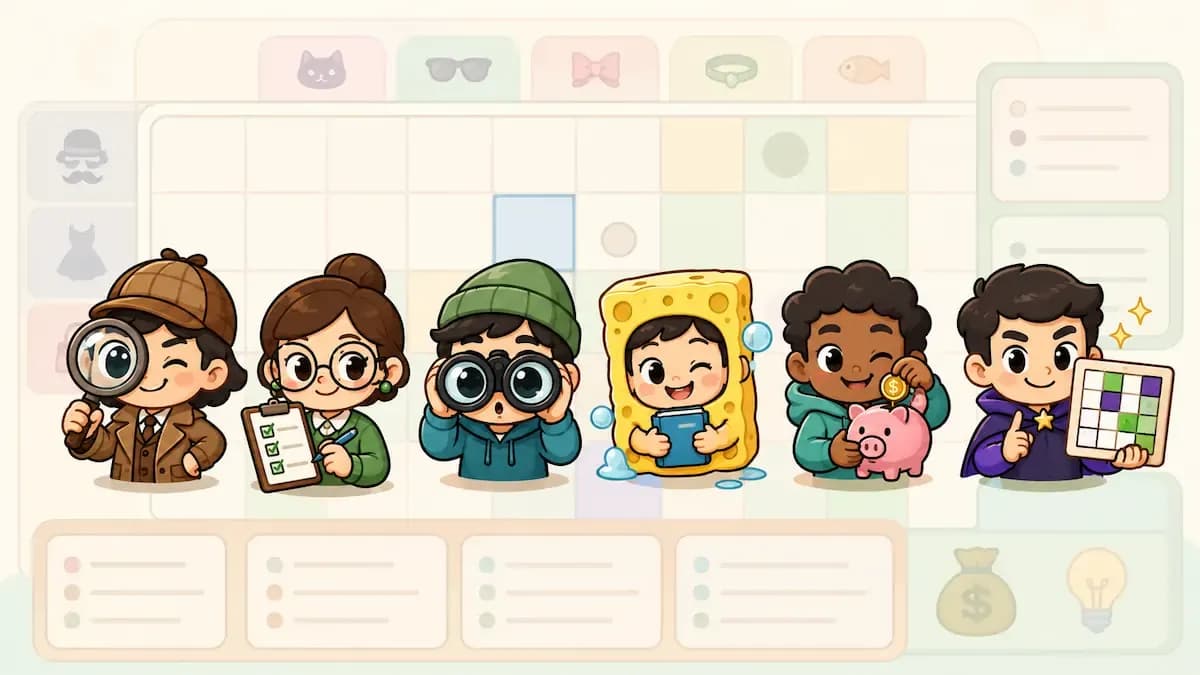
Here are six ways Profile Perfect players solve a grid.
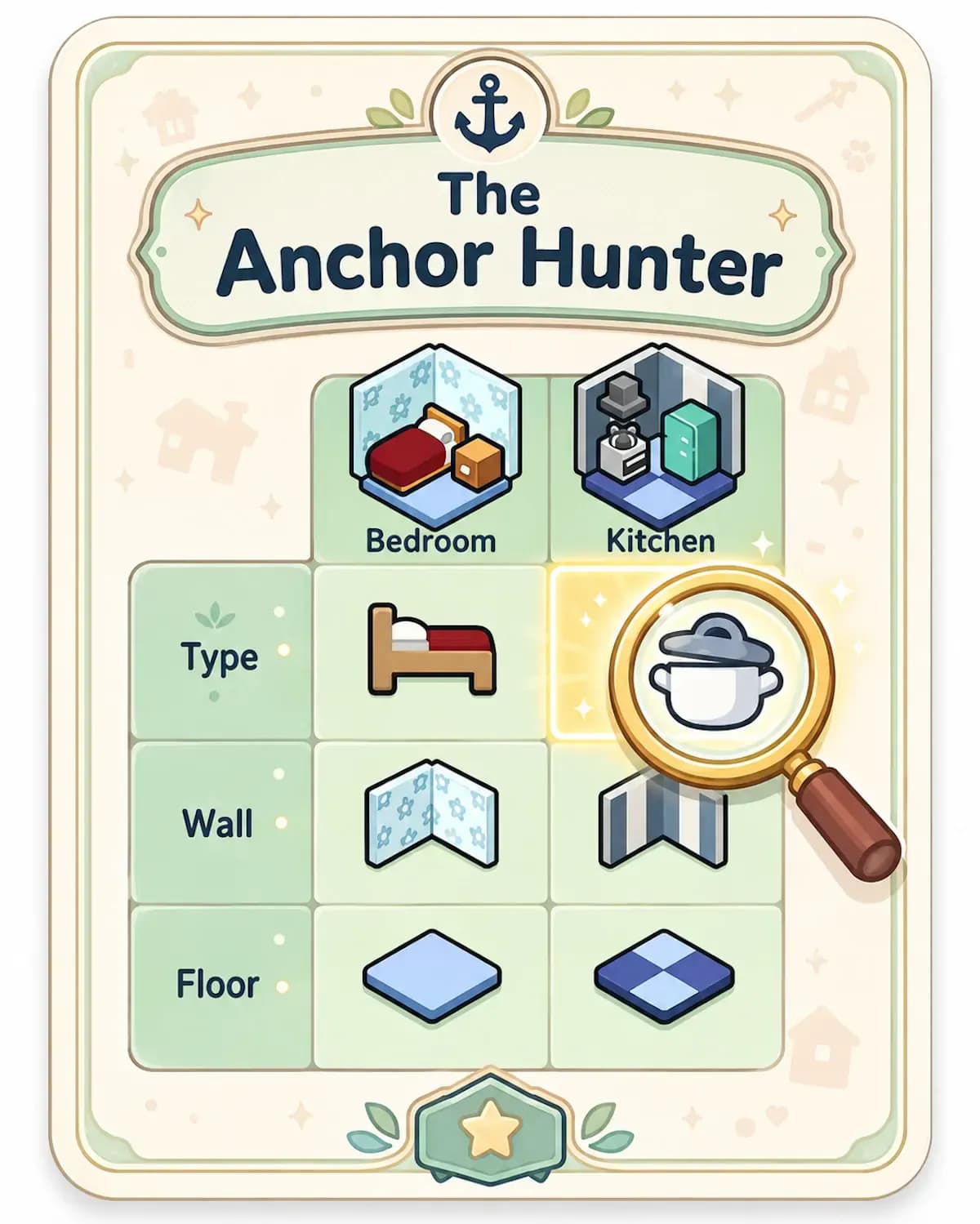
You open a level and your eyes go straight to the locked answers first. If the puzzle hands you an initial answer, you treat it like gold. You build outward from that one certain fact, clue by clue, until the rest of the grid falls into place around it.
This works because most levels are built around a foothold like that. Give an anchor hunter one solid fact and they'll chain three or four more answers off it before anyone else has finished reading the clue list.
Your strength is speed. You rarely waste time on guesswork because you're always working from something proven. Your weakness shows up on levels that give few or no locked answers up front. Without that first anchor, you can freeze for a minute, unsure where to even start.
Level 3 is a short two room puzzle with only one locked answer to begin with, a floor type, and four clues total. It's a clean example of what an anchor hunter does best, taking one confirmed detail and using it to unlock every other answer on the board.
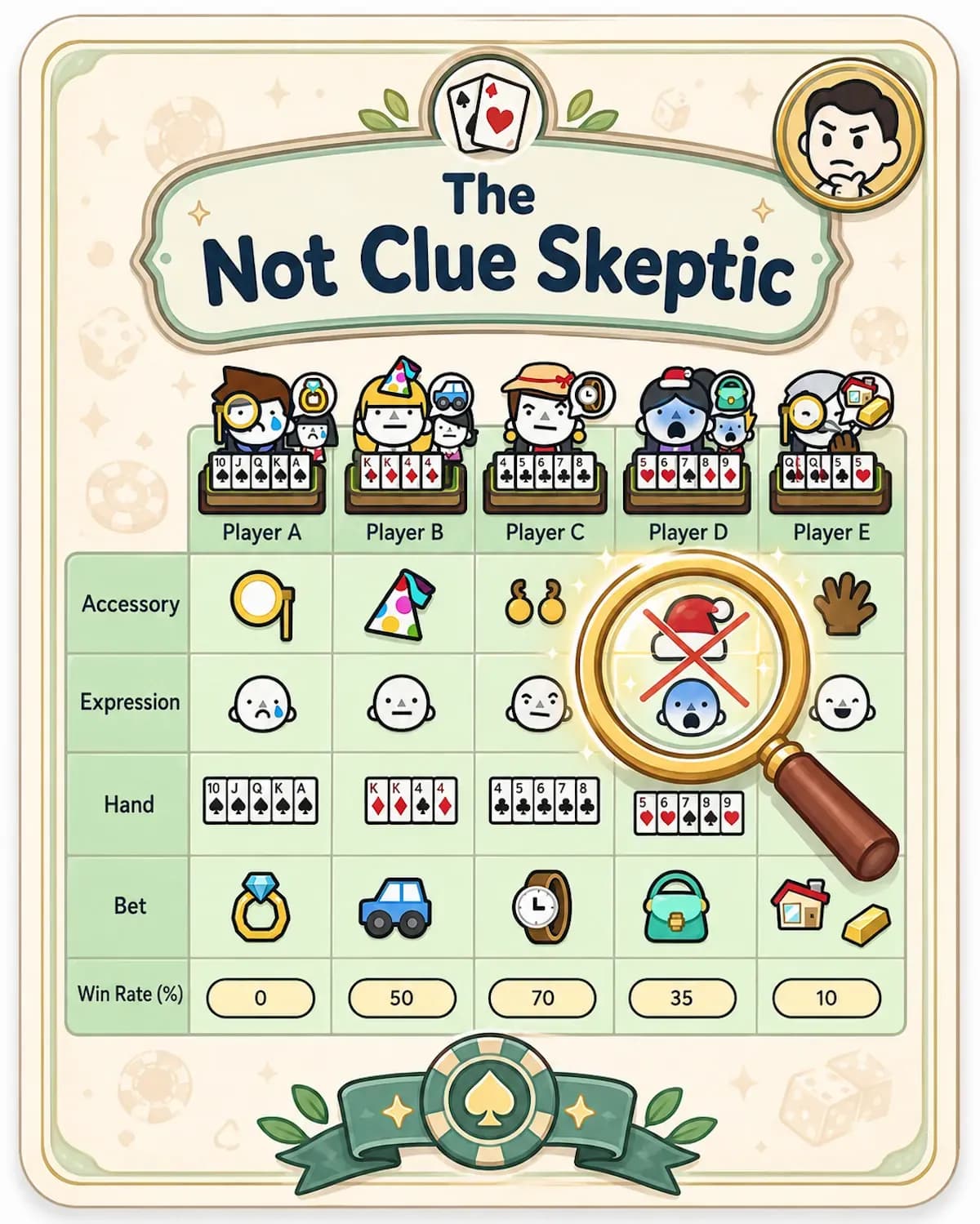
You don't trust a clue just because it sounds obvious. You read it, then you read the next three clues looking for something that either backs it up or breaks it. Only once two or three pieces of information agree do you actually commit to an answer.
This habit means you rarely lose a life. You catch the misdirection clues that trip up faster players, the ones that sound like they're pointing one way and actually mean something else.
Your strength is accuracy. Your weakness is pace. Sometimes you slow down on clues that really were exactly what they looked like, checking and rechecking something that didn't need it.
Level 234 is packed with poker players who go by more than one name, wear more than one accessory, and get referenced across clues that loop back on each other constantly. It rewards a skeptic's habit of cross checking every claim before locking in an answer.
Before you read a single clue in detail, you scan the whole board. You're looking for the words left, right, middle, and neighbor because you know those clues map directly onto where things sit in the row. You solve position first and details second.
This style clicks especially well on levels built around a physical layout, buses lined up on a street, rooms in a hallway, seats around a table. You picture the row in your head and slot pieces into place almost like a jigsaw.
Your strength is spatial thinking. You rarely misplace a subject once you know where it sits. Your weakness is clues that have nothing to do with position, the ones about colors, names, or preferences that don't care where anything is sitting. Those can slip past you if you're too focused on the layout.
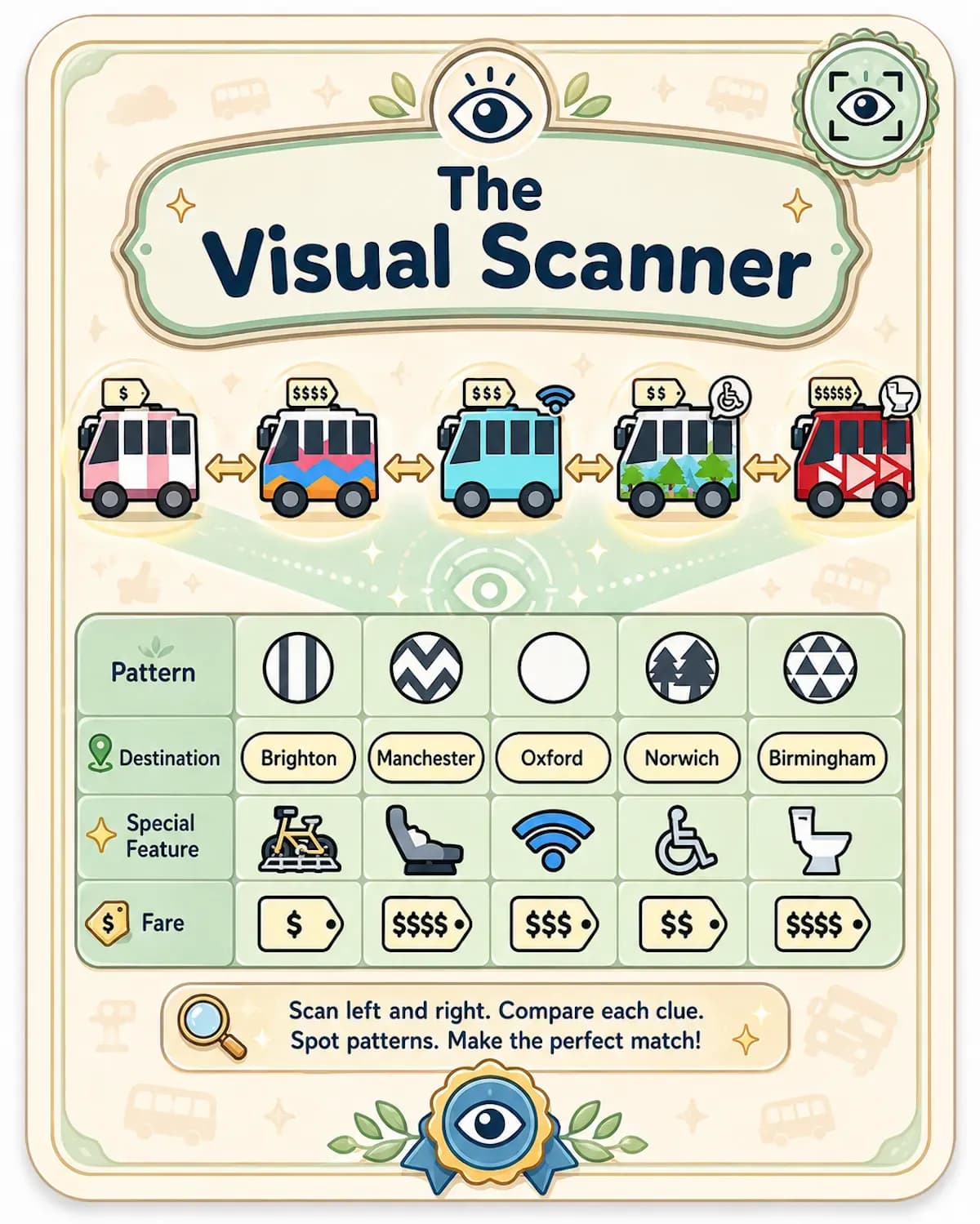
Level 20 lines up five buses and hands out clue after clue about who's leftmost, who's in the middle, and who's parked next to who. It's built for a visual scanner's brain.
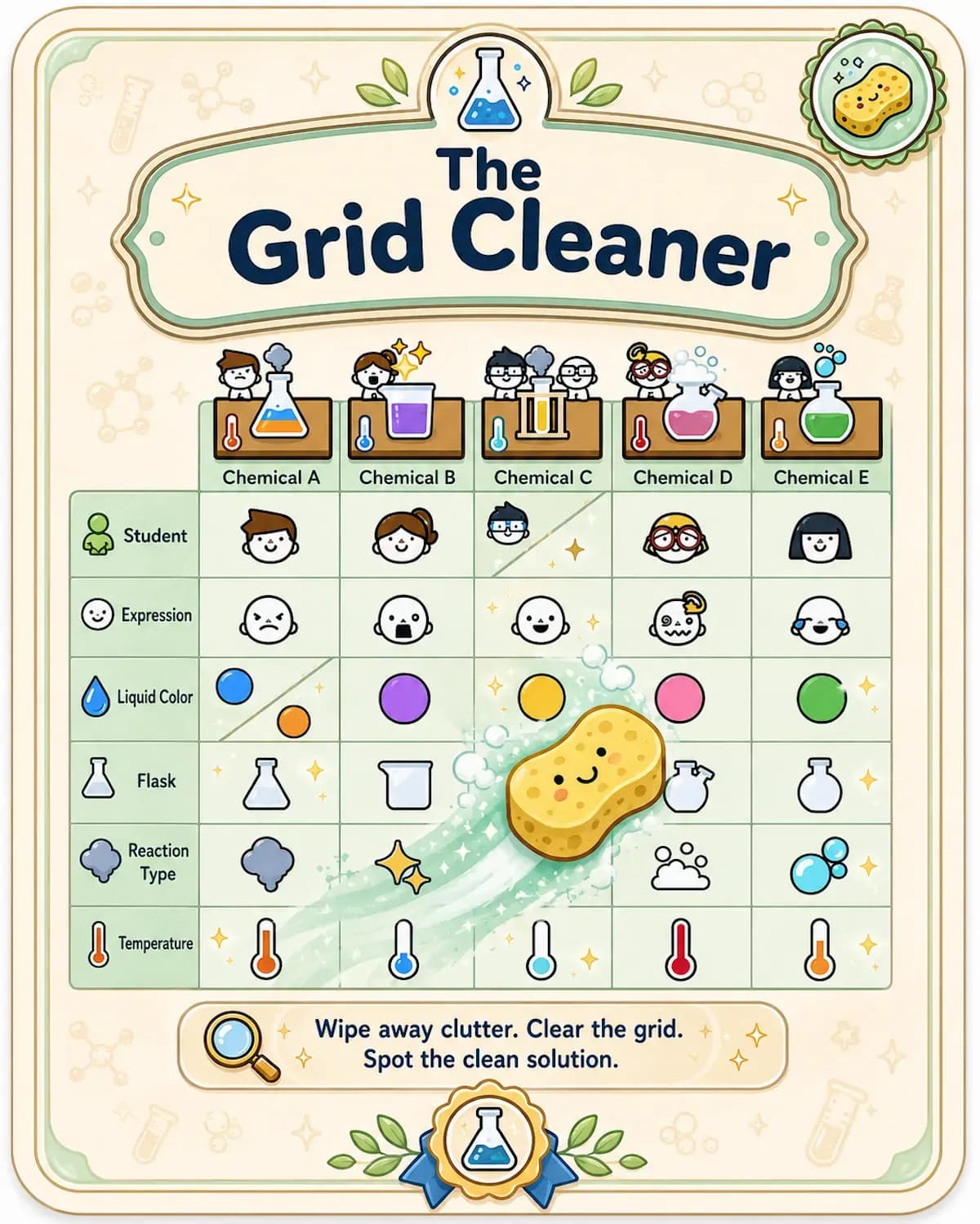
You cannot leave a level with loose ends. Even after the main question is technically answered, you keep working until every single cell is filled in, hidden values included. If there's a detail tucked away that the game doesn't strictly require you to find, you're finding it anyway.
This habit means you catch things other players skip entirely. Hidden values, the extra facts a level doesn't hand you outright, don't stand a chance against a grid cleaner.
Your strength is thoroughness. Nothing sneaks by unfinished. Your weakness is time. You'll sometimes chase a minor detail before locking down the answer that actually matters, which can slow your pace on longer levels.
Level 83 follows five chemistry students and hides three separate values that never get revealed up front, a flask type, a reaction type, and a temperature. A grid cleaner will hunt down every one of them before calling the level done.
You have boosters sitting in your inventory that you have never once used. Using a hint feels like admitting defeat, so you'd rather sit with a hard level for five extra minutes than tap that reveal button. Winning without help is the whole point for you.
This mindset builds real skill over time. Players who solve everything manually tend to get faster at reading clue chains because they've had to do it the hard way from the start.
Your strength is independence. You actually learn the game instead of leaning on shortcuts. Your weakness is stubbornness. Sometimes a booster would save you a life you can't really afford to lose, and pride gets in the way of a smart tap.
Level 96 throws five lipsticks at you with six traits each and over twenty clues to untangle, plus a few cells that hold two correct values at once. It's dense enough to test whether your no booster rule survives contact with a genuinely tough puzzle.
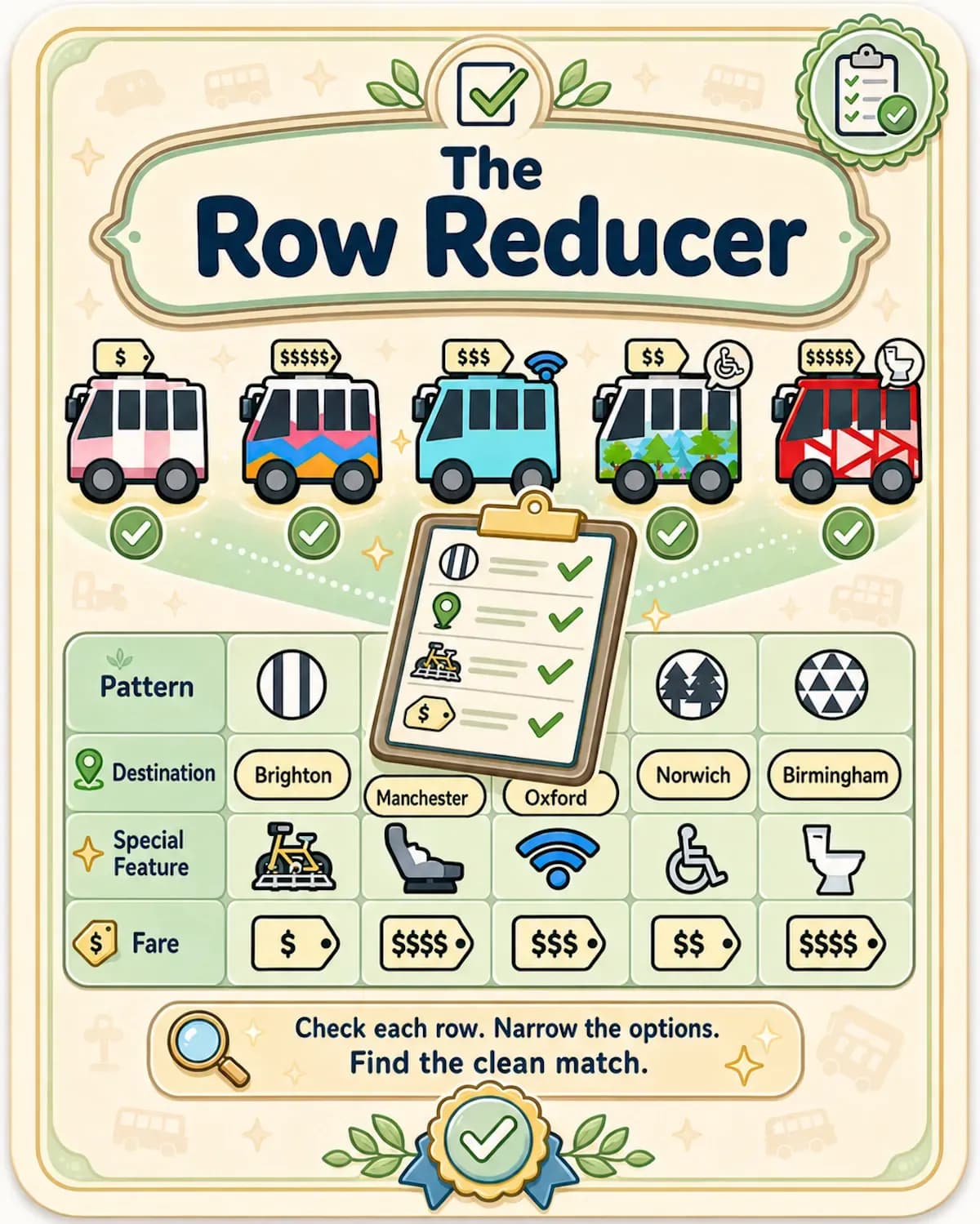
You work one trait at a time, methodically ruling out possibilities across the whole row before you commit to anything. Where other players jump around chasing whichever clue looks flashiest, you move in order, crossing off options the way you'd work through a checklist.
This is process of elimination in its purest form. You may not be the flashiest solver in the room, but you almost never miss a possibility because you check every option before moving on.
Your strength is consistency. Your weakness is flexibility. Clever multi step logic jumps that skip straight to an answer can catch you off guard because your instinct is to work through every option in order instead of leaping ahead.
Level 20's bus lineup rewards this style just as much as it rewards the visual scanner. Once you know the buses' positions, the row reducer in you takes over, checking fare against pattern against destination one trait at a time until every column locks into place.
Honestly, probably nothing you didn't already know. If you're an anchor hunter, you likely make decisions fast in real life too, once you've got one solid fact to work from. If you're a skeptic, you're probably the friend who fact checks group chat rumors before repeating them. Take it as a fun mirror, not a verdict.
Most players are a blend anyway. You might hunt anchors early in a level and turn into a grid cleaner by the end once the pressure is off. That's normal. The fun part is noticing the pattern at all.
Try picking a level that matches your type, or better yet, pick the one that matches your opposite and see how it feels to solve a puzzle in a completely different way than you're used to.