
Discover the seven qualities that define a good mobile logic puzzle in 2026, with real Profile Perfect examples covering timers, clue fairness, and more.


Guide By Liam Stone
Published on July 6, 2026
Liam Stone has played Profile Perfect since the app first launched on the Apple App Store. He spotted its potential early, and that early bet turned into hundreds of hours spent solving levels, testing clue logic, and documenting answers for other players. Liam runs the YouTube channel Puzzle Game Answer where his puzzle walkthroughs have earned over 935,000 views and a growing community of more than 800 subscribers. He covers a wide range of mobile puzzle games beyond Profile Perfect, giving him firsthand experience with how these games design clues, structure levels, and trip up even experienced players. Every guide on this site reflects that hands on experience. Liam plays each level himself, verifies every answer against the in game grid, and rewrites confusing clues into plain language so you don't need to guess. If you want more of his walkthroughs, subscribe to his channel.
Loading calendar...
Mobile puzzle games are everywhere right now. You open your phone during a commute or a coffee break, and there is always a grid, a word list, or a daily challenge waiting for you. Some of these games respect your time. Others chase you with countdown timers, ads every thirty seconds, and grids so cramped you need to zoom in just to read a label.
I have spent a lot of hours inside Profile Perfect, matching subjects to traits and working through clue chains until a grid clicks into place. That time taught me what separates a puzzle game you keep coming back to from one you delete after a week. Below are seven qualities I look for in any mobile logic puzzle in 2026, with a real example from Profile Perfect under each one.
A good logic puzzle trusts you to think. The moment a countdown appears on screen, you stop reasoning and start guessing, and guessing is not the same skill as deduction.
Profile Perfect has no timer anywhere in the game. When I played through the early levels, I could sit with a clue for as long as I needed, reread it, check it against the grid, and only tap once I was sure. That pause matters. It turns the game into something closer to a crossword you solve over lunch than a reflex test.
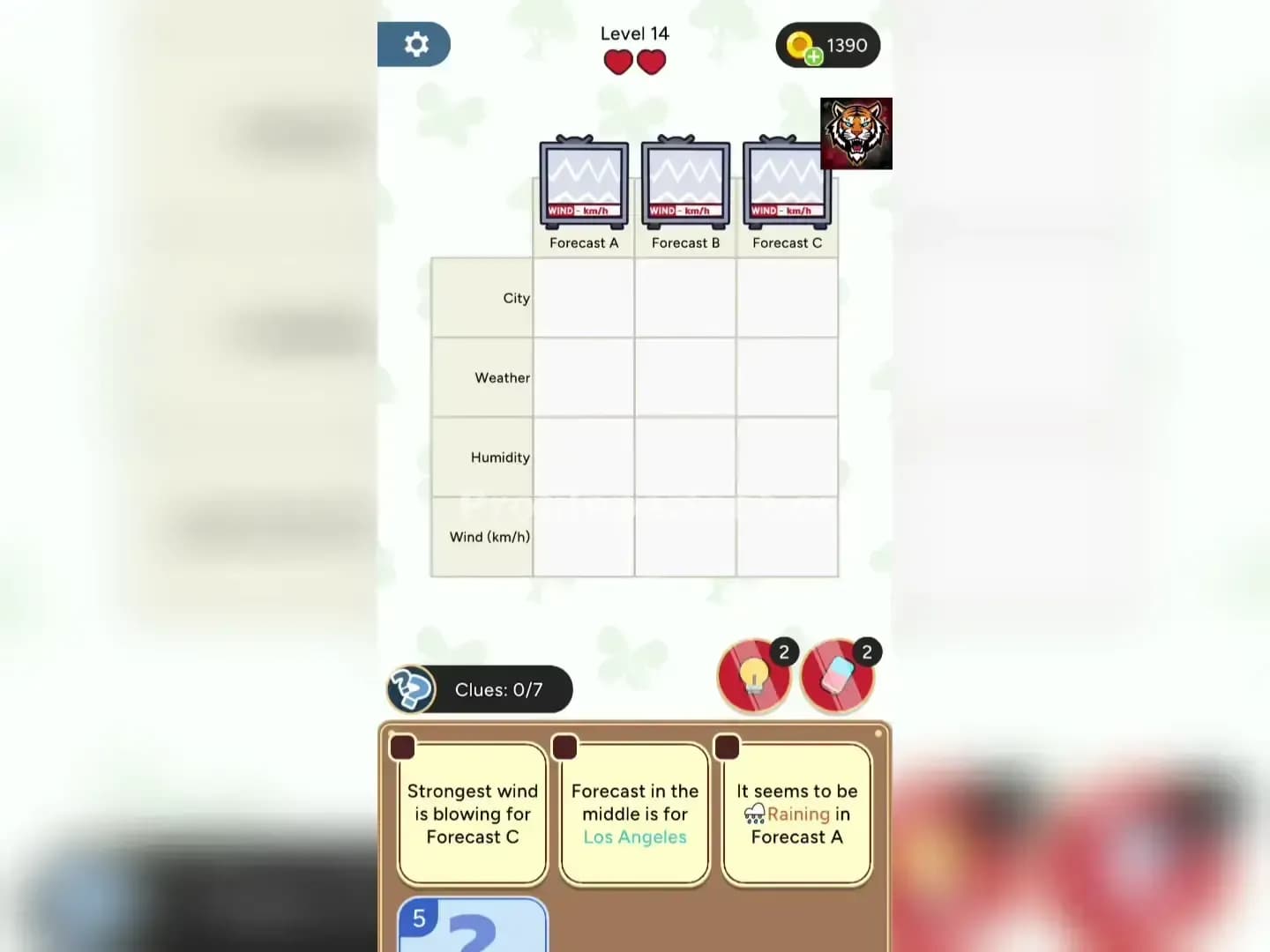
Puzzle games with timers tend to burn players out fast, because every session feels like a small emergency. Profile Perfect avoids that by letting the difficulty come from the logic itself, not from the clock.
Logic grids fail the moment you cannot tell which row belongs to which subject. On a phone screen, that happens quickly if a developer tries to cram too many columns into too little space.
Level 20 in Profile Perfect is a good example of a grid that stays readable even with five subjects. The level features five buses, each with its own pattern, destination, special feature, and fare. Despite the number of columns, the puzzle shows one bus per row with clear labels, so I never lost track of which bus I was reasoning about while working through clues like the one connecting the zigzag pattern to the Manchester route and its high fare.

A crowded grid forces you to scroll or squint. A clear one lets your eyes do the deduction work instead of your patience.
This is the quality that makes or breaks a logic puzzle. A clue chain plays fair when each clue gives you real information, and later clues build on earlier ones without asking you to guess a hidden rule.
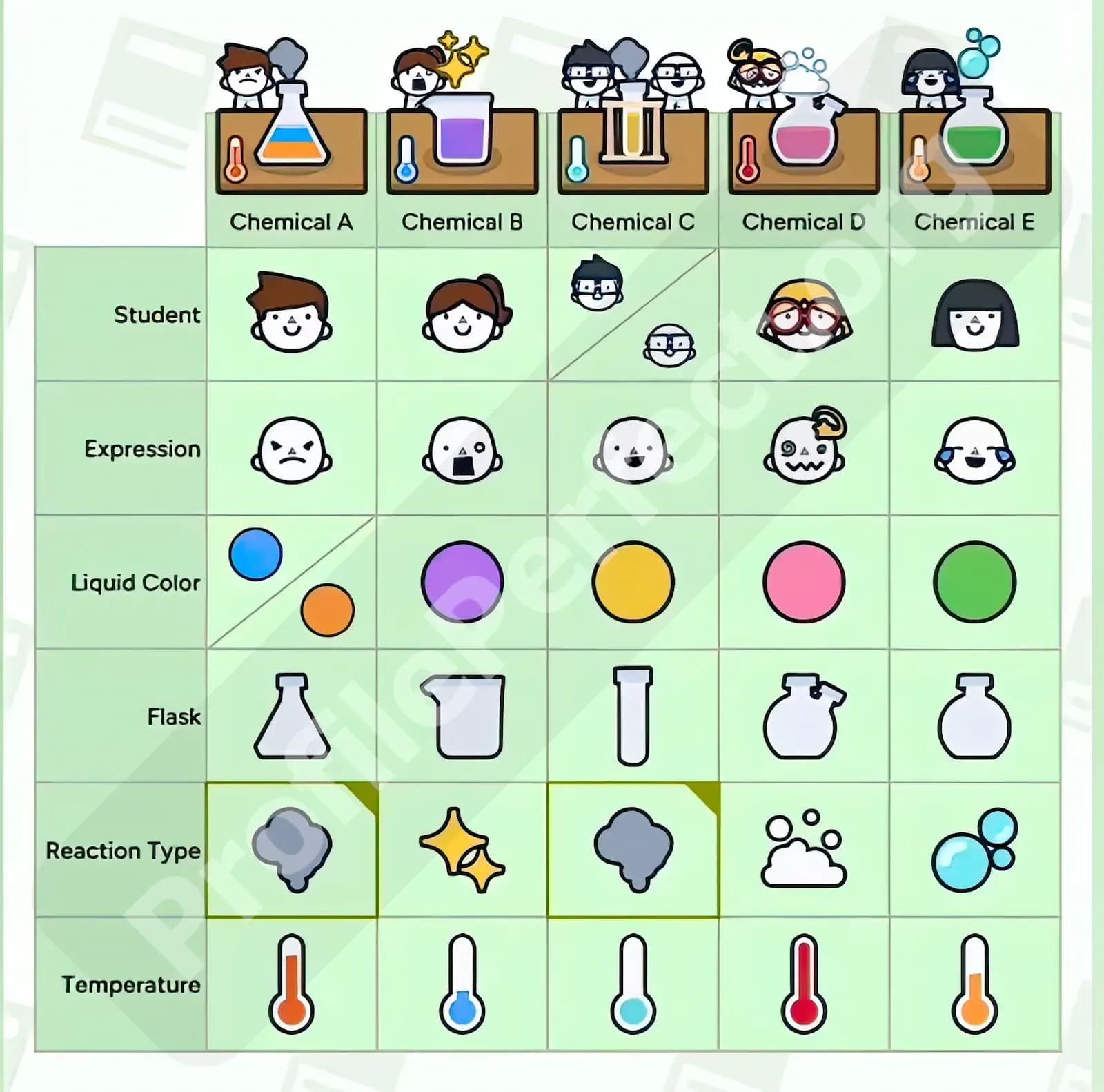
Level 83 in Profile Perfect shows this well. The level asks you to match five chemicals to a student, an expression, a liquid color, a flask, a reaction type, and a temperature. That is six traits per subject, which sounds intimidating. But when I solved it, every clue connected cleanly to the next. One clue tells you the coldest and hottest chemicals sit next to each other. Another narrows the reaction type for the chemical in the middle. Piece by piece, the chain builds toward chemical D's flask and reaction type, even though those two values stay hidden until you deduce them yourself. Nothing in that chain asked me to jump ahead or assume something the puzzle never stated.
That is the standard every logic puzzle should meet. If you ever finish a level and think "how was I supposed to know that," the clue chain failed you.
Mistakes should matter. If tapping the wrong cell has zero cost, you stop reasoning and start clicking through options until something works. But if one wrong tap ends your whole session, the game stops feeling like a puzzle and starts feeling like a punishment.
Profile Perfect finds the middle ground with a two life system. A wrong answer costs you a life, and losing both lives sends you back to the start of the level. That single rule changes how you play. I found myself double checking a clue before committing to an answer instead of tapping through the grid at random. But because the penalty is a restart rather than a permanent loss, a mistake never felt like it ruined my progress across the whole game.

Losing a level and restarting it takes a minute or two. That is long enough to make you more careful next time, and short enough that you never feel like you wasted your evening.
Logic grids are, at their core, an abstract structure built from subjects, traits, and clues. Without variety in theme, every level starts to feel identical, just with different labels swapped in.
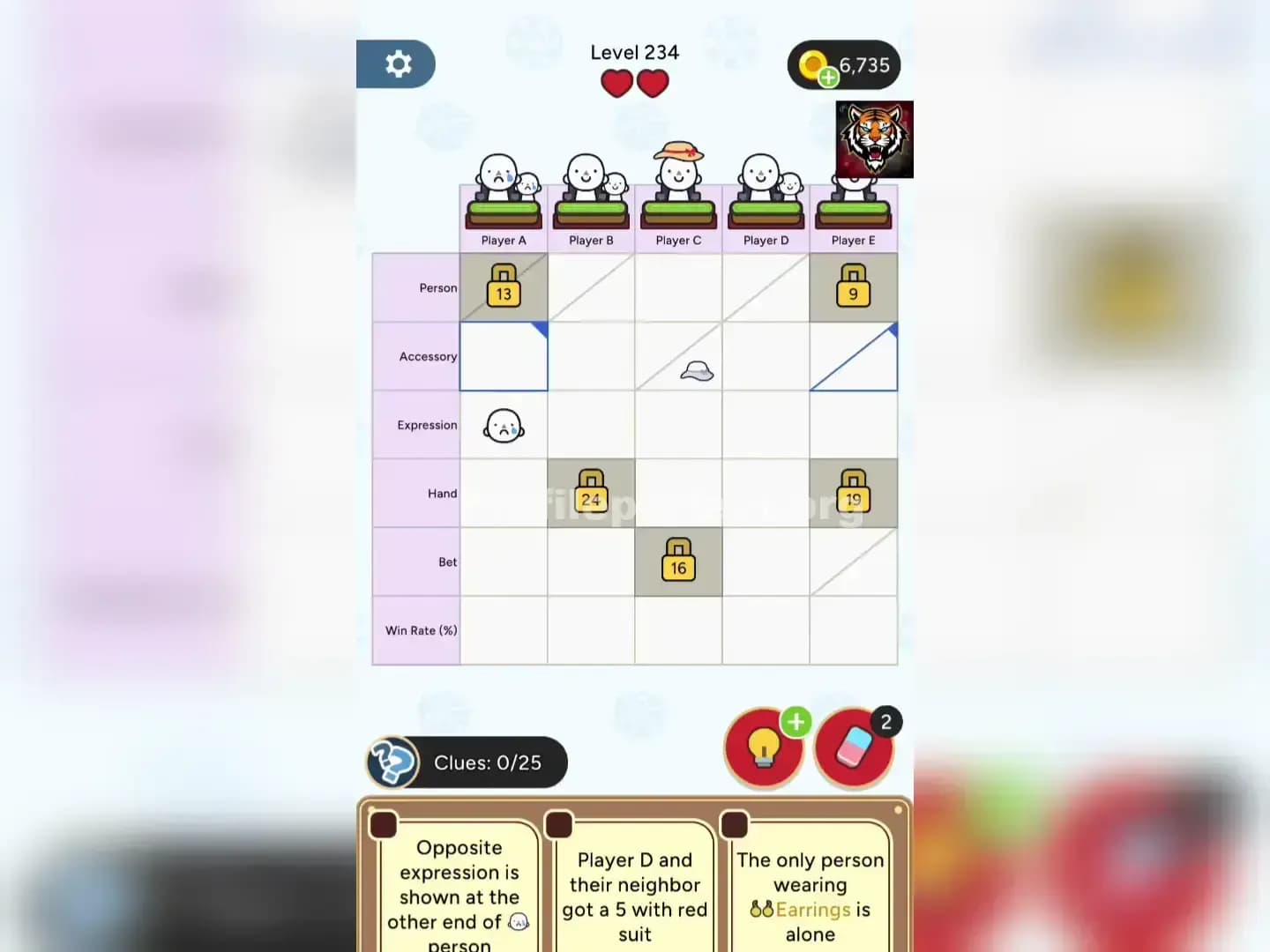
Profile Perfect avoids that by rotating through wildly different settings from level to level. Level 234 drops you at a poker table, matching players to their accessories, expressions, hands, bets, and win rates, complete with details like a player wearing a monocle holding a full house, or two lives sharing the same seat because they go by different names depending on how you read the clue. Compare that to the bus terminal in Level 20 or the chemistry lab in Level 83, and you get three completely different moods from what is structurally the same puzzle format.
That variety is what keeps a puzzle habit alive past the first few dozen levels. You are not just solving grids. You are stepping into a new small scene each time.
Boosters and hints are common in mobile puzzles now, and most of them cross a line at some point, either by giving away too much or by hiding behind an unskippable ad. The best tools sit closer to a nudge than an answer key.
Profile Perfect's boosters can reveal a single cell or solve one clue for you, but the game never lets a booster clear a whole level. When I used one on a tough clue chain, it removed one obstacle and left the rest of the deduction to me. The satisfaction of finishing the grid stayed intact because most of the thinking was still mine.
If a hint system does your thinking for you, it is not helping you get better at the game. It is just skipping the game.
Not every puzzle needs to be short, but every puzzle needs a natural stopping point. Games that stretch a single level across ten or fifteen minutes without a clear pause make it hard to fit them into a commute or a waiting room.
Most Profile Perfect levels run a manageable length, long enough to require real thought but short enough to finish in one sitting without losing the thread of the clues you already worked out. That pacing is part of why the game fits so easily into small pockets of downtime instead of demanding a dedicated session.
Next time you pick up a new puzzle game, or you want to check whether your current one still deserves a spot on your home screen, run it through this list.
Profile Perfect checks every box on that list, which is a big part of why it has held my attention past the first few levels. If you are choosing your next mobile logic puzzle, use this checklist as your filter. A game that respects your time and your reasoning is worth keeping. One that does not is worth deleting.