
Explore the ADHD-friendly side of Profile Perfect’s no-timer logic puzzles, with calm clue reading, clear grids, safe taps, and low-pressure play.

Guide By Liam Stone
Published on July 5, 2026
Liam Stone has played Profile Perfect since the app first launched on the Apple App Store. He spotted its potential early, and that early bet turned into hundreds of hours spent solving levels, testing clue logic, and documenting answers for other players. Liam runs the YouTube channel Puzzle Game Answer where his puzzle walkthroughs have earned over 935,000 views and a growing community of more than 800 subscribers. He covers a wide range of mobile puzzle games beyond Profile Perfect, giving him firsthand experience with how these games design clues, structure levels, and trip up even experienced players. Every guide on this site reflects that hands on experience. Liam plays each level himself, verifies every answer against the in game grid, and rewrites confusing clues into plain language so you don't need to guess. If you want more of his walkthroughs, subscribe to his channel.
Loading calendar...
Quick, plain-language disclaimer, because this kind of post can slide into overclaiming fast: I'm not a doctor, a therapist, or a researcher, and nothing below is a medical claim. Profile Perfect doesn't treat ADHD. It doesn't train your brain, boost your memory, or "help with focus" in any measurable sense — it's a logic-grid puzzle game, full stop. What I can talk about is how a handful of its interface choices land for me, and for some other players with distractible, easily-overwhelmed brains I've compared notes with. If you're looking for something that manages ADHD, that's a conversation for an actual clinician, not a phone game review. If you're just curious whether a calm puzzle app might be a comfortable way to spend fifteen minutes, read on.
These aren't secret features — they're just ordinary game design decisions that happen to remove some common friction points. Your mileage will vary, and that's fine.
No countdown, no ticking clock, no score quietly draining while you think. You can read a clue, set the phone down for ten minutes, and come back to a grid that hasn't judged you for leaving. For some players, a visible timer turns a puzzle into a performance — you're not just solving, you're racing your own hesitation. Take the clock away and the same puzzle can feel like a much calmer place to think out loud.
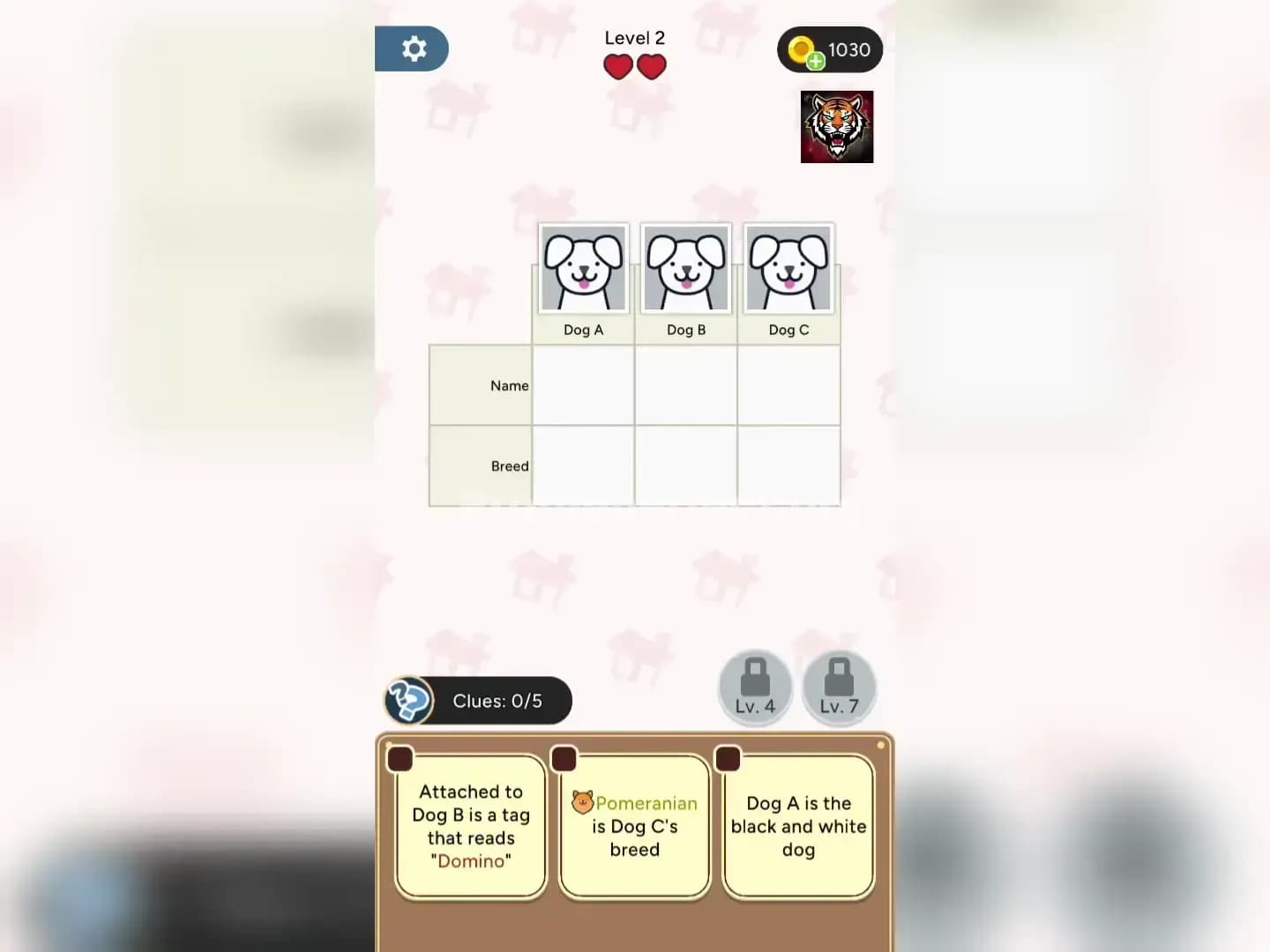
Every clue lives in a scrollable panel you can revisit any time. That matters more than it sounds: re-reading something isn't a failure state here, it's just how the panel is meant to be used. For some players, needing to re-read a clue three times feels like proof they weren't paying attention. A persistent, always-there clue list quietly removes that story — of course you're scrolling back up, that's what the list is for.
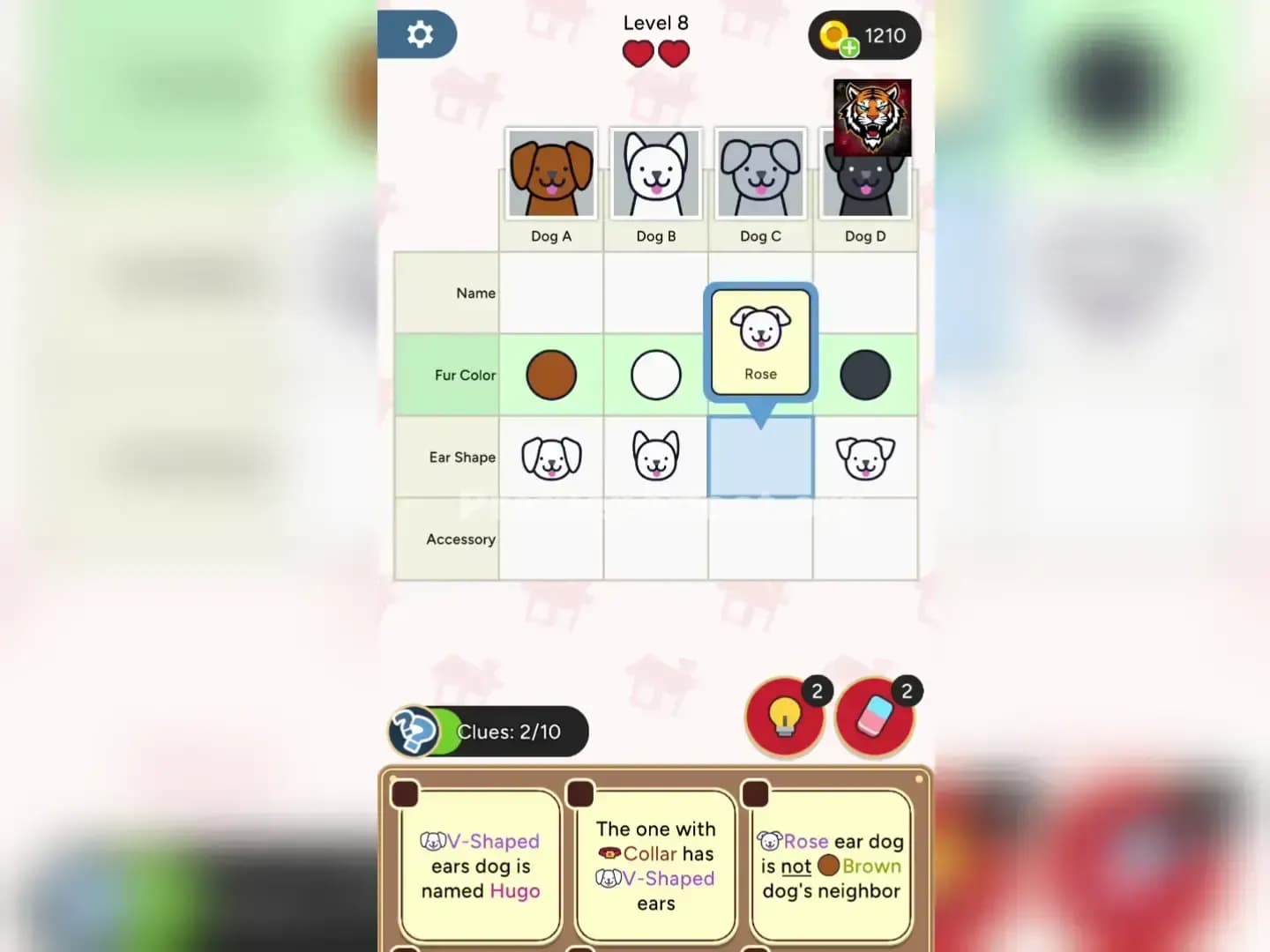
A filled, locked-in cell doesn't look like an empty one. That sounds minor, but it means the interface is holding "what's already done" for you instead of asking you to keep it in your head. After a break, or a distracted lap around the kitchen, one glance at the grid tells you where you left off — you're not reconstructing your own train of thought from scratch.
Look at almost any level's clue list and you'll notice a few marked as immediate, direct facts rather than logic to untangle. In one early level, two people just need to be matched to a surname and nationality — and the very first clue is simply "Joyce's full name is Joyce Miller." No deduction required, just a tap. In another, a two-room level opens with a clue that food-prep tools are in Room B — which is just... the kitchen. That's the whole inference.
These starting anchors exist for pacing reasons, not accessibility ones, but the effect is the same either way: the first move doesn't ask you to sit with ambiguity. You get one small, real win before the puzzle asks anything harder of you. For some players, that first quick tap is what makes it easy to stay a little longer.
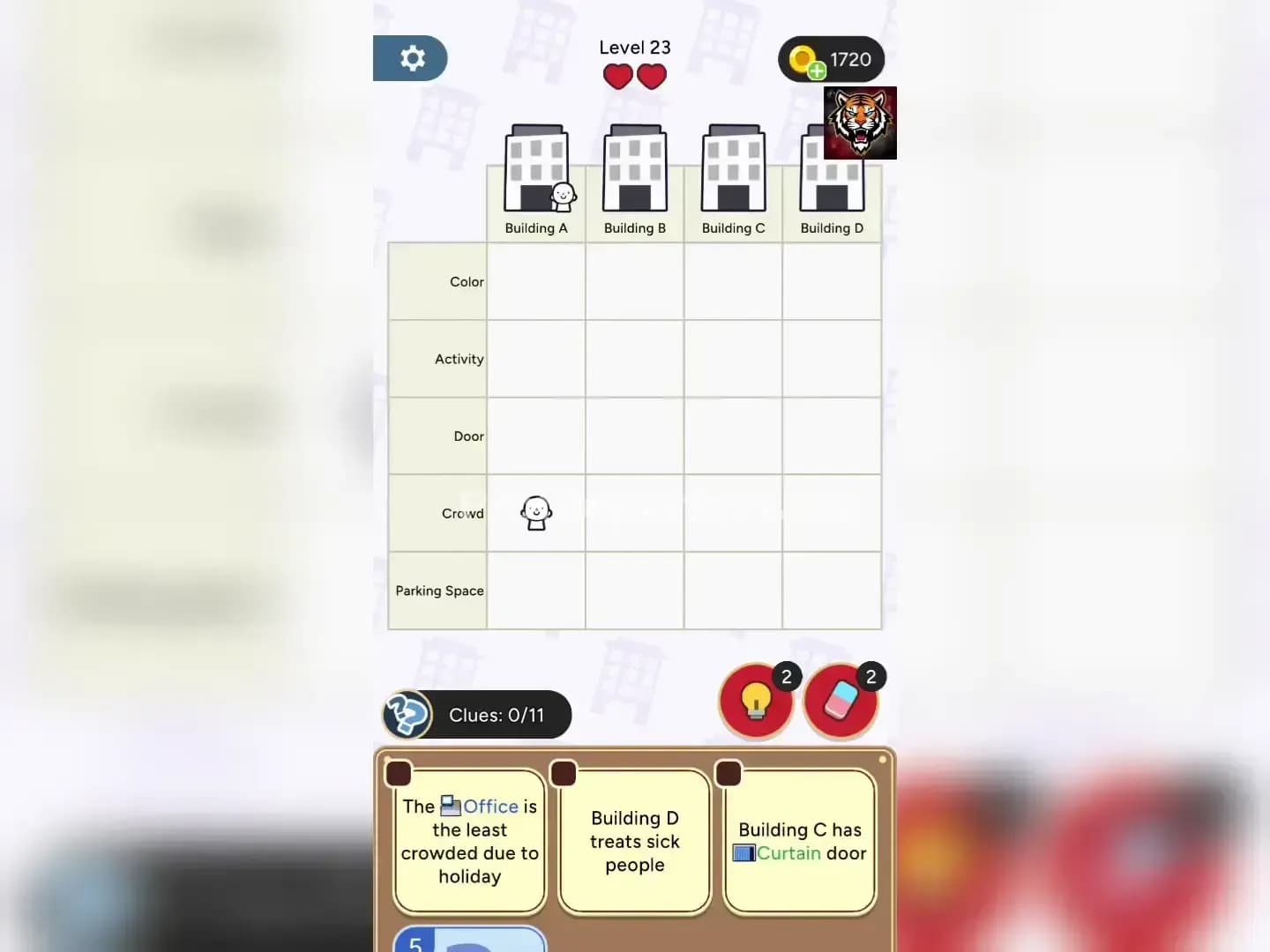
A wrong tap costs a life; lose both and the level restarts, not the whole app. That's a bounded, predictable consequence — not the anxiety of a single mistake ending everything, but not a consequence-free free-for-all either. For some players, truly unlimited guessing feels aimless, while a strict one-strike system feels paralyzing. Two lives sits in an oddly comfortable middle.
And when a level genuinely stalls, boosters that reveal a cell or solve a clue exist as an actual off-ramp — a way to end a stuck moment on a solved note instead of a frustrated one, without treating that as cheating.
Here's the actual thing I do, not an inspirational version of it:
This isn't a faster way to solve a level. It's a way to have a complete, non-frustrating turn even on a day when a full sit-down session isn't happening.
None of this is a claim that Profile Perfect is "good for ADHD," and I'd be skeptical of any puzzle app that said so about itself. It's just a well-paced logic game where the absence of a timer, the persistence of the clue list, the visible grid states, the built-in starting anchors, and the shape of its two-life consequence system happen to remove a specific kind of friction — for some players, on some days. If that's the kind of low-pressure puzzle you're after, it's worth fifteen minutes. If you're looking for something that manages attention or mood more broadly, that's worth a conversation with an actual professional, not a blog post about grid puzzles.