
Profile Perfect and Sudoku both reward logic without guessing. See how clue based deduction compares to number placement, plus a full room puzzle walkthrough.

Guide By Liam Stone
Published on July 6, 2026
Liam Stone has played Profile Perfect since the app first launched on the Apple App Store. He spotted its potential early, and that early bet turned into hundreds of hours spent solving levels, testing clue logic, and documenting answers for other players. Liam runs the YouTube channel Puzzle Game Answer where his puzzle walkthroughs have earned over 935,000 views and a growing community of more than 800 subscribers. He covers a wide range of mobile puzzle games beyond Profile Perfect, giving him firsthand experience with how these games design clues, structure levels, and trip up even experienced players. Every guide on this site reflects that hands on experience. Liam plays each level himself, verifies every answer against the in game grid, and rewrites confusing clues into plain language so you don't need to guess. If you want more of his walkthroughs, subscribe to his channel.
Loading calendar...
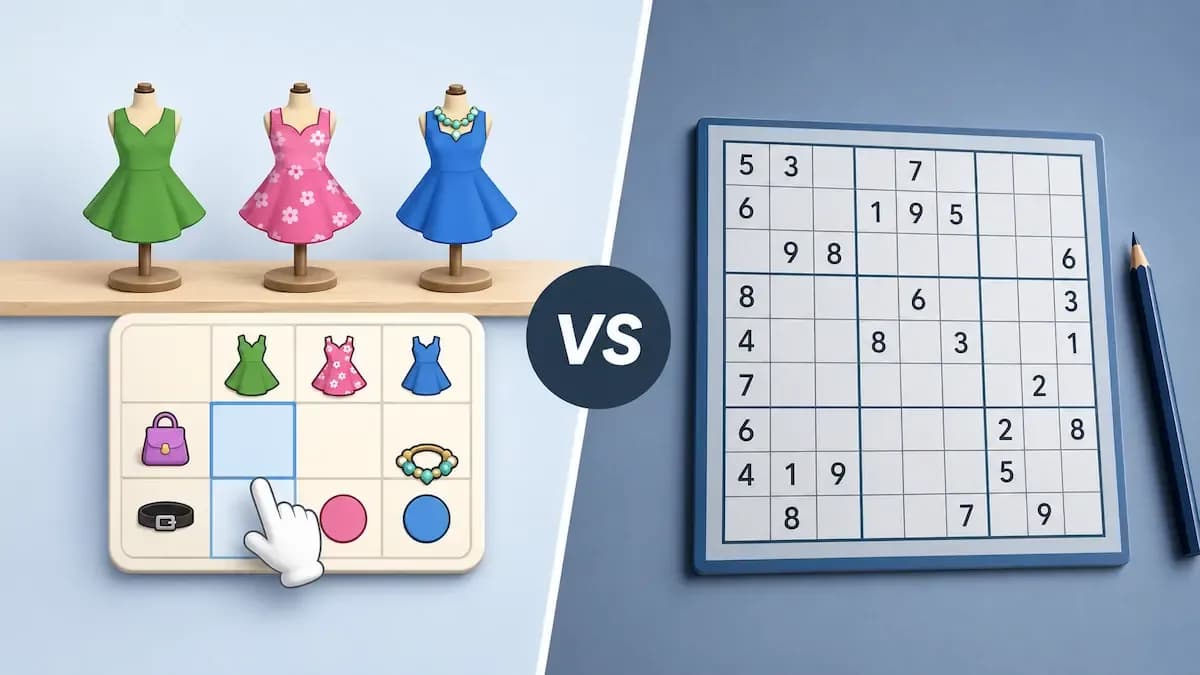
Puzzle apps have become part of a lot of daily routines. People solve a quick brain teaser on the train, before bed, or during a coffee break. Sudoku helped start that habit decades ago, and it still shows up in newspapers, apps, and puzzle books everywhere. Profile Perfect belongs to a newer wave of puzzle games that ask you to read, connect, and deduce rather than fill in numbers. Both games reward careful thinking and punish guessing. Beyond that, they work in pretty different ways. Here is how they compare, and why each type of logic has its own appeal.
Sudoku gives you a nine by nine grid split into nine smaller boxes. Every row, column, and box needs the digits one through nine, each used exactly once. The rules never change from puzzle to puzzle. What changes is the difficulty, based on how many numbers you start with and how deep the deduction has to go before the grid opens up.
Profile Perfect works with subjects and traits instead of numbers. A level might give you three dogs and ask you to match each one with a name and a breed. Another level might give you a set of rooms and ask you to work out each room's type, wall pattern, and floor. You read a list of clues, some direct and some based on position or elimination, then tap the grid to lock in each answer. A wrong tap costs a life, and losing both lives sends you back to the start, so reading carefully matters just as much as thinking clearly.
Sudoku rewards you for spotting patterns across rows, columns, and boxes at the same time. You track where a number can and cannot go, often several numbers at once. Over time your eyes learn to scan a grid quickly and notice which cells are forced.
Profile Perfect asks for a different kind of attention. You read sentences, translate descriptions into facts, and hold several relationships in your head at once. A clue about food tools points to a kitchen. A clue about who sits next to whom narrows down positions. The game trains comprehension and deduction together, not just number placement.
A Sudoku puzzle usually keeps a steady rhythm from start to finish. You fill in the easy cells first, slow down as the grid gets harder, then speed up again near the end as fewer options remain.
Profile Perfect has no timer, so the pace depends entirely on you. Each level plays out like a small investigation. One clue gives you a foothold, another confirms a relationship, and the picture builds piece by piece. The two life system rewards you for reading carefully rather than for moving fast.
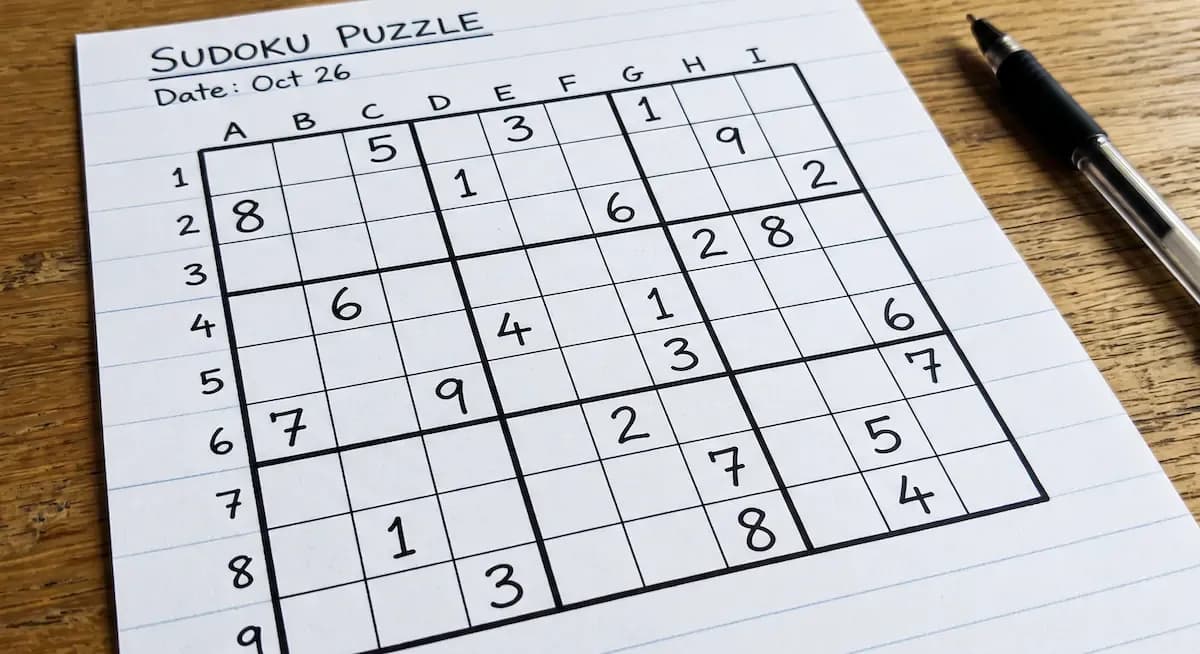
Sudoku's visual language stays simple on purpose. Nine boxes, nine rows, nine columns, all filled with digits. Nothing distracts from the numbers themselves.
Profile Perfect leans into its file and profile theme. Levels show named subjects such as dogs, rooms, dresses, or people, each with a small set of traits to fill in. The grid still works like a classic logic puzzle, but the theme gives it a story feel instead of a plain math feel.

If you like pure structure, a fixed rule set, and the satisfaction of a grid that resolves through math alone, Sudoku will always feel right. It also travels well, since you can play it on paper without a screen.
If you enjoy detective shows, mystery novels, or anything with a bit of story attached to the thinking, Profile Perfect gives you that same feeling in small doses. You get a scenario, a set of characters or objects, and clues written like real observations rather than plain math statements.
Early levels in Profile Perfect stay small, often with just two or three subjects and two or three traits. That makes them a good entry point even if logic puzzles are new to you. Read every clue slowly before tapping anything, since some clues only make sense once you connect them with another clue.
Level 3 shows how a small level comes together. It gives you two rooms, Room A and Room B, and three traits to work out for each one, room type, wall pattern, and floor.

Room B's floor is tiled from the start, so that answer sits locked in before you even begin.
One clue says tools for making food sit in Room B. That points straight to a kitchen, so Room B's room type is kitchen.
Another clue says the room beside the tiled floor has a solid colored floor. Room B holds the tiled floor, so Room A gets the solid floor.
A third clue says the room next to the kitchen is where people sleep. Room B is already the kitchen, so Room A is the bedroom.
A fourth clue says the bedroom has a floral pattern on its wall. Room A is the bedroom, so its wall pattern is floral.
That leaves striped for Room B's wall, the only pattern left once floral goes to Room A.
Four clues, two rooms, and every answer follows from the one before it. No guessing needed anywhere, which is exactly the kind of solving Profile Perfect is built around.
Sudoku is pure structure. Profile Perfect is structure wrapped in a small story. Neither one beats the other, they just ask your brain to work in different ways. If you already love Sudoku, Profile Perfect gives you a similar sense of order, but through reading and reasoning instead of numbers. Try a few early levels and see which style of thinking fits your day.