A visual guide to Profile Perfect's logic puzzles, showing how color, shape, accessory, material, decoration, expression, and pattern help you solve grids by sight before reading a single clue.

Guide By Liam Stone
Published on July 7, 2026
Liam Stone has played Profile Perfect since the app first launched on the Apple App Store. He spotted its potential early, and that early bet turned into hundreds of hours spent solving levels, testing clue logic, and documenting answers for other players. Liam runs the YouTube channel Puzzle Game Answer where his puzzle walkthroughs have earned over 935,000 views and a growing community of more than 800 subscribers. He covers a wide range of mobile puzzle games beyond Profile Perfect, giving him firsthand experience with how these games design clues, structure levels, and trip up even experienced players. Every guide on this site reflects that hands on experience. Liam plays each level himself, verifies every answer against the in game grid, and rewrites confusing clues into plain language so you don't need to guess. If you want more of his walkthroughs, subscribe to his channel.
Loading calendar...
Word puzzles ask you to think in language. Number puzzles ask you to think in math. But a whole group of players solve best when they think in pictures, colors, shapes, faces, patterns. If you're the person who remembers a stranger by their jacket instead of their name, or you spot the one mismatched sock in a drawer before anyone else notices, you already think the way a visual puzzle wants you to think.
Daily puzzle habits have grown past word grids over the past couple of years. Players now split their time between language puzzles, number puzzles, and image based deduction games, and a good chunk of that growth comes from people who never liked staring at text clues in the first place. They want a grid they can scan with their eyes before they read a single word.
Profile Perfect sits right in that space. Every level hands you a set of subjects, a set of traits, and a stack of clues, but a huge share of those traits are things you see rather than things you read, like color, shape, accessory, material, decoration, expression, and pattern. This piece walks through how those visual traits work, then builds a gallery straight from five levels I've actually played, showing exactly how a glance at the grid gets you halfway to the answer.
Most logic puzzles hide their structure behind sentences. Profile Perfect flips that. Because so many traits are visual, you can scan a row of subjects and immediately rule out combinations before you read a single clue. A red umbrella and a striped umbrella are never going to get confused with each other. Neither will a purple mannequin and a brown one.
This matters for how you approach the game. If you read every clue first and treat the visuals as decoration, you're solving the hard way. If you scan for color and pattern first, then use the clues to lock in position and story details, you're solving the way the puzzle was actually built.
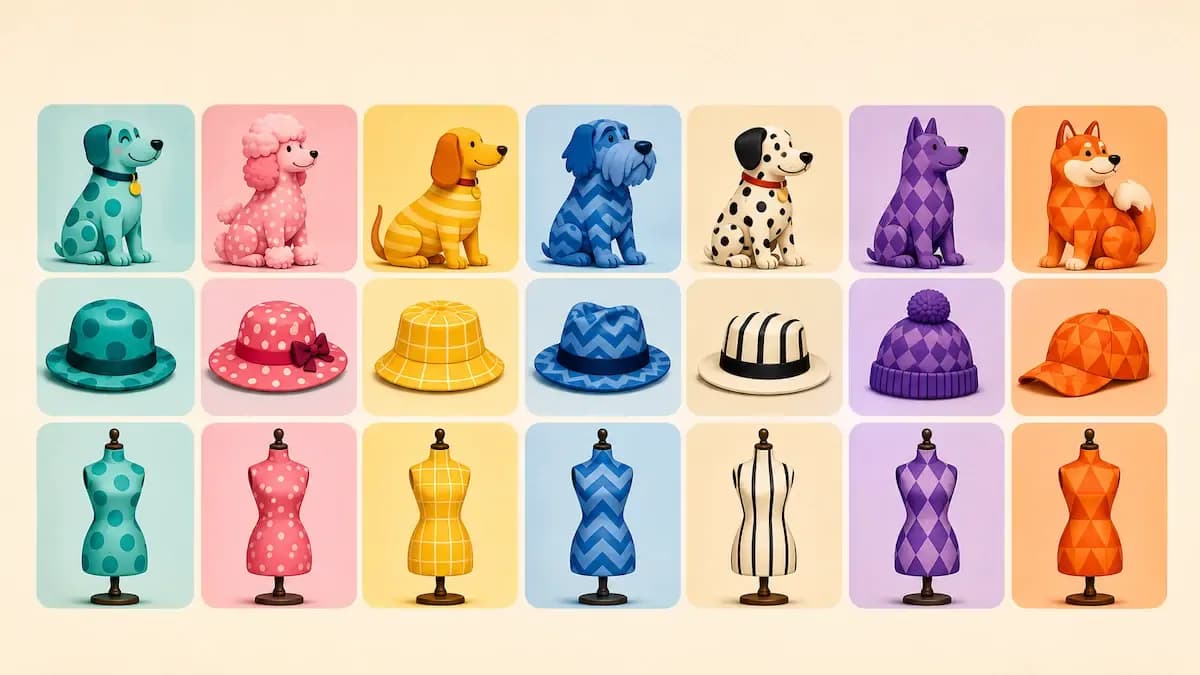
Across the levels I've played, seven visual traits show up again and again, namely color, shape, accessory, material, decoration, expression, and pattern. Each one does a slightly different job in the grid.
Color is the fastest trait to scan. A grid full of colored subjects, hats, lipsticks, umbrellas, lets you sort by hue before you read anything. Shape covers things like ear shape on a dog or head shape on a key, small physical details that separate near identical subjects. Accessory adds a prop, a bottle, a crown, a pair of goggles, that often tells you who a subject belongs to or what they're doing. Material changes the texture of the object itself, wood versus gold, plastic versus fiberglass, and frequently ties into a subject's price or durability. Decoration dresses up a subject's surroundings, like a lantern or a neon sign attached to a bar. Expression puts a feeling on a face, happy, angry, drooling, sleepy, and gives you a human read on the puzzle. Pattern covers repeating designs like polkadot, checkered, striped, or zigzag, and pairs naturally with color to make a subject instantly recognizable.
None of these traits work alone. The puzzle stacks two or three of them onto the same subject, then asks you to track how they move together across the grid.
This is the part that matters most for a visual thinker. Instead of describing the traits in the abstract, here are five levels I solved, shown as they'd appear in game, each with a caption that walks straight from the image to the deduction.
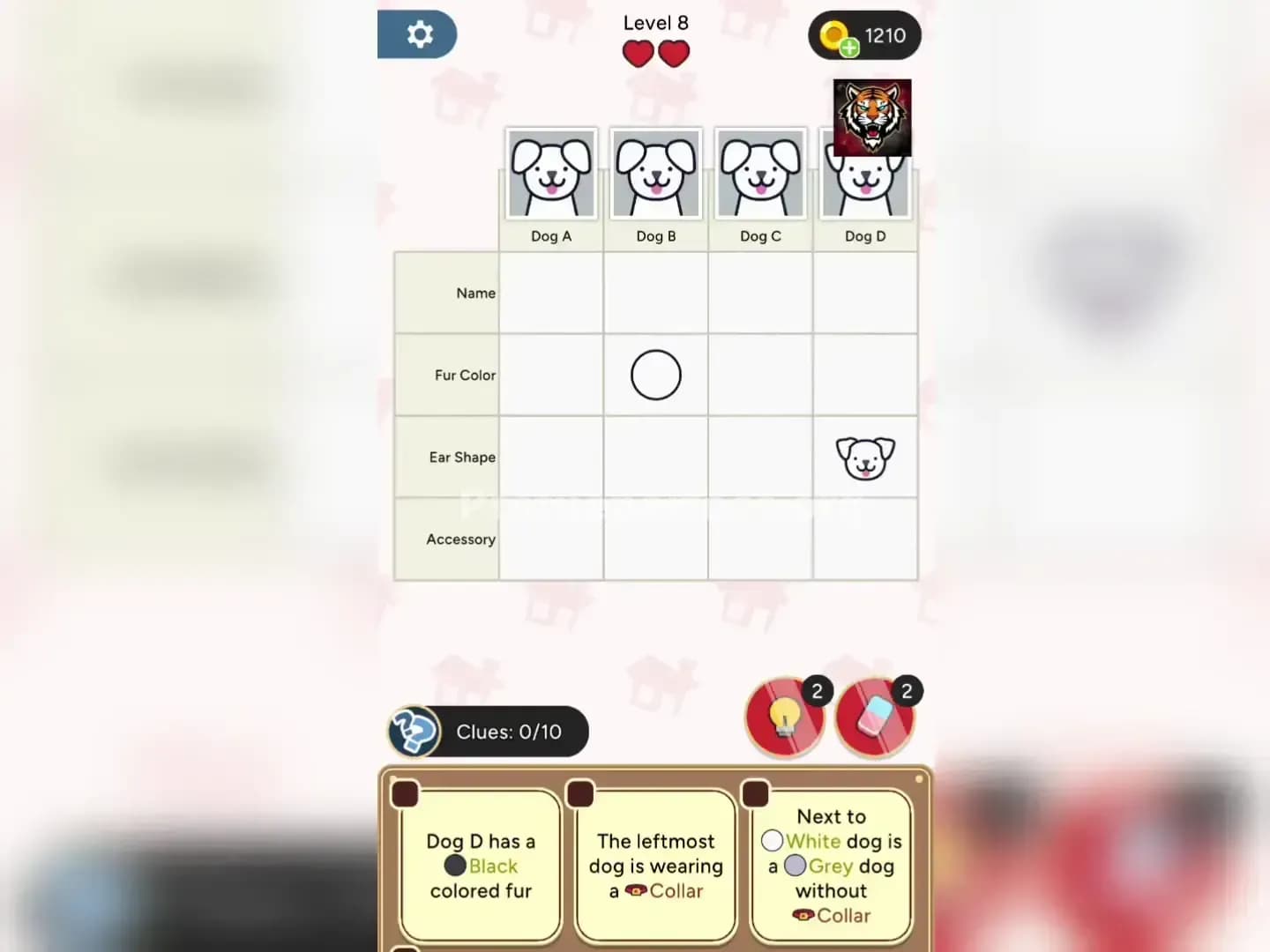
Four dogs sit side by side. The dog on the far left wears a collar, and a closer look shows its ears point in a clean V shape. That combination locks in Hugo before you've read a single clue about him by name. Move one space to the right and the fur turns white. That dog sits beside a grey dog with rounded, rose shaped ears and no collar at all, so you already know these two are Bailey and Rocky just from color and ear shape. The dog on the far right wears a crown instead of a hat or collar, and its fur reads solid black. That's Luna, and you found her without touching the clue list.
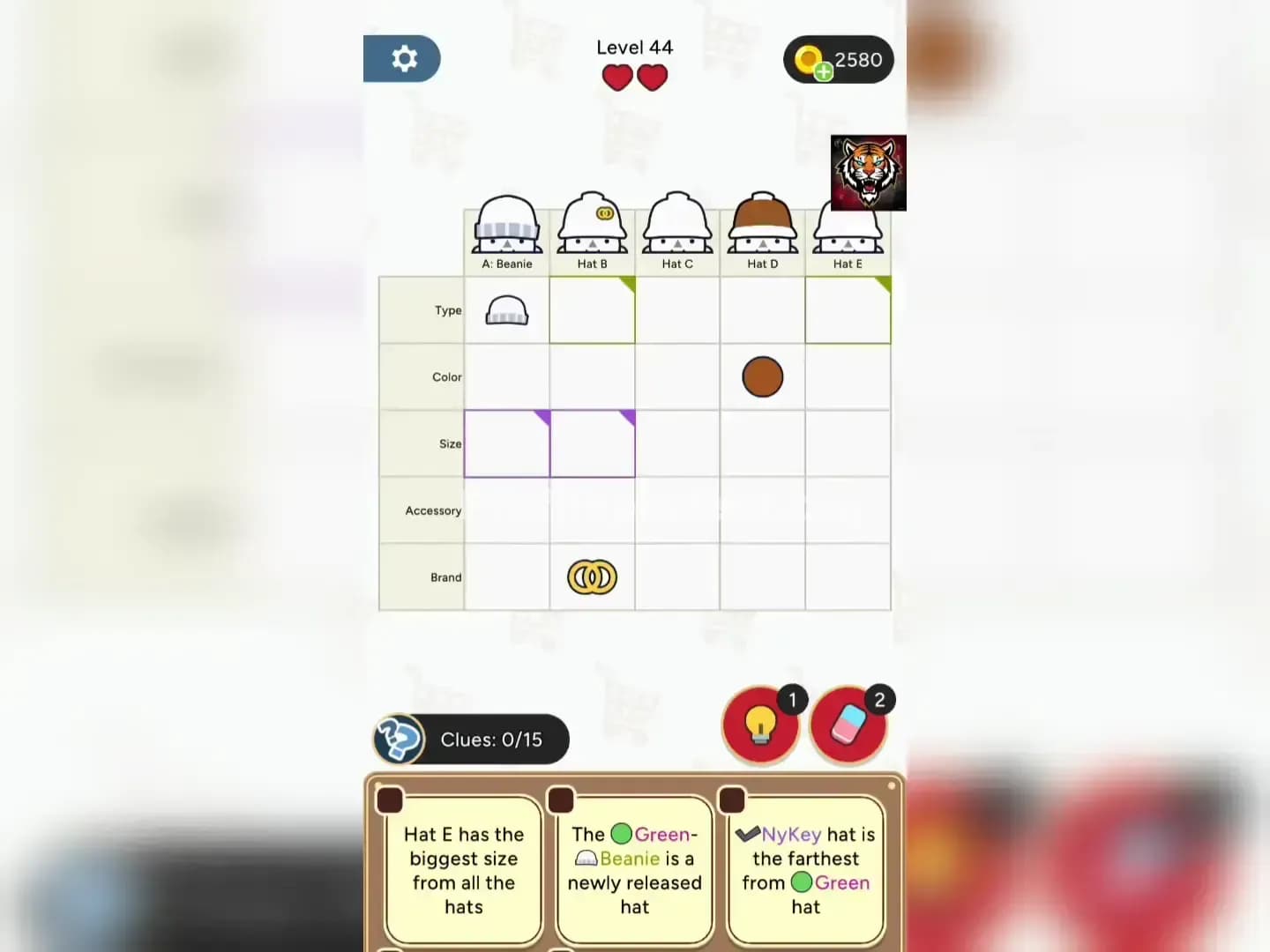
Five hats line up by size and color. A green beanie sits on the left with a pair of goggles clipped on, a combination built for outdoor wear, not a formal event. The middle hat is a small black cap holding nothing but a metallic pin. On the far right, a red bucket hat towers over the rest in extra large, tied off with a ribbon. Before you check a single brand name, color and size already sort three of the five hats into place.
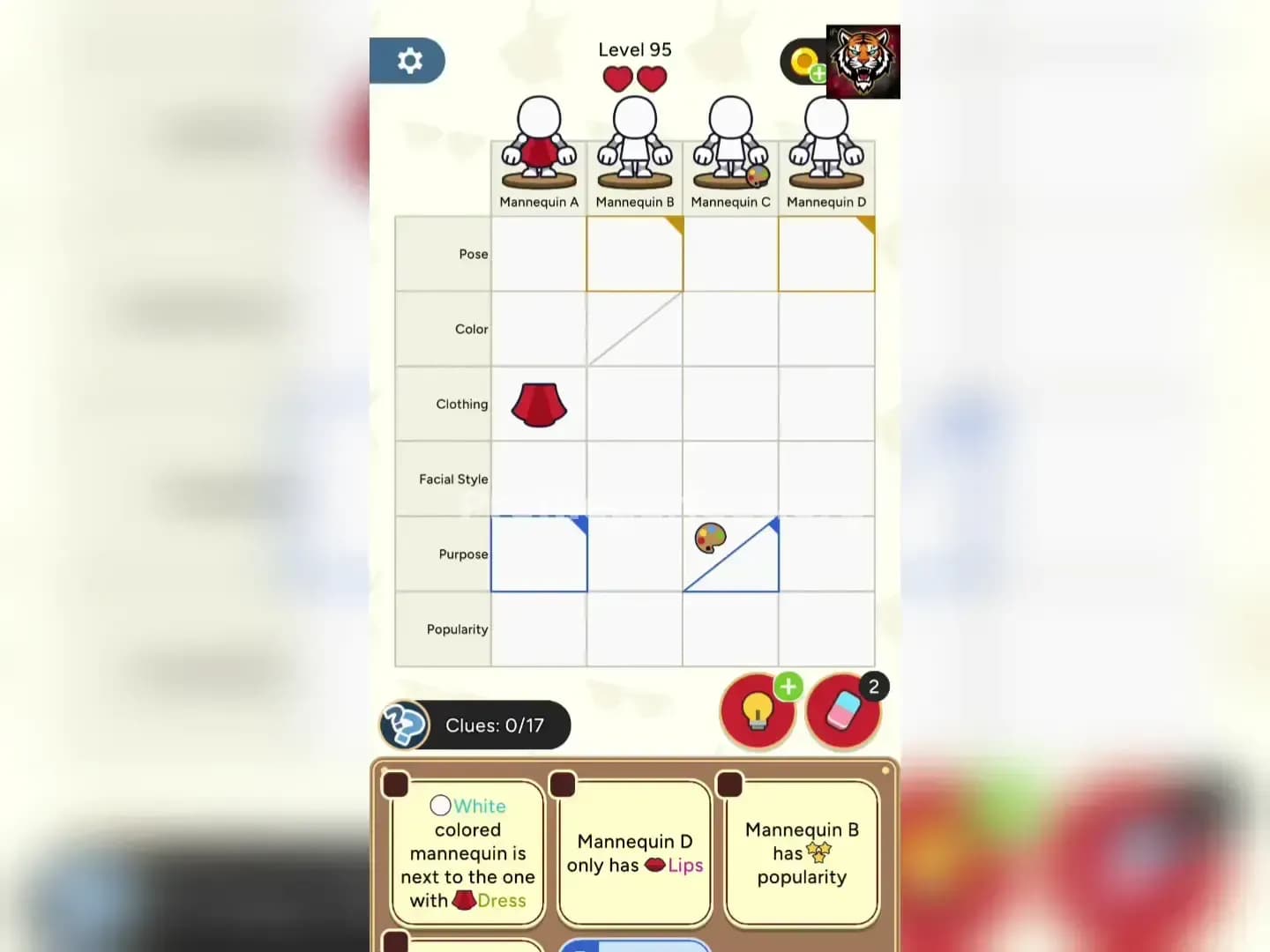
Four mannequins strike different poses and wear different faces. A brown mannequin shrugs in a dress, its face fully masked, a setup built for medical display. Beside it, a pale mannequin waves hello, its face showing only the eyes, dressed for tailoring work where the clothes matter more than the face. A purple mannequin stands neutral in a crop top with its full face on show, doing double duty for art and medical use. On the end, a red mannequin also waves hello, but in a swimsuit with only the lips detailed, built for photography. Pose and facial style split these four apart long before purpose enters the picture.
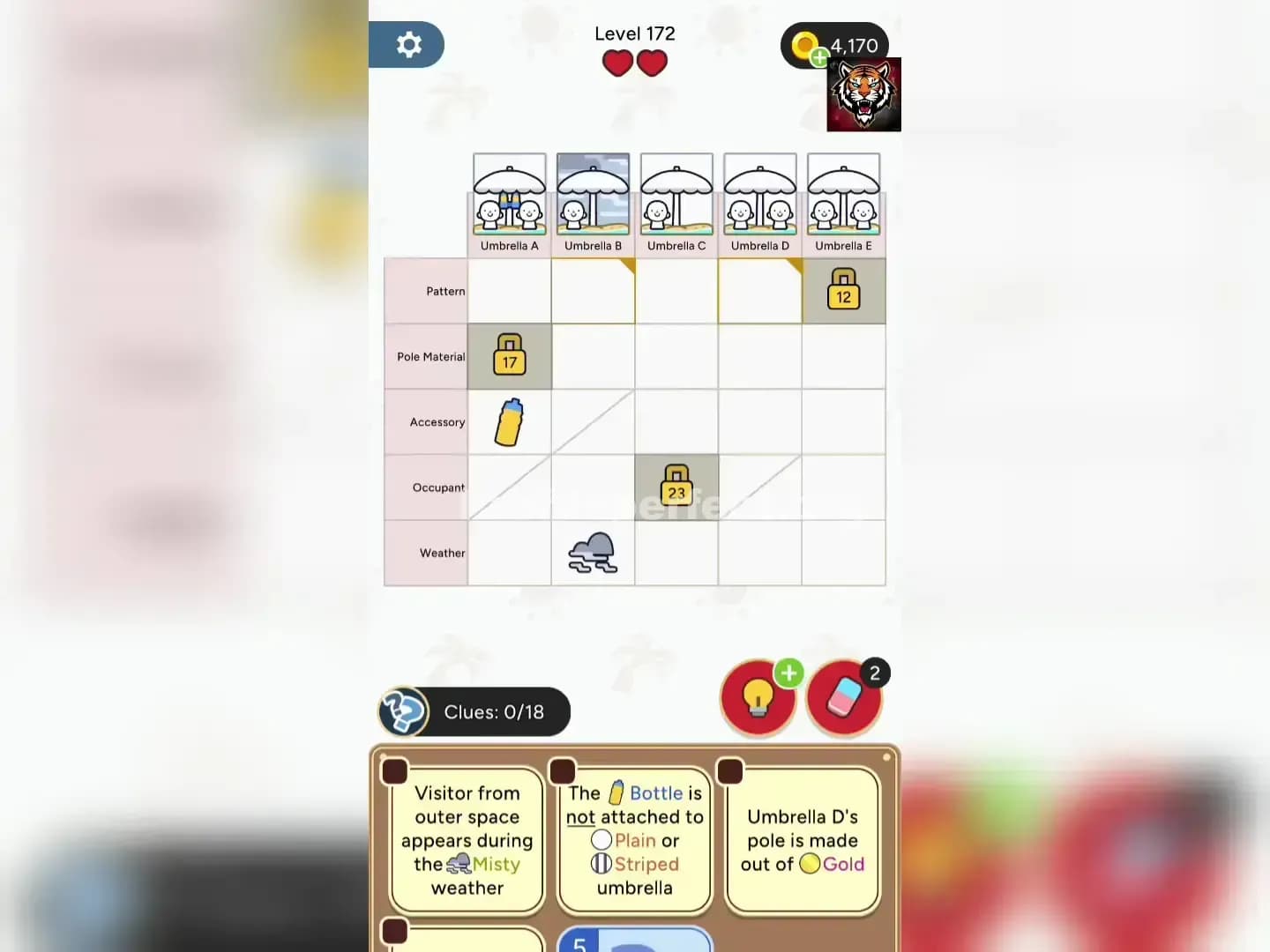
Five umbrellas each shelter someone different. A polkadot umbrella on the left has a wooden pole and a bottle tucked against it, sturdy enough for whoever's riding out a storm underneath. A checkered umbrella nearby has built in lights, a useful detail for a lifeguard watching the beach on a windy day. On the far right, a striped umbrella plays music through a small speaker, keeping a couple dry in the rain. Pattern and accessory point straight at who's actually standing under each one.
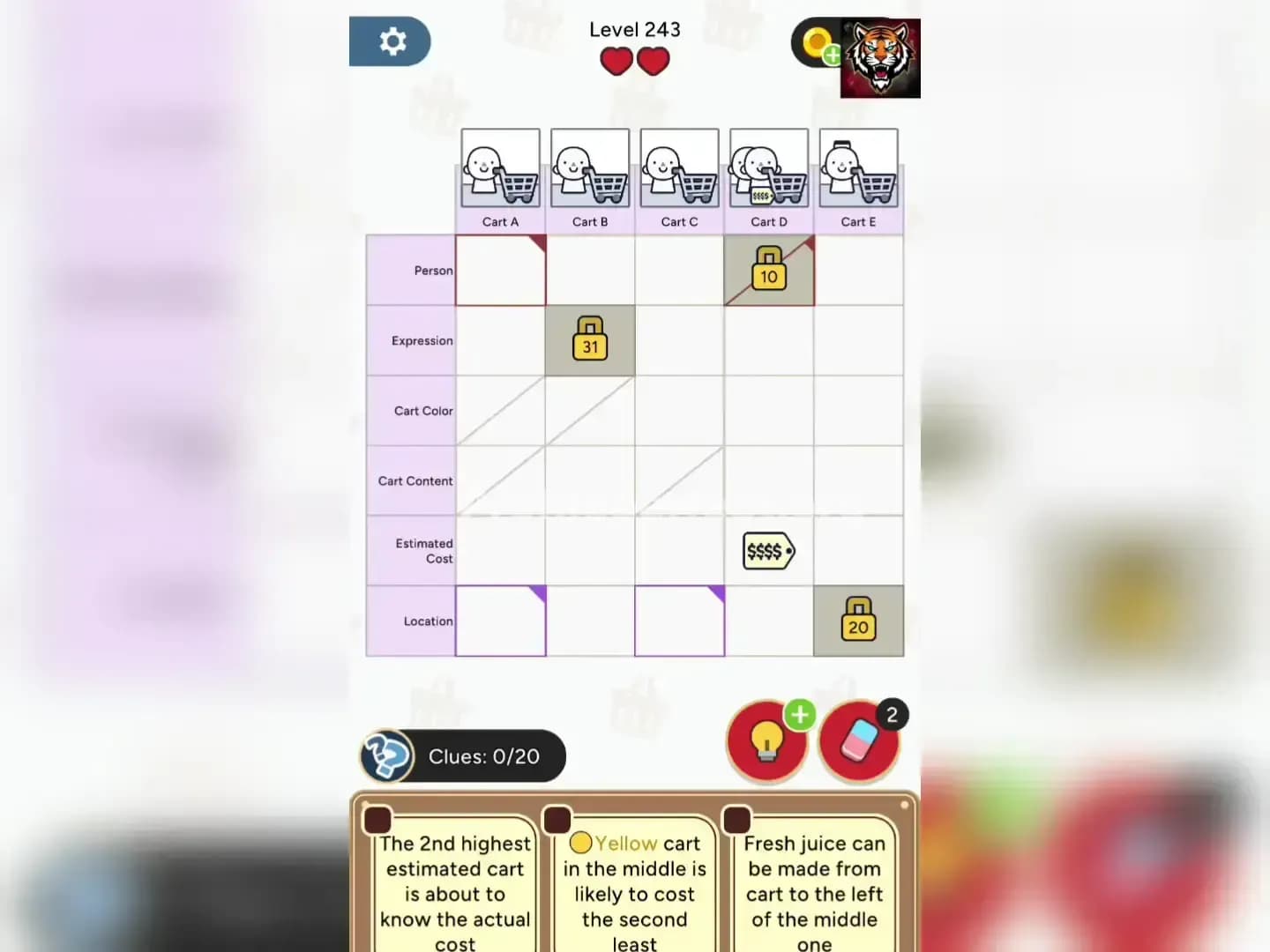
Five shopping carts, five very different faces. One cart is orange and red, and the person pushing it looks half asleep on the way to the restroom. Another cart is black and green, packed with fresh fruit, and its owner is the only one smiling in the whole row, happy about both the produce and the biggest bill of the group. A yellow cart nearby holds a baby and a bottle of milk, and the expression on that shopper's face says everything about a rough trip to the store. Cart color and facial expression get you most of the way to guessing what's inside before you read the item list.
Visual traits get their real power once you connect them to position. A clue rarely says "the red cart is happy." It says the happy person sits next to the one bored of waiting, or the checkered umbrella sits beside the gold pole. That means every visual detail you spot also tells you something about a neighbor.
This is where scanning pays off twice. First you group subjects by shared color, pattern, or material. Then you check which of those groups sit next to each other in the row. A puzzle with a striped umbrella and a gold pole umbrella becomes solvable the moment you notice the checkered one has to sit between them, because you already scanned for pattern and material as separate facts before the clue even connected them.
Start every level with a visual pass before you read the clues in order. Look for color first, since it splits the grid fastest. Then look for pattern and shape, since those often separate subjects that share the same color. Only after that should you bring in accessory, material, decoration, and expression, since those traits tend to answer smaller, more specific questions once the big groups are already sorted.
Expression deserves its own moment of attention. A happy, angry, sleepy, or drooling face isn't just flavor text. It usually maps directly to a clue about mood, position, or what that subject is holding. Treat a face the same way you'd treat a color swatch, as a fast visual key you can match against the clue list.
Once your eyes have done that first pass, the clues stop feeling like a wall of text. They read more like confirmations of what you already suspected from looking at the grid.
Visual thinkers have always been part of the puzzle audience, but they've had fewer games built specifically around how they process information. A grid full of colors, shapes, and expressions gives that audience a puzzle that rewards the way they already look at the world, one glance, one pattern, one mismatched detail at a time.
If you've read this far and you already picture the dog row or the umbrella row in your head, you're the exact player this format was built for. Open a level, scan before you read, and see how far your eyes get you before the clues even start talking.