
Learn how to solve Profile Perfect weather, season, and time-of-day clues fast with examples from Levels 14, 70, 164, 176, 218, 220, 282, 348, 366, and 400.


Guide By Liam Stone
Published on June 15, 2026
Liam Stone has played Profile Perfect since the app first launched on the Apple App Store. He spotted its potential early, and that early bet turned into hundreds of hours spent solving levels, testing clue logic, and documenting answers for other players. Liam runs the YouTube channel Puzzle Game Answer where his puzzle walkthroughs have earned over 935,000 views and a growing community of more than 800 subscribers. He covers a wide range of mobile puzzle games beyond Profile Perfect, giving him firsthand experience with how these games design clues, structure levels, and trip up even experienced players. Every guide on this site reflects that hands on experience. Liam plays each level himself, verifies every answer against the in game grid, and rewrites confusing clues into plain language so you don't need to guess. If you want more of his walkthroughs, subscribe to his channel.
Loading calendar...
Some Profile Perfect clues are clean little freebies. “Forecast B is Los Angeles.” Great. Tap it, lock it, move on. But then the game starts throwing out clues about red leaves, after-dark scammers, breakfast bars, hot weather, snow fields, or bees refusing to work in the rain, and suddenly the loop gets much crunchier.
That’s where weather, season, and time-of-day clues come in. These clues look simple, but they often hide an extra step of common knowledge. Autumn means falling leaves. Dawn means sunrise. After dark means night. Lunch time points toward midday. A hot sunny day might affect honey production. A storm nearly striking someone probably maps to stormy weather.
The trick is not to treat these as flavor text. In Profile Perfect, flavor text is often the whole clue.
Profile Perfect is a logic-grid puzzle game, so every level is built around subjects and traits. The subjects are the columns: Forecast A, Flower B, Bath C, Paraglider D, Stall E, and so on. The traits are the rows: weather, season, active time, mood, activity, temperature, price, location, or purpose.
Weather and time clues become tricky because they don’t always name the trait directly. Instead of saying “Flower D is Autumn,” Level 70 says Marigold blooms when red leaves are falling. You’re expected to know that red leaves falling points to autumn. That’s not a hard fact in the academic sense, but in puzzle logic, it’s a clean association.
I like to handle these clues with one rule:
Weather/time is its own logic row: season → activity → mood/effect → position.
That means you don’t just read “winter” or “night” as a label. You ask what that condition causes, who it affects, where it sits, and what other trait it unlocks.
Before tapping anything, rewrite the clue in plain puzzle language.
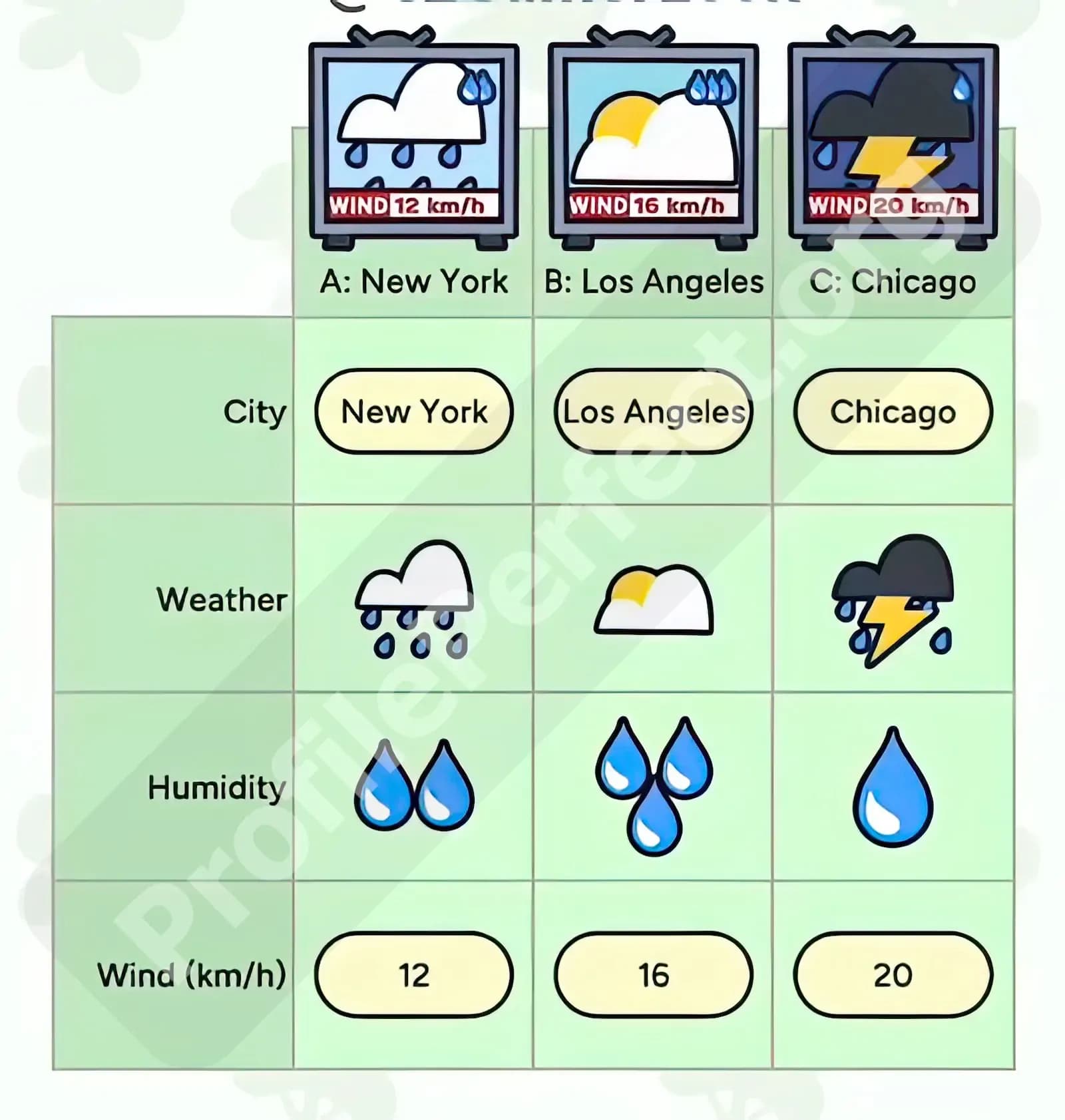
In Level 14, the game uses a forecast setup: New York, Los Angeles, and Chicago must be matched with weather, humidity, and wind speed. “Chicago is predicted to have a Thunderstorm” is direct. But “Thunderstorm city has the least humidity” forces you to link weather to a numbered value. Once Chicago becomes Thunderstorm, Chicago also becomes the least humid city.
That’s the weather clue loop in its simplest form:
Weather → measurement → subject.
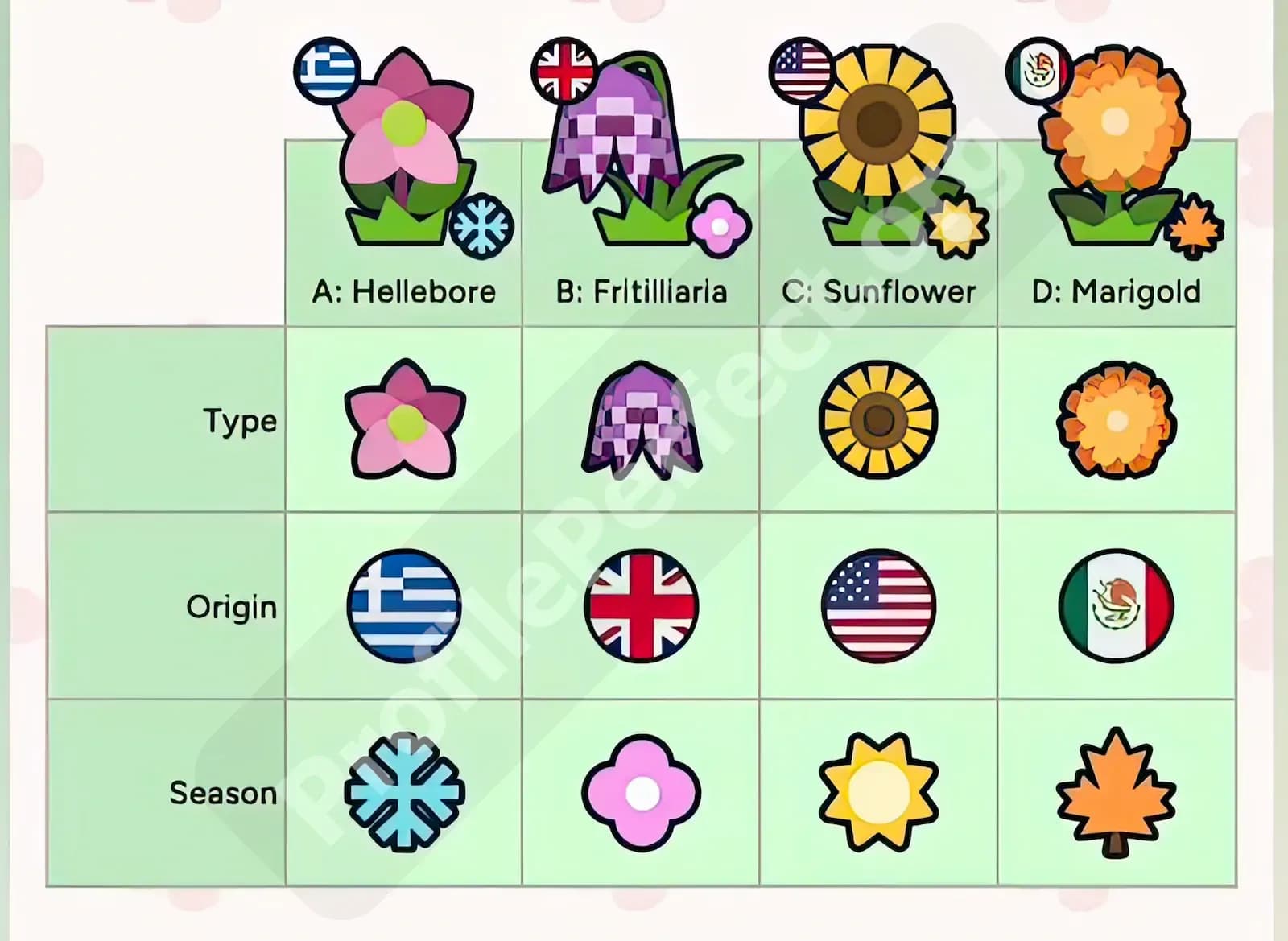
Level 70 makes the common-knowledge step more obvious. Marigold blooms when red leaves are falling, so Marigold equals Autumn. Sunflower gets sunlight during Summer, so Sunflower equals Summer. Hellebore, also called Christmas Rose, blooms in the cold season, so Hellebore equals Winter. None of these clues are difficult once translated, but if you skip that translation step and just stare at the grid, the level feels weirdly slippery.
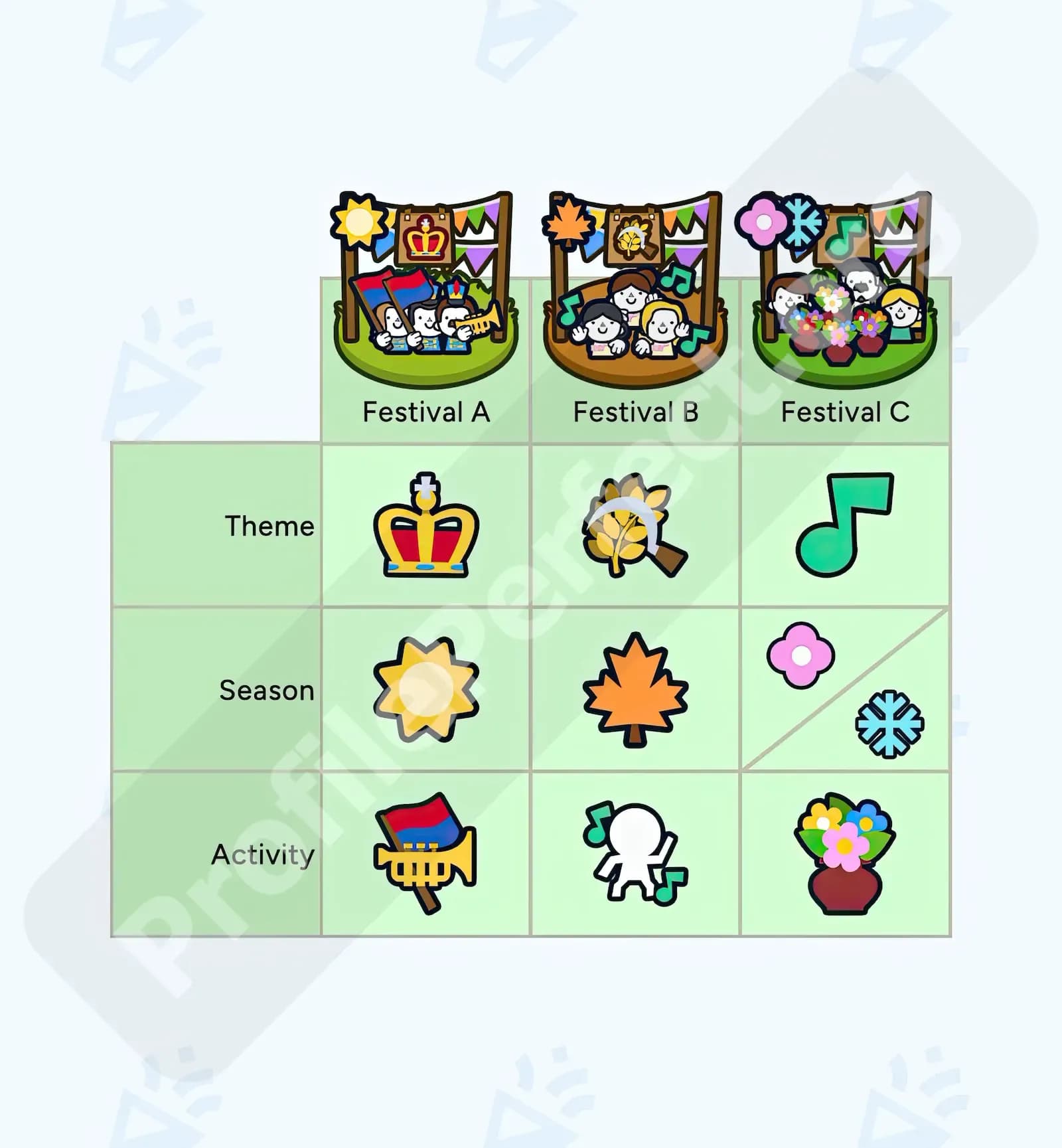
Level 164 is a great example because it mixes festival themes, seasons, and activities. The Spring festival is about arranging flowers, so Spring links to Flower. The festival next to the Flower festival is held during Autumn, so now Flower also gives you a position clue. Song is held twice a year, which explains why Festival C can carry Spring and Winter. Harvest is not done during Summer, which pushes Harvest away from the Summer festival.
This is where many players tank a life. They see “Harvest” and instantly want to pair it with Autumn. That’s a reasonable guess, but Profile Perfect punishes reasonable guesses when they’re not fully proven. The safer play is to build the chain:
Spring → Flower → neighboring festival → Autumn → not Summer → Harvest.
That’s a banger deduction path because it turns one seasonal clue into several locked cells without guessing.
Time-of-day clues often do double duty. They tell you when something happens, but they also help with left-right placement.
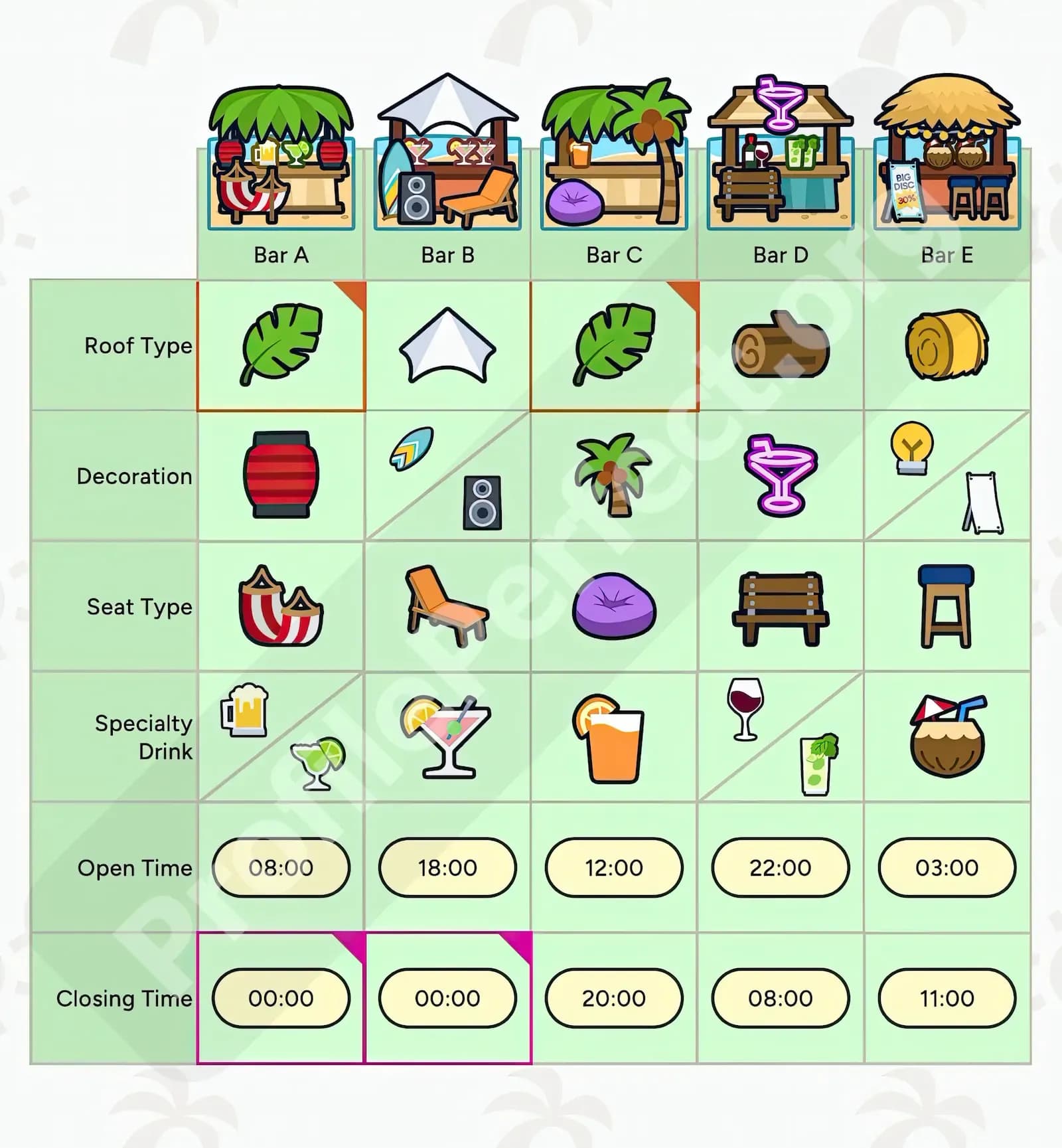
Level 176, the beach bar level, is packed with time logic. The bar with stools only serves breakfast and brunch, so it closes at 11:00. The lunch-time bar has a tree decoration, so 12:00 links to Coconut Tree. Bar D opens before midnight, which means 22:00, not 00:00 or morning. Bar E opens five hours after Bar D, turning 22:00 into 03:00. The Cocktail bar opens at 18:00 because people line up before 18:00.
This level looks busy because there are roof types, decorations, seats, drinks, open times, and closing times. But the time row is the backbone. Once you lock breakfast, lunch, evening, night, and closing hours, the rest of the grid starts folding in on itself.
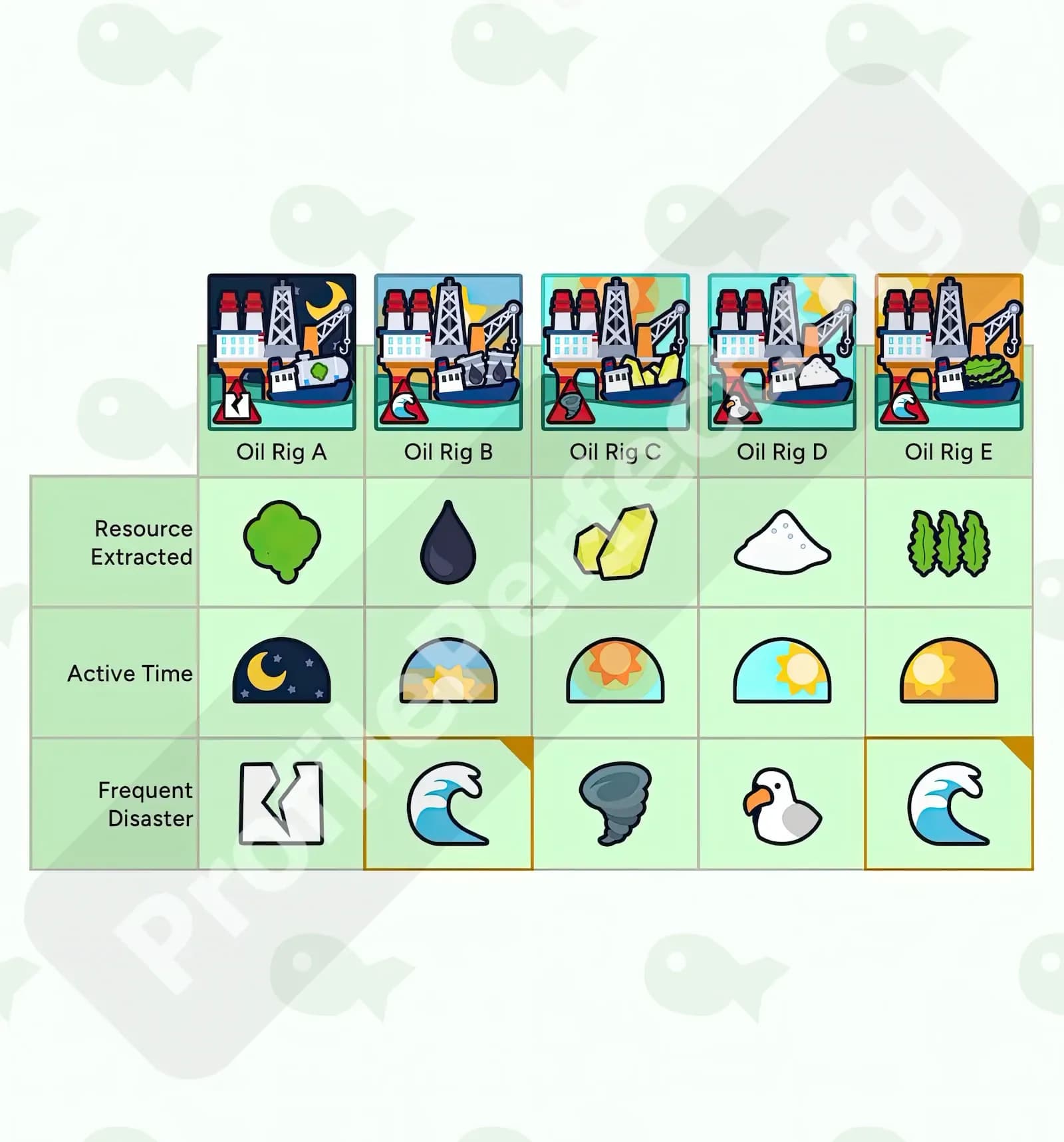
Level 348 does something similar with oil rigs. Noon goes to the middle oil rig. Natural Gas works overtime at Night. The right neighbor of the Morning rig works half a day later, which points to Evening. Again, don’t read time as decoration. Time is a spatial clue.
Weather clues often affect reactions, productivity, or danger.
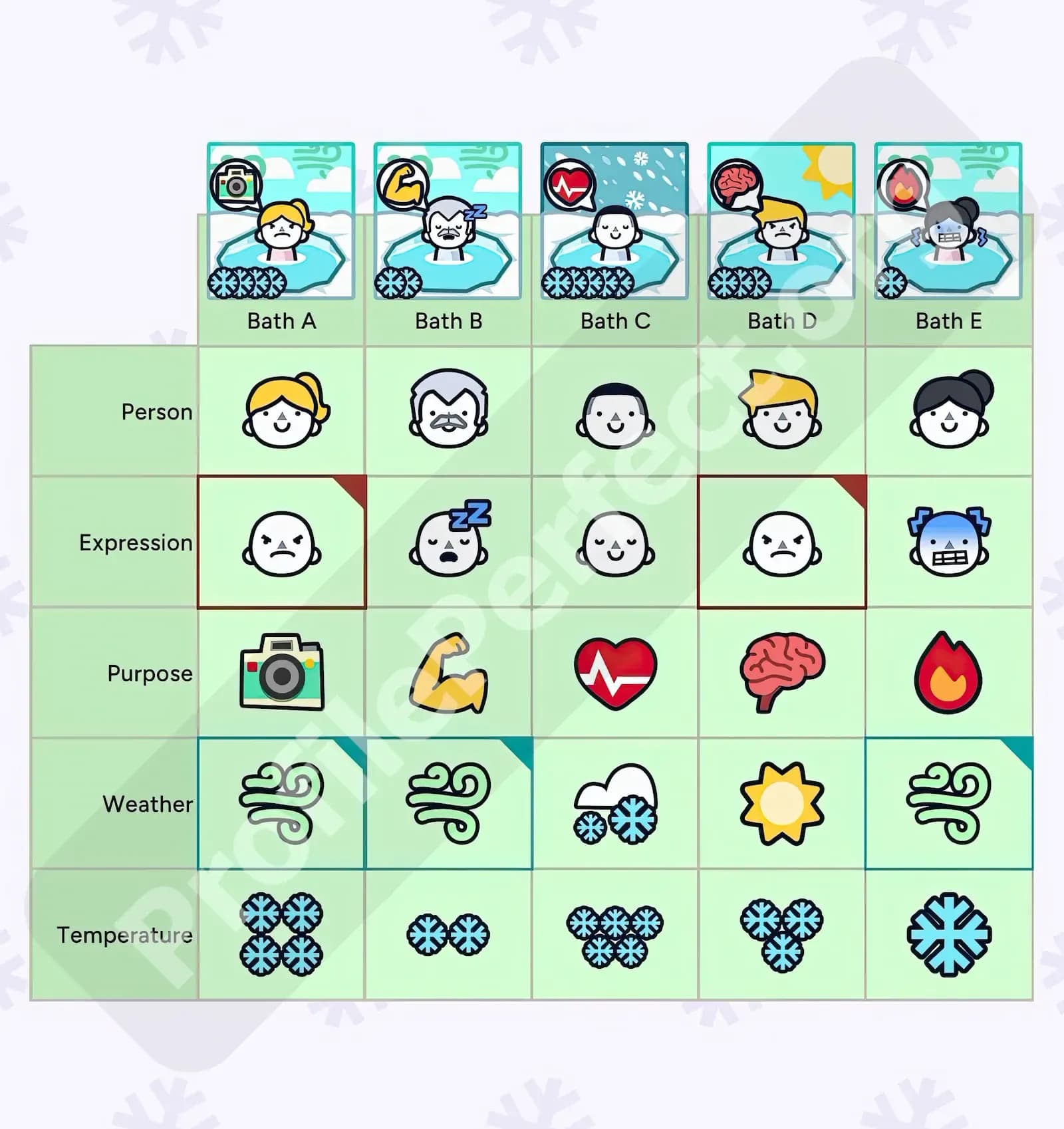
Level 220 uses baths, weather, expression, purpose, and temperature. Blizzard is not at the Fat Burning bath. Baths next to the Sleeping person have different weather conditions: Windy and Blizzard. Sunny is attached elsewhere, and temperature values help sort the row. In this kind of puzzle, weather isn’t just “what the sky looks like.” It separates neighboring columns and helps explain why someone is shivering, calm, determined, or sleeping.
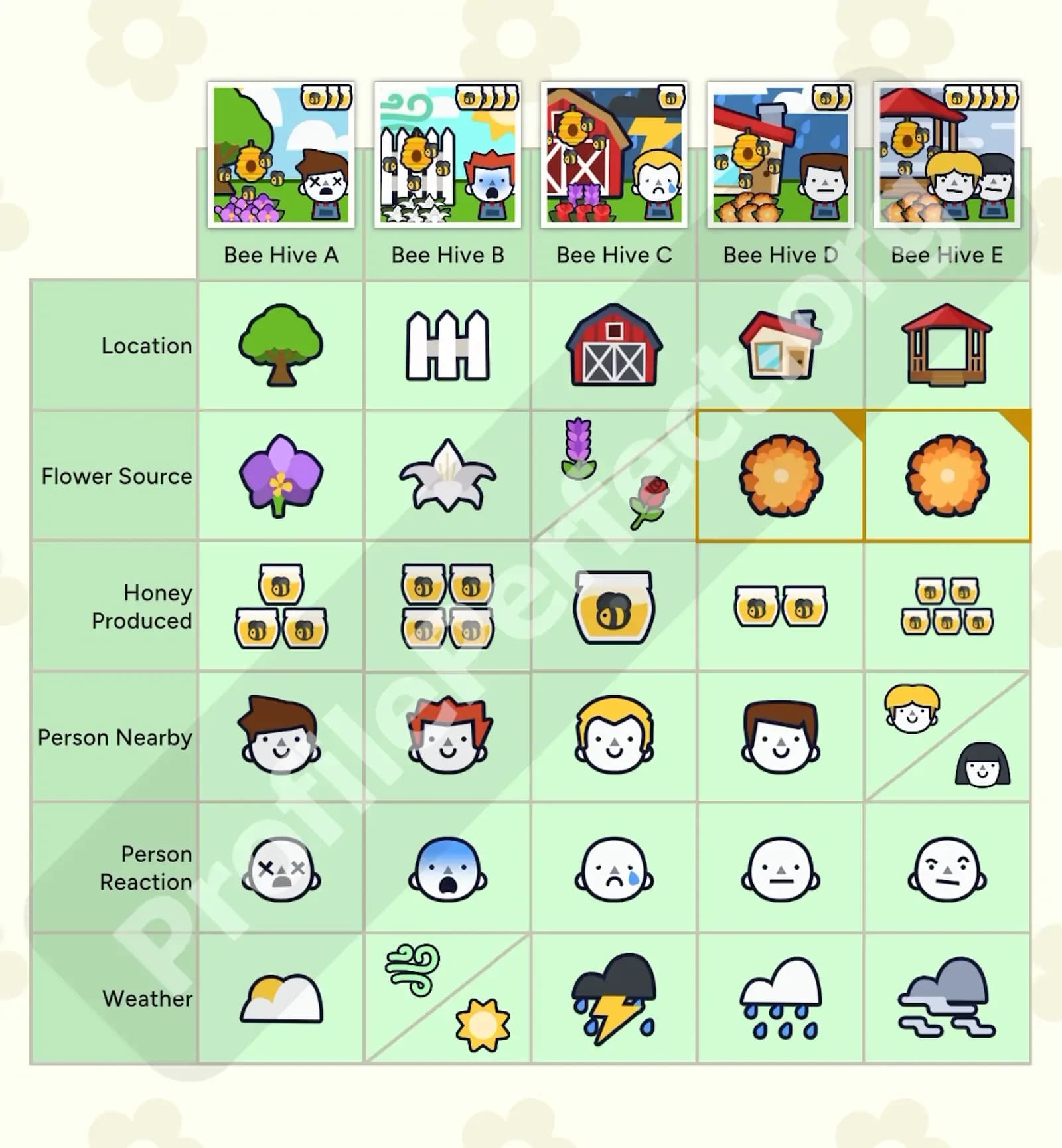
Level 366 is even better. Bee hives react to weather in a more story-driven way. Hot weather makes bees produce more honey than their neighbors. Rainy weather stops bees near Kim from working. Thunder nearly strikes the boy on vacation, making him cry, so that clue links Stormy weather to Crying and the Barn. Windy weather pushes clouds west, linking Windy and Cloudy through position. Foggy belongs away from the leftmost hives.
That’s classic Profile Perfect: the vibe sounds like a little scene, but underneath it is a precise deduction machine.
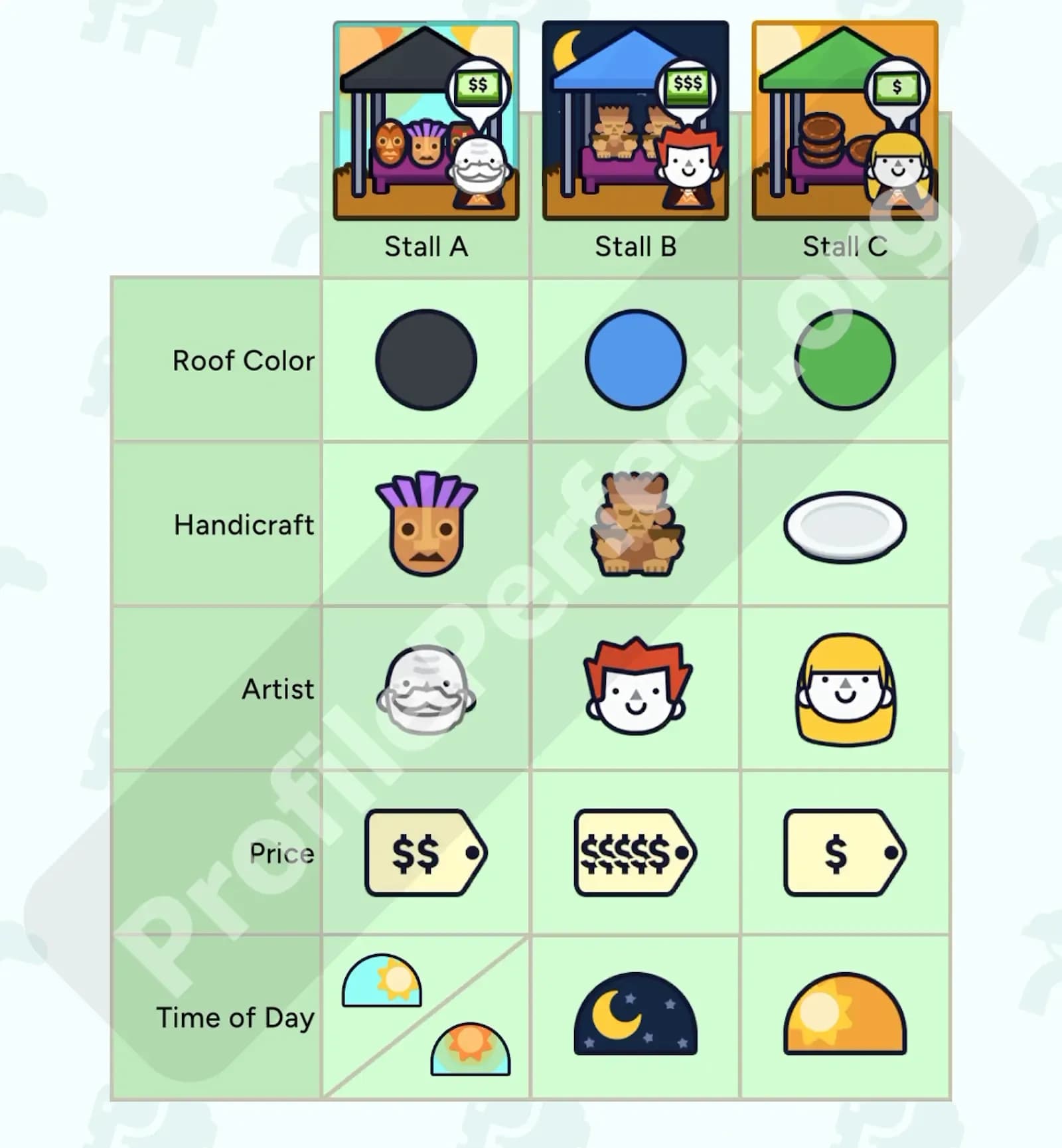
Level 400 is small, but it’s a perfect late-game reminder. The scammer stall only opens after dark. In normal language, “after dark” means night. So the overpriced stall, Kaelo, and Night all lock together. The Mask stall opens early in the Morning, and Jengo takes a quick lunch break before selling again, which adds Afternoon to the same stall.
So the final translation looks like this:
After dark → Night Early → Morning Lunch break before selling again → Morning and Afternoon Evening → the remaining time slot
When a Profile Perfect clue says “after dark,” don’t overthink it. The game usually wants Night.
| Level | Main Clue Type | What It Teaches |
|---|---|---|
| Level 14 | Forecast, humidity, wind | Weather can link to numbers and city identity. |
| Level 70 | Flowers and seasons | Common knowledge turns “red leaves” into Autumn. |
| Level 164 | Festivals and seasons | Season can unlock activity and position. |
| Level 176 | Bar opening hours | Time can control both schedule and placement. |
| Level 218 | Animal active time | Dawn, noon, and night are identity clues. |
| Level 220 | Bath weather and temperature | Weather can separate neighboring subjects. |
| Level 282 | Paragliding weather | Weather works with emotion, color, and origin. |
| Level 348 | Oil rig active time | Morning, noon, evening, and night create order. |
| Level 366 | Bee hive weather | Weather can explain reactions and production. |
| Level 400 | Market stall time | “After dark” and “early” are direct time translations. |
Here’s my go-to method when a level starts talking about seasons, storms, dawn, or evening.
First, circle every weather or time word mentally. Don’t solve yet. Just notice them: rainy, cloudy, thunderstorm, autumn, winter, sunny, windy, foggy, dawn, noon, night, morning, evening.
Second, translate any common-knowledge language. Red leaves means autumn. Sun rises means dawn. After dark means night. Breakfast and brunch means morning or late morning. Lunch time means noon. Cold season means winter.
Third, ask what the clue affects. Does weather change a mood? Does season decide an activity? Does time place something to the left or right? Does temperature rank the columns?
Fourth, chain it. The strongest Profile Perfect move is not solving one cell. It’s turning one clue into three. If Sunny makes bees produce more honey, and that hive has more honey than its neighbors, you now have weather, honey rank, and position all working together.
Finally, avoid the greedy tap. Profile Perfect gives you only a tiny margin for mistakes, and weather clues are exactly where the game tempts you into “that sounds right” guesses. Don’t take the bait. Translate, chain, then tap.
Weather, season, and time-of-day clues are some of the most satisfying clue types in Profile Perfect because they reward players who read like detectives instead of checklist robots. A clue about falling leaves isn’t just pretty wording. A clue about a bar closing before midnight isn’t just background. A clue about stormy weather making someone cry isn’t just a dramatic little joke.
It’s all data. It’s just wearing a costume.
Once you start treating weather and time as serious logic rows, levels like 70, 176, 366, and 400 become much smoother. You’ll solve faster, waste fewer lives, and stop getting baited by clues that look like flavor text but are actually carrying the whole grid.