Solve Profile Perfect sports clues faster by matching gear, courts, balls, helmets, rackets, bats, scoring terms, price, popularity, and layout hints.

Guide By Liam Stone
Published on June 15, 2026
Liam Stone has played Profile Perfect since the app first launched on the Apple App Store. He spotted its potential early, and that early bet turned into hundreds of hours spent solving levels, testing clue logic, and documenting answers for other players. Liam runs the YouTube channel Puzzle Game Answer where his puzzle walkthroughs have earned over 935,000 views and a growing community of more than 800 subscribers. He covers a wide range of mobile puzzle games beyond Profile Perfect, giving him firsthand experience with how these games design clues, structure levels, and trip up even experienced players. Every guide on this site reflects that hands on experience. Liam plays each level himself, verifies every answer against the in game grid, and rewrites confusing clues into plain language so you don't need to guess. If you want more of his walkthroughs, subscribe to his channel.
Loading calendar...
Sports clues in Profile Perfect can feel like a sudden difficulty spike. One minute you’re matching names, colors, and simple positions. The next, the game expects you to know that a rugby ball is oval, a kendo dojo uses weapons, a tennis racket clue might be hiding behind athlete names, and a “smallest court” clue is probably pointing you toward volleyball or tennis logic.
That’s the crunchy part of Profile Perfect I actually enjoy. These levels are not just about reading the clue; they’re about translating everyday sports knowledge into grid logic. When the game says “the oval ball,” it is not being cute. It wants you to connect shape to sport. When it says “Golden-Star trophy,” it might be chaining shape, material, and sport in one line. Miss that hidden connection and the whole grid starts to feel floaty.
The trick is to stop treating sports levels as random trivia. Treat them like equipment maps.
The fastest way to solve sports-heavy Profile Perfect levels is to build a mental pair list before tapping anything. Ask yourself: what does this sport use, where is it played, what object is unique to it, and what vocabulary belongs to it?
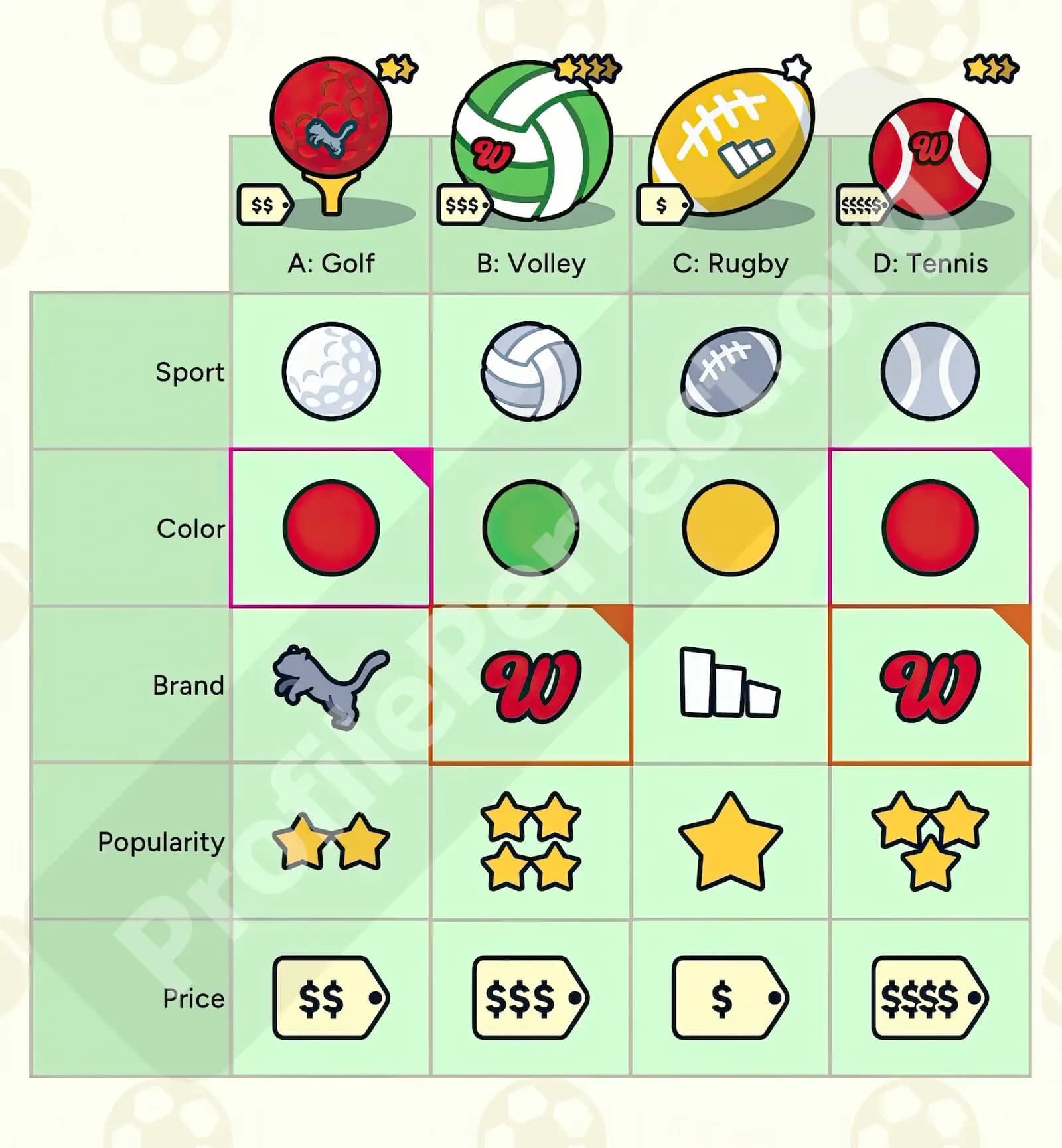
For example, Level 157 is all about balls. The solved set includes golf, volley, rugby, and tennis. That level becomes easier once you separate hard sports identity clues from economy clues. “Golf ball” links to a specific ball type. “Oval ball” clearly points to rugby. “Fibrous ball” points toward tennis because of the fuzzy surface. After that, price and popularity clues become second-phase deductions, not first guesses.
That order matters. In Profile Perfect, guessing too early is a bad loop because the game only gives you two lives. I always lock sport identity first, then use money, stars, popularity, or position later.
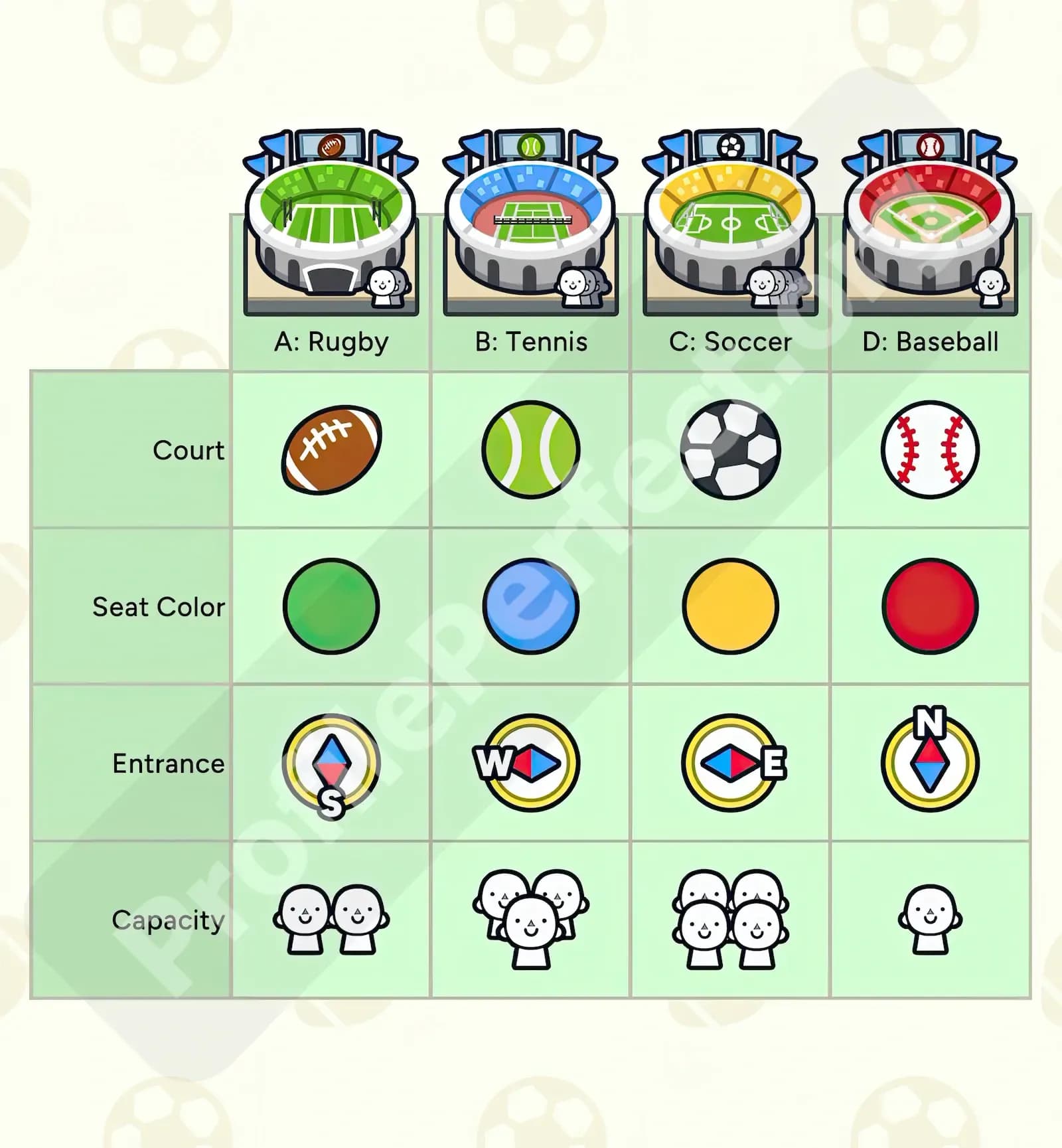
Court clues are some of the most useful sports clues because they usually identify the sport directly. Level 162 is a clean example. The stadium grid includes Rugby, Tennis, Soccer, and Baseball, plus entrances, seat colors, and capacity. “Crowds are gathering at the East side of Soccer stadium” instantly gives you Soccer plus East. “To watch the Rugby match, enter the stadium from South” gives you Rugby plus South.
That’s a banger anchor. Once a sport is tied to an entrance, every nearby clue becomes sharper. If the East entrance has a neighbor with the opposite entrance, you can start reading the grid spatially. If the red seats have the smallest capacity, don’t solve that as a sports clue yet. Solve it as a seat-color clue, then let the sport connection drop in once the row gets tighter.
The same logic applies to Level 157’s “smallest court” clue. Even if the wording is a bit odd, the clue is pushing you to think about playing spaces. Sports levels often hide direct answers inside casual phrases like “court,” “ring,” “rink,” “stadium,” or “dojo.”
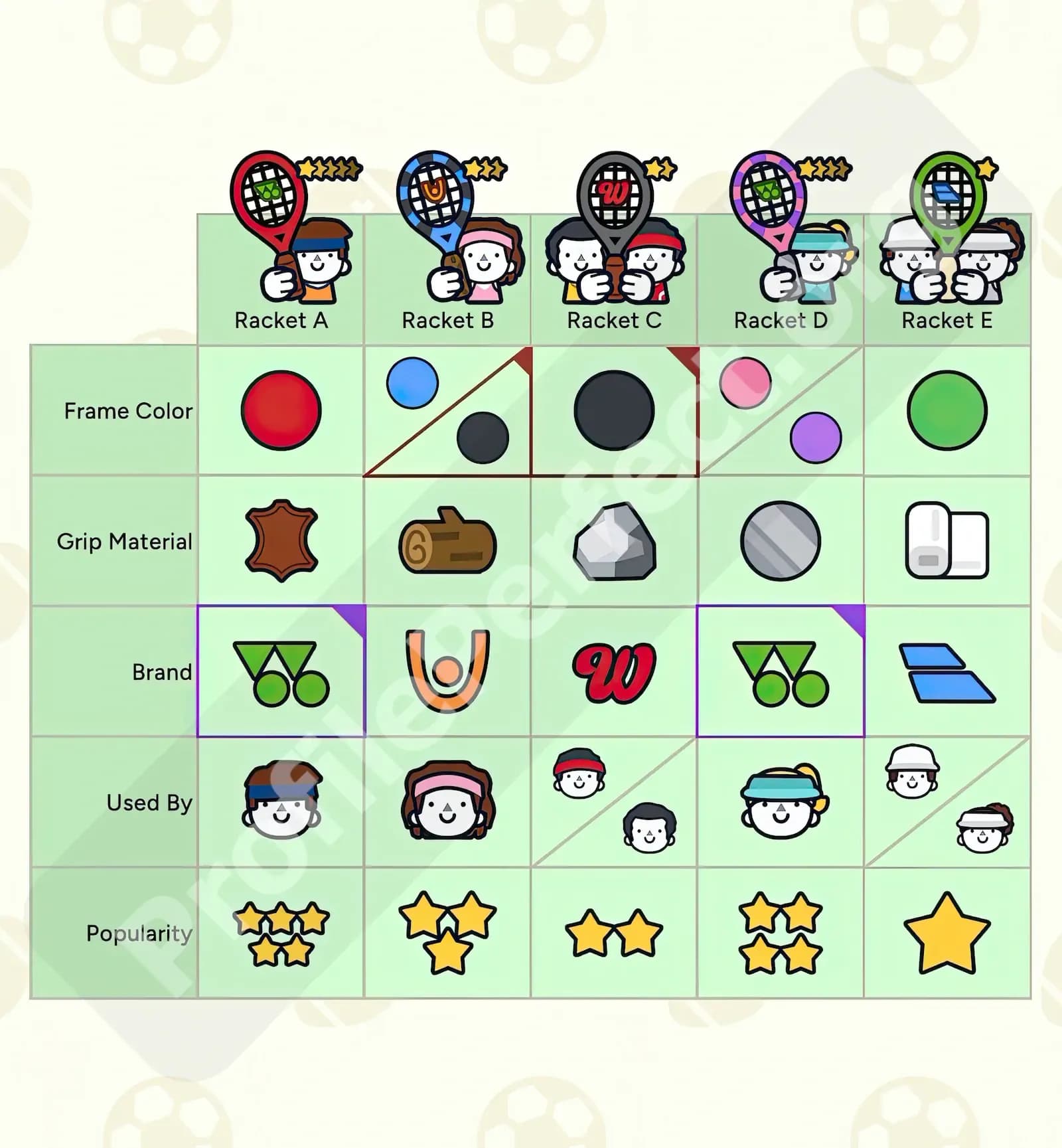
Profile Perfect loves mixing sports gear with marketplace stats. Level 159 does this with rackets. You’re juggling frame colors, grip materials, brands, athletes, and popularity. It’s the kind of level where your brain wants to tank immediately because every clue seems connected to three things.
Don’t panic. First, identify gear facts. A racket belongs to tennis-style sports, and the athlete names are clearly sports references: Rafael, Serena, Roger, Pete, Maria, Andy, and Venus. Even when the game uses parody brands like Yomex, Heady, Walson, and Babalat, the real clue is the relationship between athlete, racket, color, and popularity.
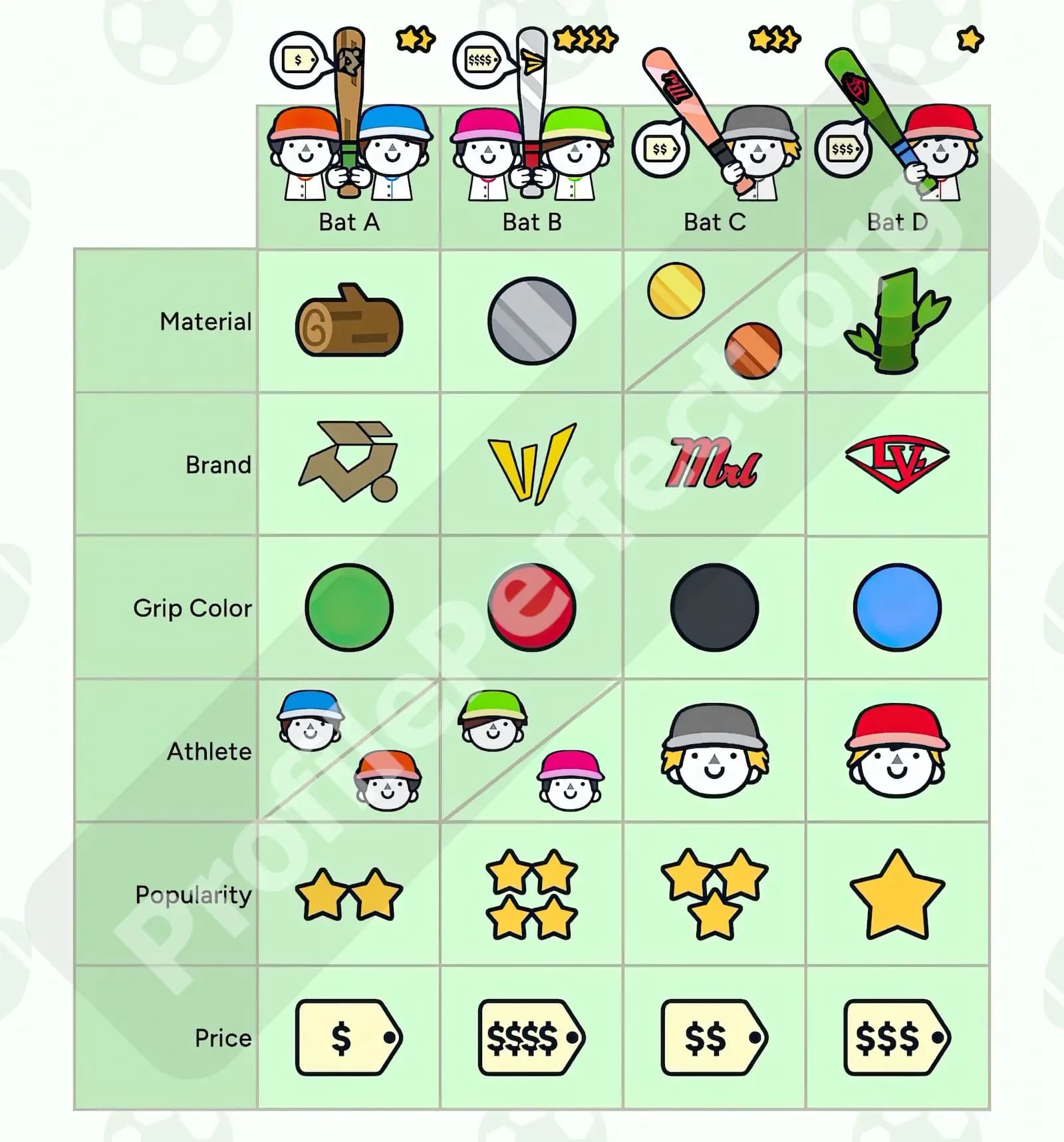
Level 277 does something similar with bats. The bat grid includes materials like wood, aluminum, copper, gold, and bamboo, plus grip colors, brands, athletes, popularity, and price. “Wooden bat in the leftmost is popular among newbies” is a direct material-position anchor. “Copper is used by the bat between Aluminum and Bamboo” is a spatial material chain. “Japanese player” points to Ryu, which becomes a sports identity clue wrapped in nationality flavor.
When gear levels get messy, I write a mini chain like this:
Sport/object first → material or type second → brand third → price/popularity last.
That order keeps the grid from turning into a shambling corpse of half-guesses.
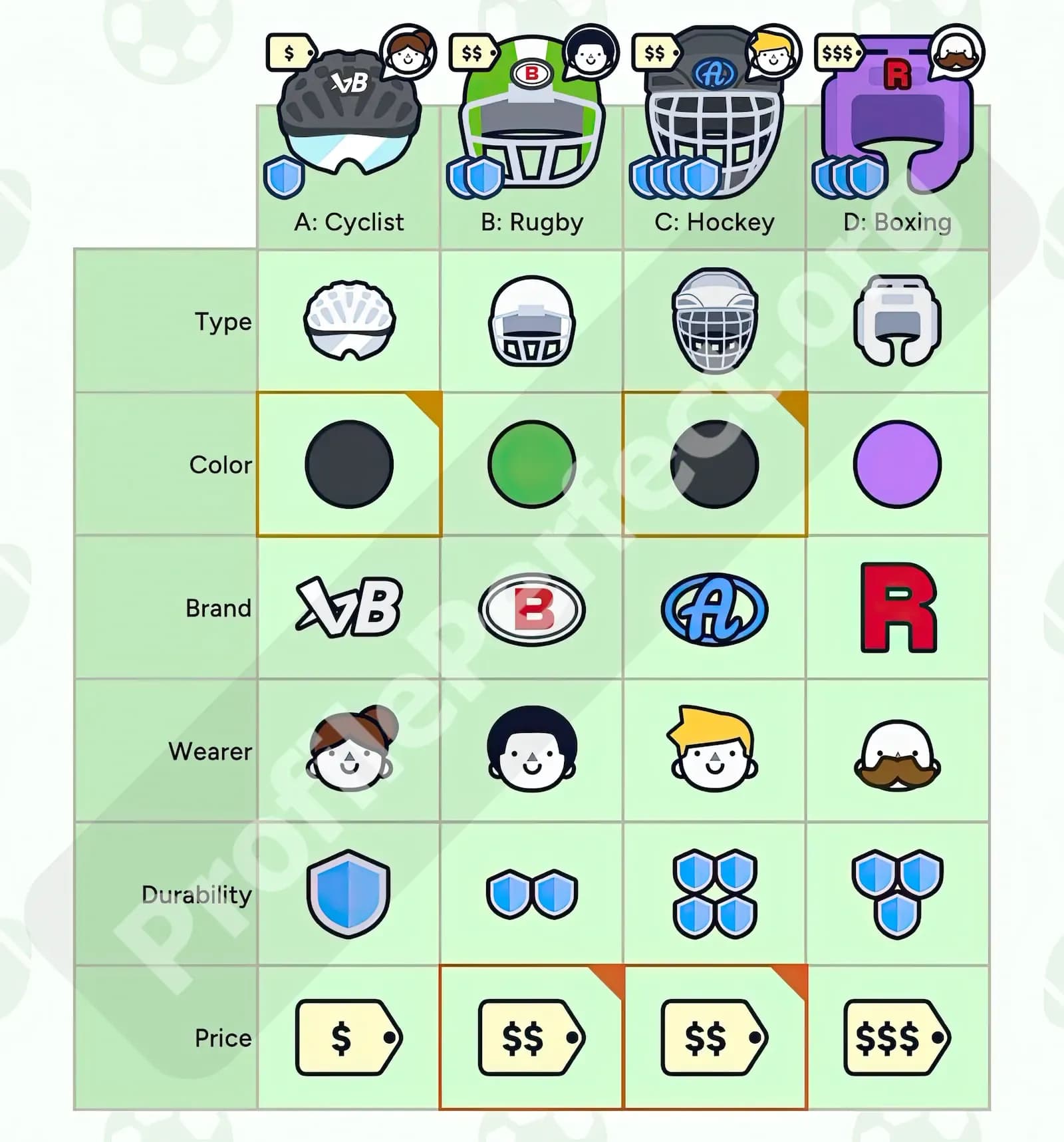
Some of the best common-knowledge clues in Profile Perfect are about protective equipment. Level 281 is a helmet puzzle with Cyclist, Rugby, Hockey, and Boxing helmets. This level expects you to know which activities use helmets and which ones are combat or contact sports.
“The helmet to the right of the Hockey is used in combat sport” points directly toward Boxing. That clue is not really about the helmet at first; it’s about sport category. Hockey is a contact sport, but in this clue, the “combat sport” wording is doing the heavy lifting. Once Boxing lands, the purple Ridle helmet and durability clues line up.
This is also where Profile Perfect likes to stack real-world logic with puzzle logic. Cycling helmets can be cheap and lightweight. Rugby and hockey helmets sit in the middle. Boxing is framed as premium in this level. You don’t need to be a sports encyclopedia, but you do need to recognize the broad vibe of each sport.
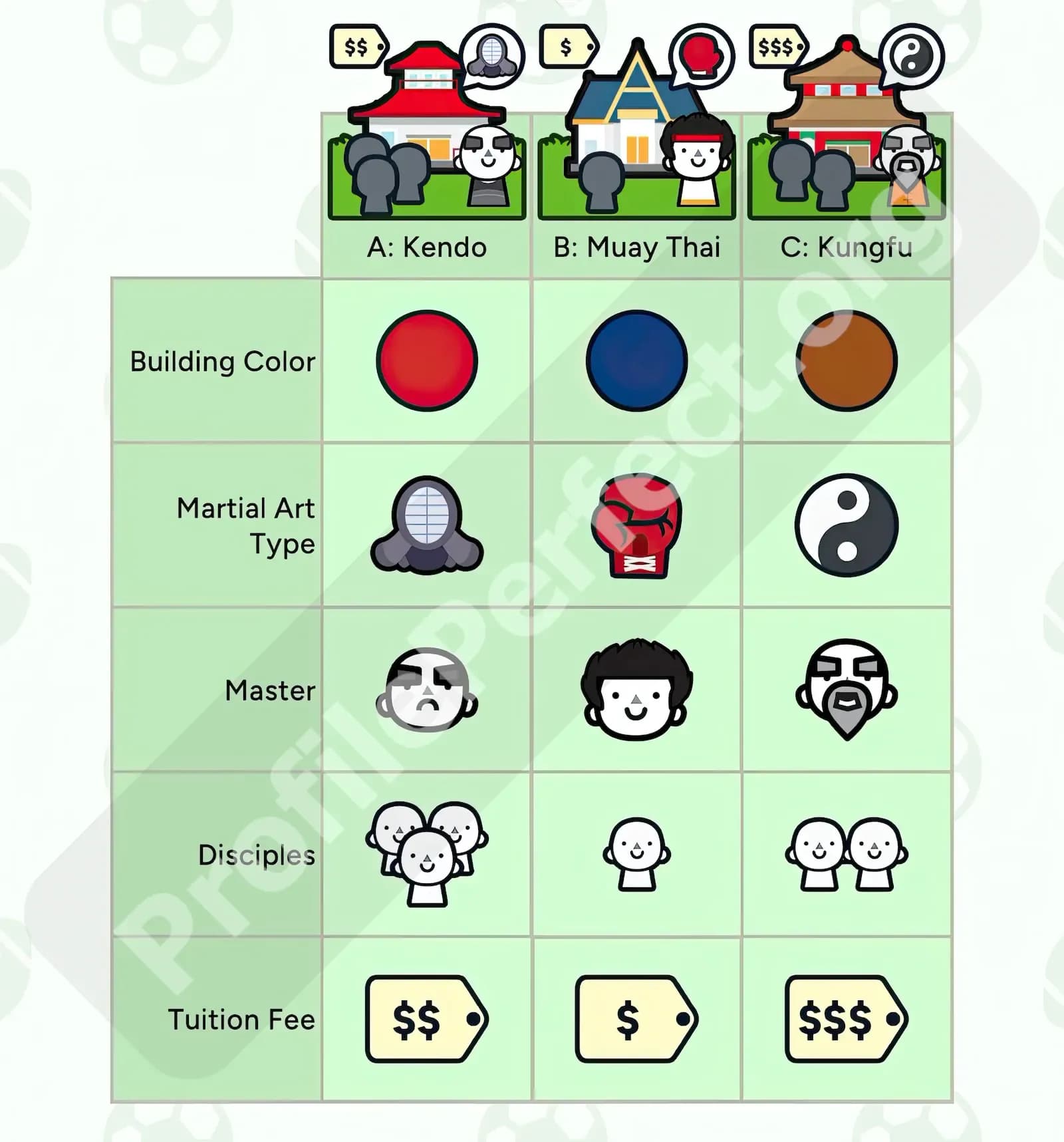
Level 275 is one of the cleaner martial arts examples. The dojos include Kendo, Muay Thai, and Kung Fu. The clue “Middle dojo’s technique is not from East Asia” points to Muay Thai, because Muay Thai is Thai, while Kendo and Kung Fu are strongly associated with East Asian martial arts traditions.
Then the clue “Japanese martial art’s tuition is the average” points to Kendo. That’s the key common-knowledge move. Kendo is Japanese and weapon-based, while Kung Fu is often treated as weaponless or hand-to-hand in puzzle shorthand. The rightmost dojo “does not use any kind of weapon,” which helps confirm Kung Fu.
For sports and martial arts categories, don’t just read names. Read geography, equipment, and fighting style.
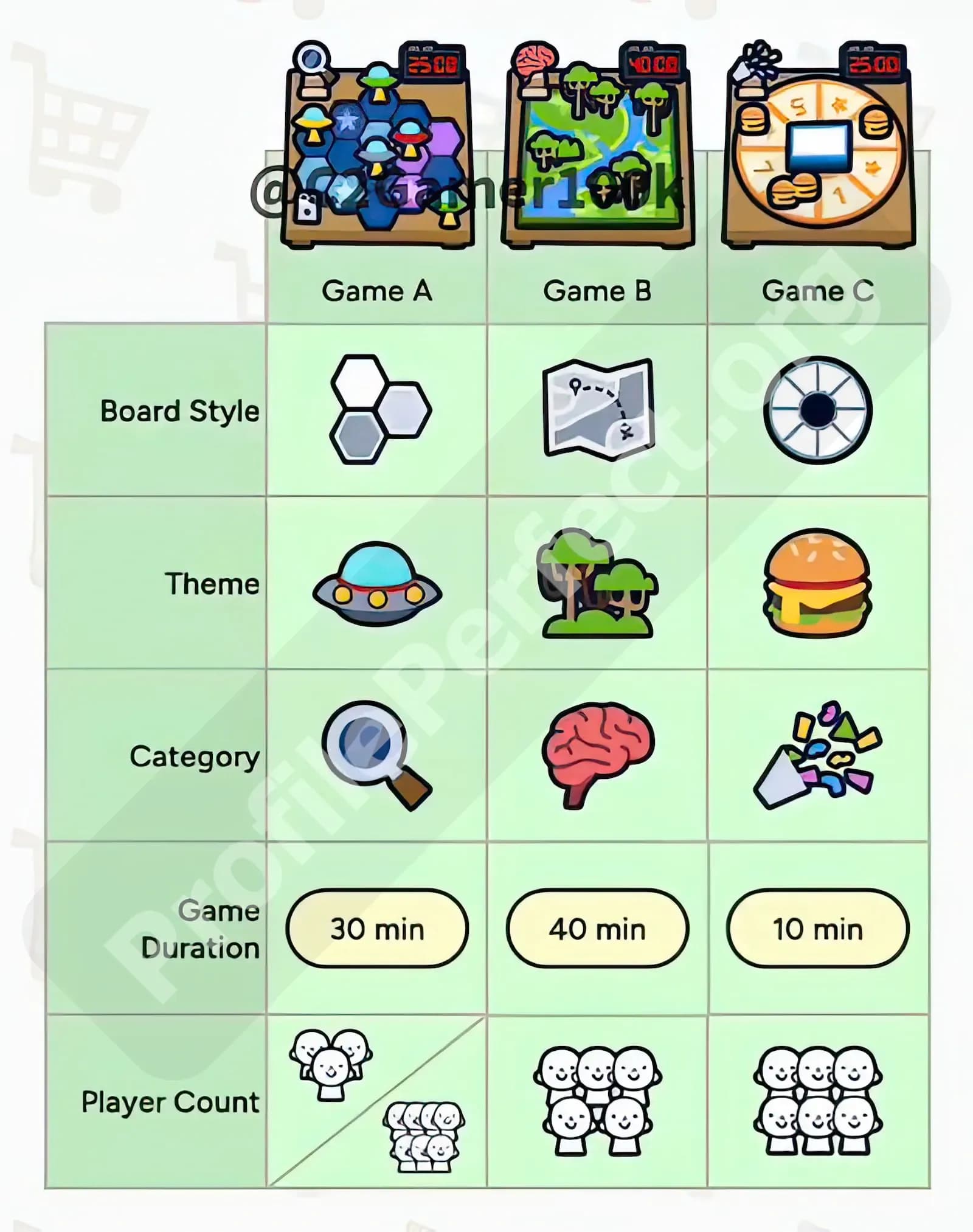
Sports, games, and hobbies overlap in Profile Perfect. Level 47 uses board games rather than athletic sports, but the same solving technique works. You match board style, theme, category, duration, and player count. “Sci-fi” links to space and galaxies. “Party game” links to shorter playtime and bigger casual player groups. “Strategy” links to longer game duration.
This kind of level teaches a useful habit: separate theme clues from stat clues. Theme clues are usually direct. Duration, player count, price, and popularity are comparison clues. If you solve the comparison clues too early, you’ll get stuck. If you anchor the theme first, the rest becomes serviceable logic.
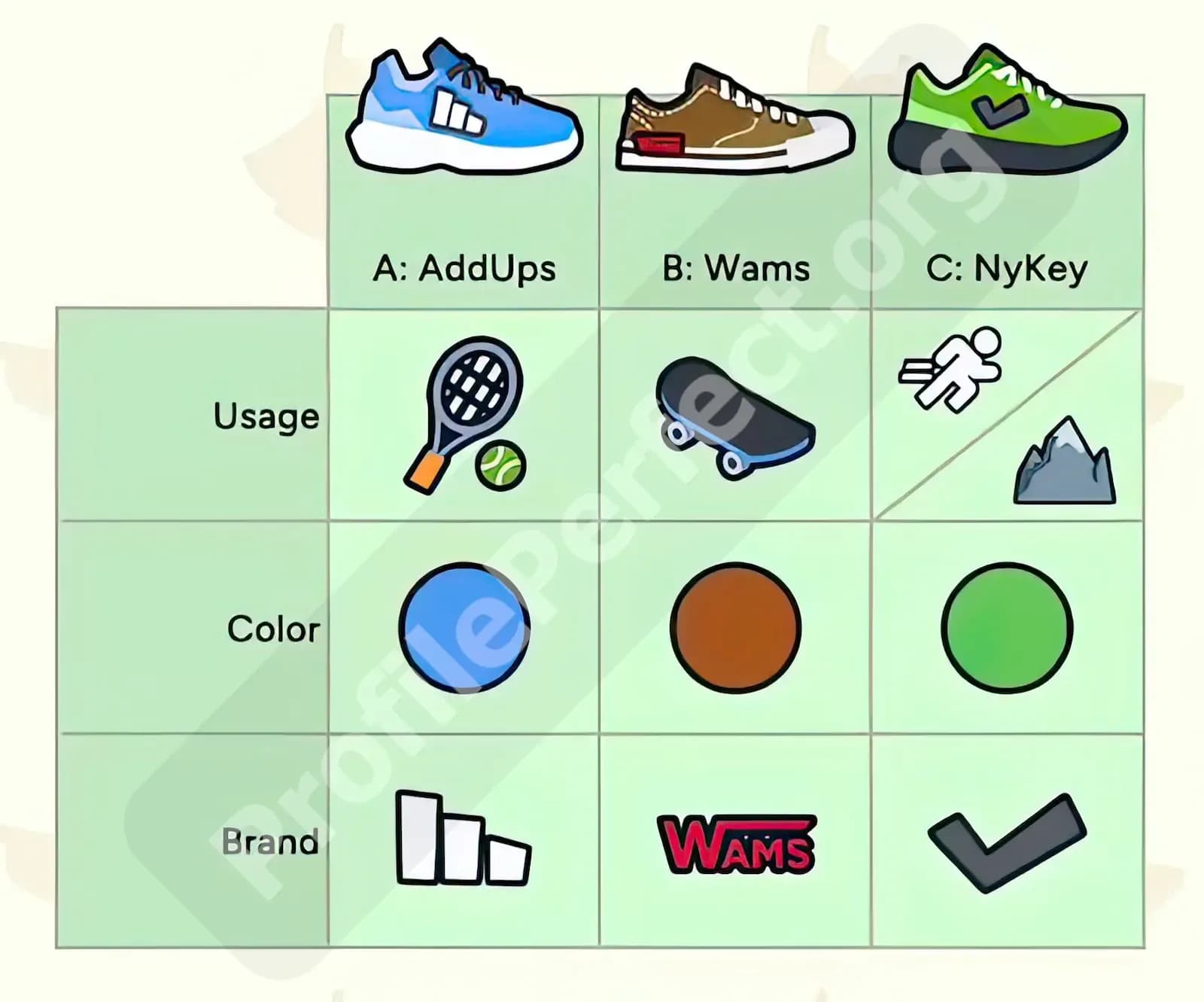
Level 93 does this with sneakers. Tennis, skateboard, running, and hiking are all usage clues. The multi-purpose sneaker supports Running / Hiking, while Tennis and Skateboard stay separate. Whenever Profile Perfect shows a split value like Running / Hiking, Blue / Black, Roger / Pete, or Beer / Tea, treat that cell as containing two valid values. Do not “fix” it into one answer unless another clue forces a narrower reading.
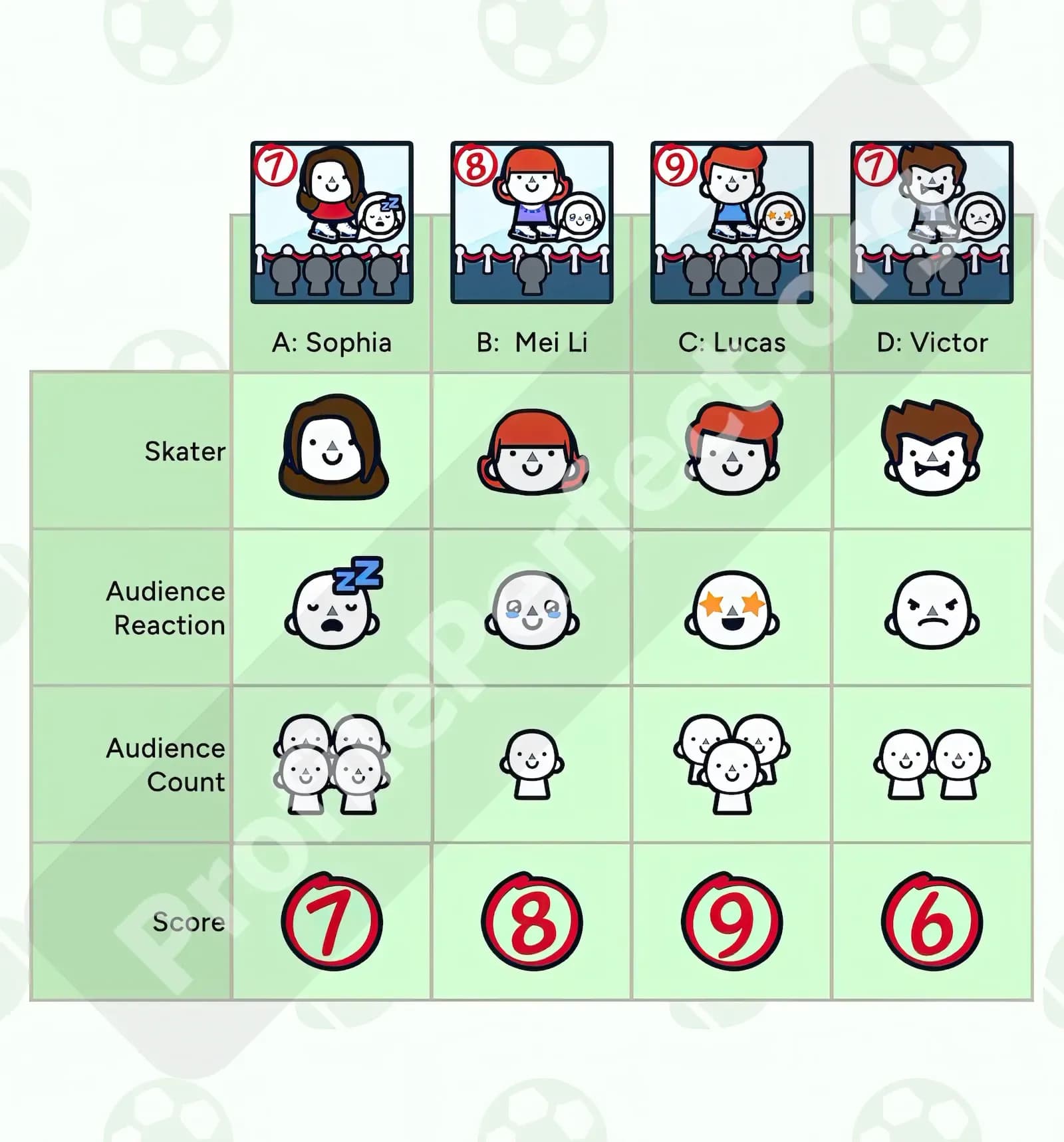
Level 276, the ice rink puzzle, is a good example of performance scoring. Skaters have audience reactions, audience counts, and scores. Lucas gets the highest score after a risky move, Victor gets the lowest score, and audience reactions help lock the emotional row.
Here’s the important part: scores are often safer after names and reactions are known. “Highest score” and “runner-up” are ranking clues. They become rock-solid once you know the skater positions. The same applies to medal count in Level 155. Adam has more medals than the woman athlete, Harris claims his fourth medal, and the diet clues link Vegetable, Grain, and Fruit. You solve identity first, then achievements.
My favorite loop for these Profile Perfect levels is simple:
First, scan for direct sport anchors: rugby, tennis, boxing, soccer, kendo, hockey, golf, baseball. Second, translate common-knowledge words: oval ball, ring, rink, court, dojo, helmet, bat, racket, trophy, referee, coach. Third, place obvious gear and location pairs. Fourth, use spatial clues like left, right, between, neighbor, and two columns away. Fifth, finish with price, popularity, durability, score, audience count, or medals.
That’s how you avoid wasting lives. Sports levels look like trivia, but they’re really translation puzzles. Once you turn “oval ball” into Rugby, “combat sport” into Boxing, “Japanese martial art” into Kendo, and “rink” into Figure Skating, the whole grid gets less scary.
Profile Perfect is at its best when it makes you feel clever for knowing one small thing about the world. Sports clues deliver that feeling constantly. They can be frustrating, sure, especially when a clue is weirdly worded, but they’re also some of the most satisfying levels to crack. Build the sport-to-equipment pairs first, let the logic grid breathe, and save the price/popularity cleanup for the end.