
Learn how to solve Profile Perfect color clues by translating symbolism, visual hints, and idioms into grid answers like Black, Green, Red, and Blue fast.

Guide By Liam Stone
Published on June 15, 2026
Liam Stone has played Profile Perfect since the app first launched on the Apple App Store. He spotted its potential early, and that early bet turned into hundreds of hours spent solving levels, testing clue logic, and documenting answers for other players. Liam runs the YouTube channel Puzzle Game Answer where his puzzle walkthroughs have earned over 935,000 views and a growing community of more than 800 subscribers. He covers a wide range of mobile puzzle games beyond Profile Perfect, giving him firsthand experience with how these games design clues, structure levels, and trip up even experienced players. Every guide on this site reflects that hands on experience. Liam plays each level himself, verifies every answer against the in game grid, and rewrites confusing clues into plain language so you don't need to guess. If you want more of his walkthroughs, subscribe to his channel.
Loading calendar...
Color clues in Profile Perfect look easy until they absolutely aren’t.
That’s the trick. When the game says “Black,” “Green,” or “Blue,” you can tap the grid and move on. No drama. But later levels love to get sneakier. Instead of handing you the color, Profile Perfect gives you a phrase like “absorbs light the most,” “go-green campaign,” “iron oxide planet,” “black gold,” “darkest dough,” or “looks like Neptune.” Suddenly, you’re not just solving a logic grid. You’re translating a tiny world-knowledge riddle before the real deduction even starts.
And honestly? I like this loop. It gives Profile Perfect a crunchy little edge over a plain matching puzzle. But it can also feel unfair if you treat every clue literally. The best way to solve these levels fast is to separate the clue into two steps: first decode the color association, then use normal elimination.
In Profile Perfect, every level is built around subjects and traits. The subjects are the columns: Dog A, Rocket B, Tank C, Donut D, Stall E, and so on. The traits are the rows: color, owner, item type, destination, price, expression, temperature, and other categories.
A direct clue says something like “Red mittens are worn by Snowman A.” That’s clean. You fill Red under Snowman A’s mittens and keep going.
An association clue is different. It hides the answer behind meaning. “The Backpack has the color that absorbs light the most” does not say “Black backpack,” but that’s exactly what it means. Black absorbs the most visible light, so in Profile Perfect Level 300, the Backpack is Black. This is a classic color translation clue: the game gives you a property, not the label.
The danger is rushing. If you tap before translating, Profile Perfect’s two-life system can tank your run fast. A wrong confident guess hurts more than a slow correct deduction.
Here’s the method I use for these clues:
Read the clue and ask, “Is this naming a color, describing a color, or referencing an object linked to a color?”
Then rewrite it in plain grid language.
For example:
“The color that absorbs light the most” becomes Black.
“Go-green campaign” becomes Green.
“Darkest dough color” becomes Black.
“People mistook it as chocolate” becomes Brown.
“Black gold” becomes Oil, not necessarily a literal black grip or black saber.
That last one is important. Profile Perfect can use color words in two ways. Sometimes they point to an actual color value. Sometimes they point to another trait. In Level 334, “black gold” points to Oil as a power source. The phrase contains a color, but the answer is not a color row. This is where the game gets spicy.
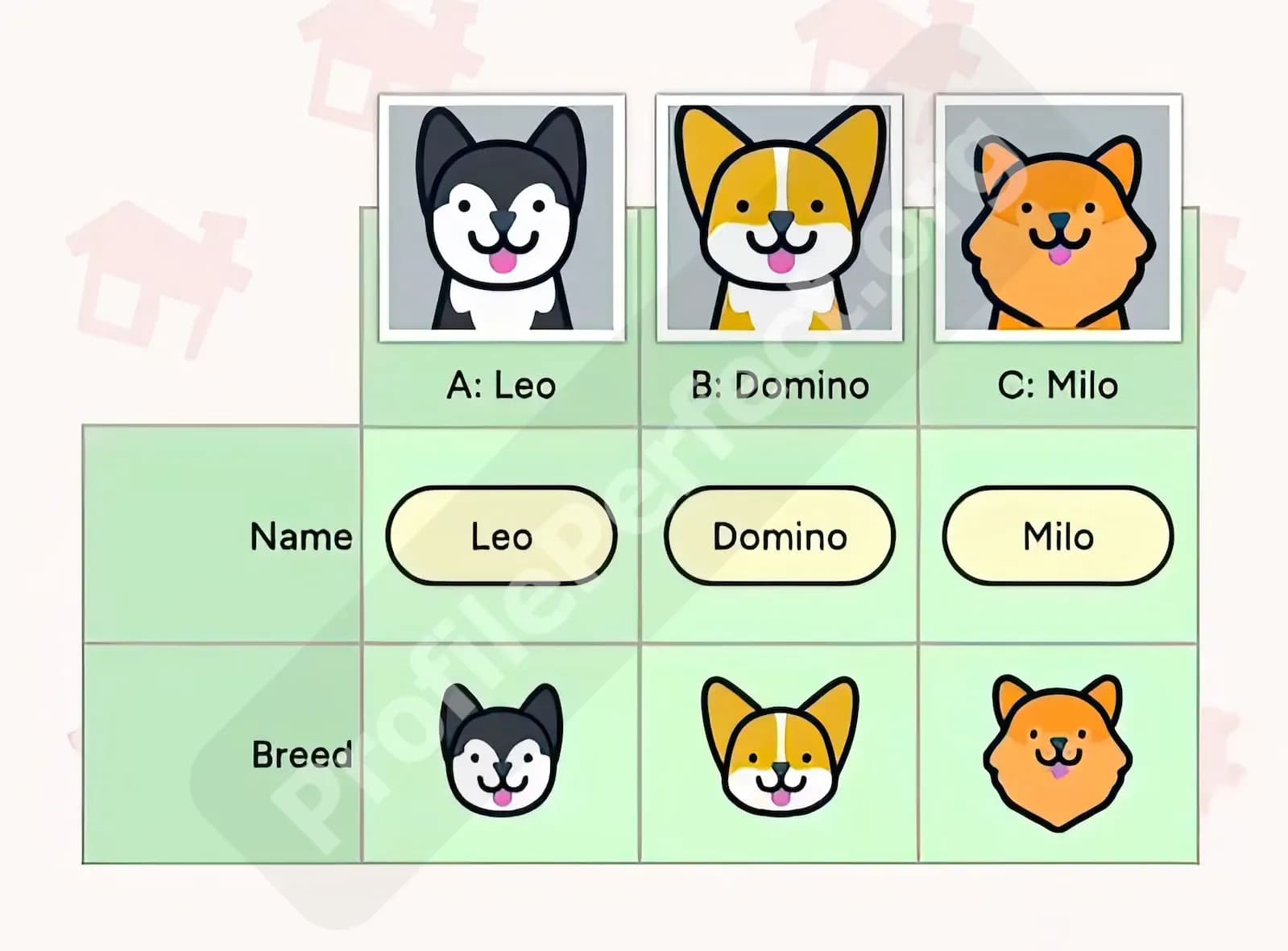
Profile Perfect Level 2 introduces this idea gently. One clue says Dog A is the black and white dog. New players may look for a color row, but the level only has Name and Breed. So “black and white dog” has to identify the breed. In this case, Dog A is the Siberian Husky, and the Husky is called Leo.
This is a great beginner lesson: not every visual color clue goes into a color category. Sometimes color is a bridge to a breed, object, costume, material, or theme.
So when Profile Perfect gives you a visual description, don’t ask only “what color is this?” Ask “what trait is this color helping me identify?”
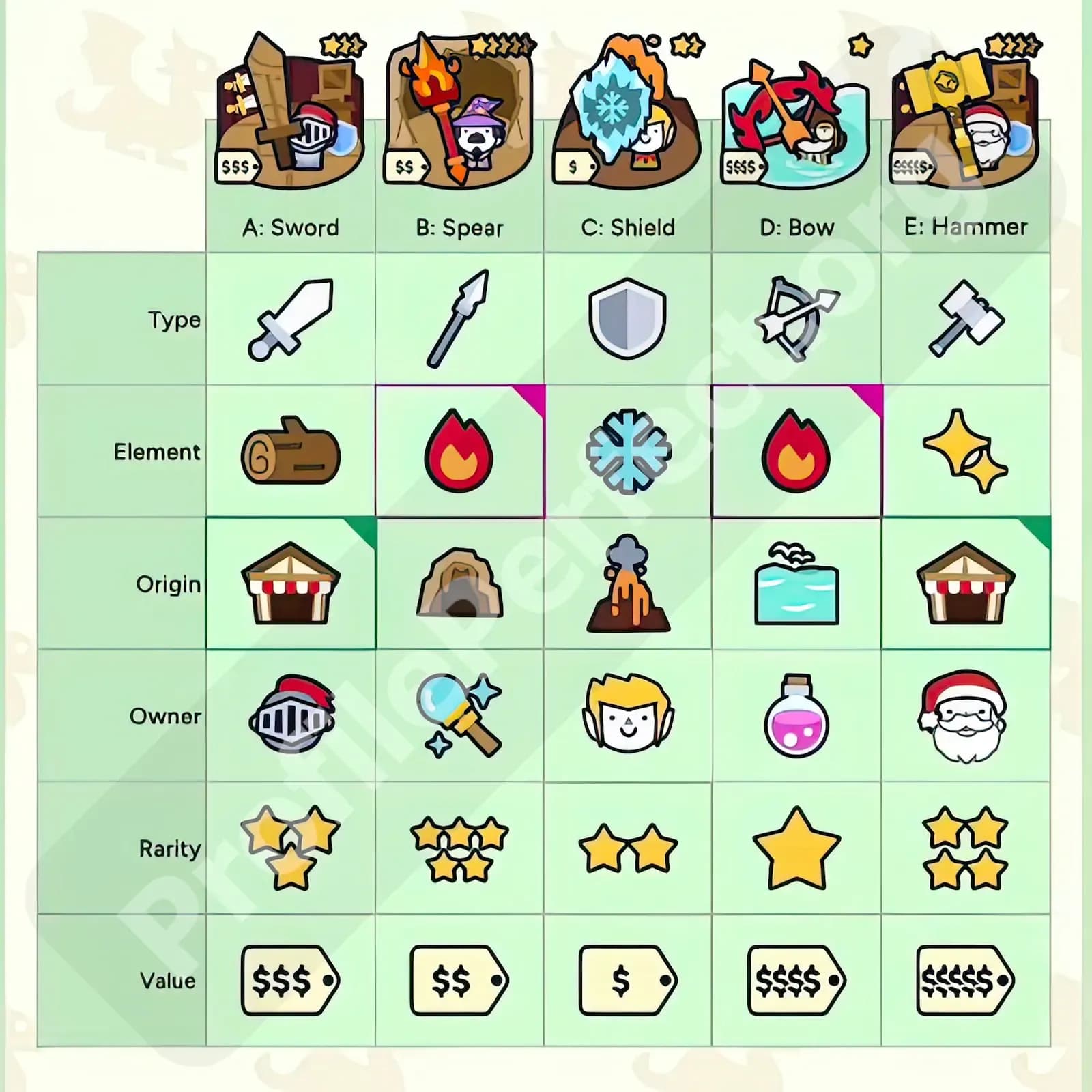
Level 32 is not a normal color-row level, but it trains the same skill. The weapons use elements like Wood, Fire, Ice, and Light. These aren’t colors, but they carry strong visual associations.
Wood points toward earthy brown or natural materials. Fire points toward red, orange, heat, and danger. Ice points toward blue, white, cold, and defensive imagery. Light points toward bright, holy, golden, or shining objects.
The solved grid uses these as element traits, not color traits: the Wooden Sword, Fire Spear, Ice Shield, Fire Bow, and Light Hammer. This level teaches a banger habit for later puzzles: treat symbolic words as clue tokens. “Fire” may not literally mean Red today, but it belongs in the same mental folder.
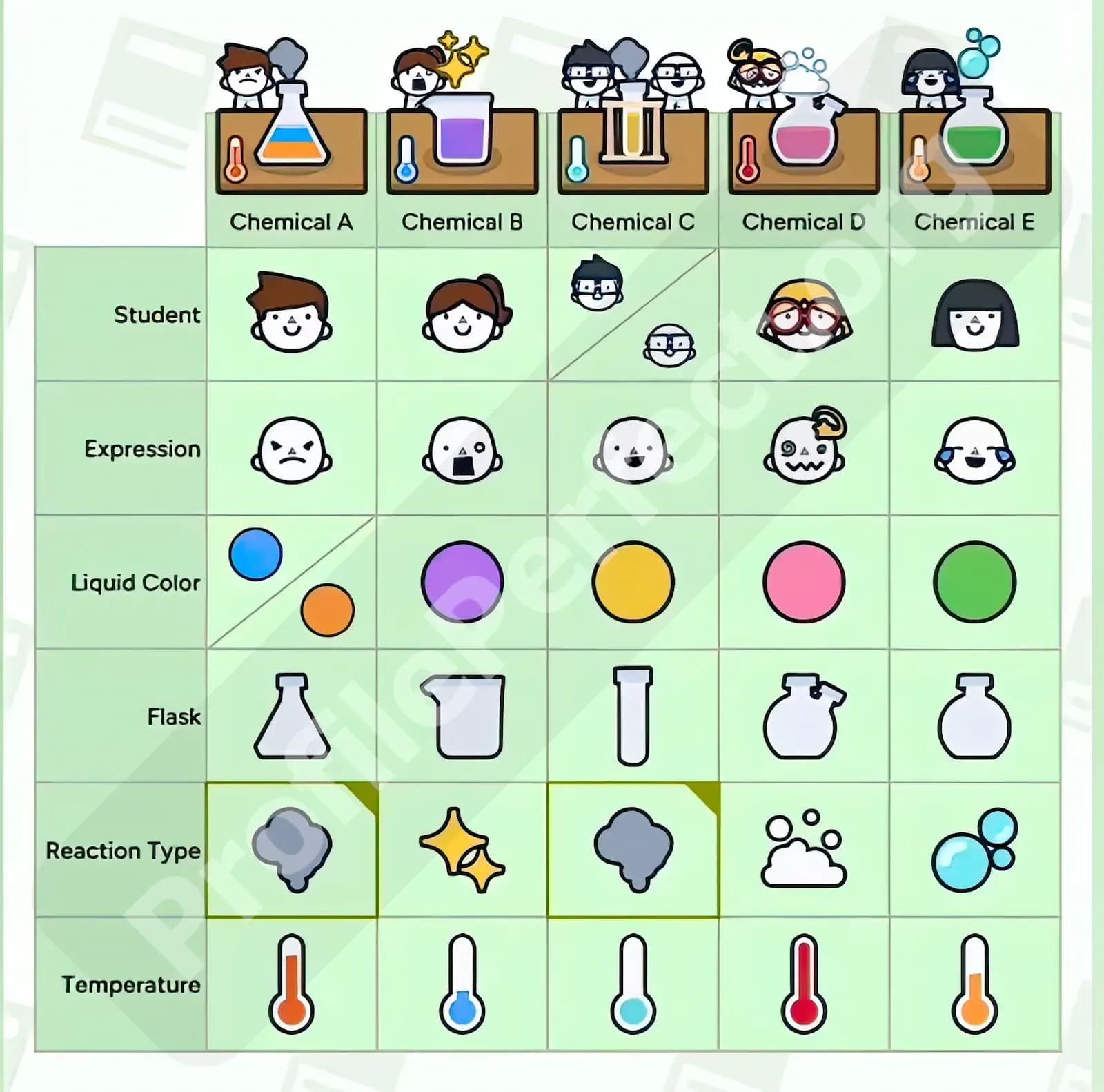
Profile Perfect Level 83 uses chemical liquids, temperatures, flasks, reactions, and student expressions. Some colors are direct, like Megan working on the Green chemical, or the Blue chemical not being next to Billy or Joyce. Others rely more on chemistry-flavored association.
The strongest one is “John is Happy for his successful iron chloride solution,” which resolves into a Yellow chemical. That’s not the kind of clue everyone catches instantly. It asks for a bit of common knowledge: certain iron chloride solutions can appear yellowish. Even without being a chemistry nerd, you can treat “iron chloride” as a color clue and pause before tapping.
This level also pairs Orange with heat: “Orange chemical is the second hottest.” Orange often signals warmth, flame, or heat, and Profile Perfect uses that vibe neatly here. The trick is not to overextend it. Orange is second hottest because the clue says so, not because orange always means hot in every level.
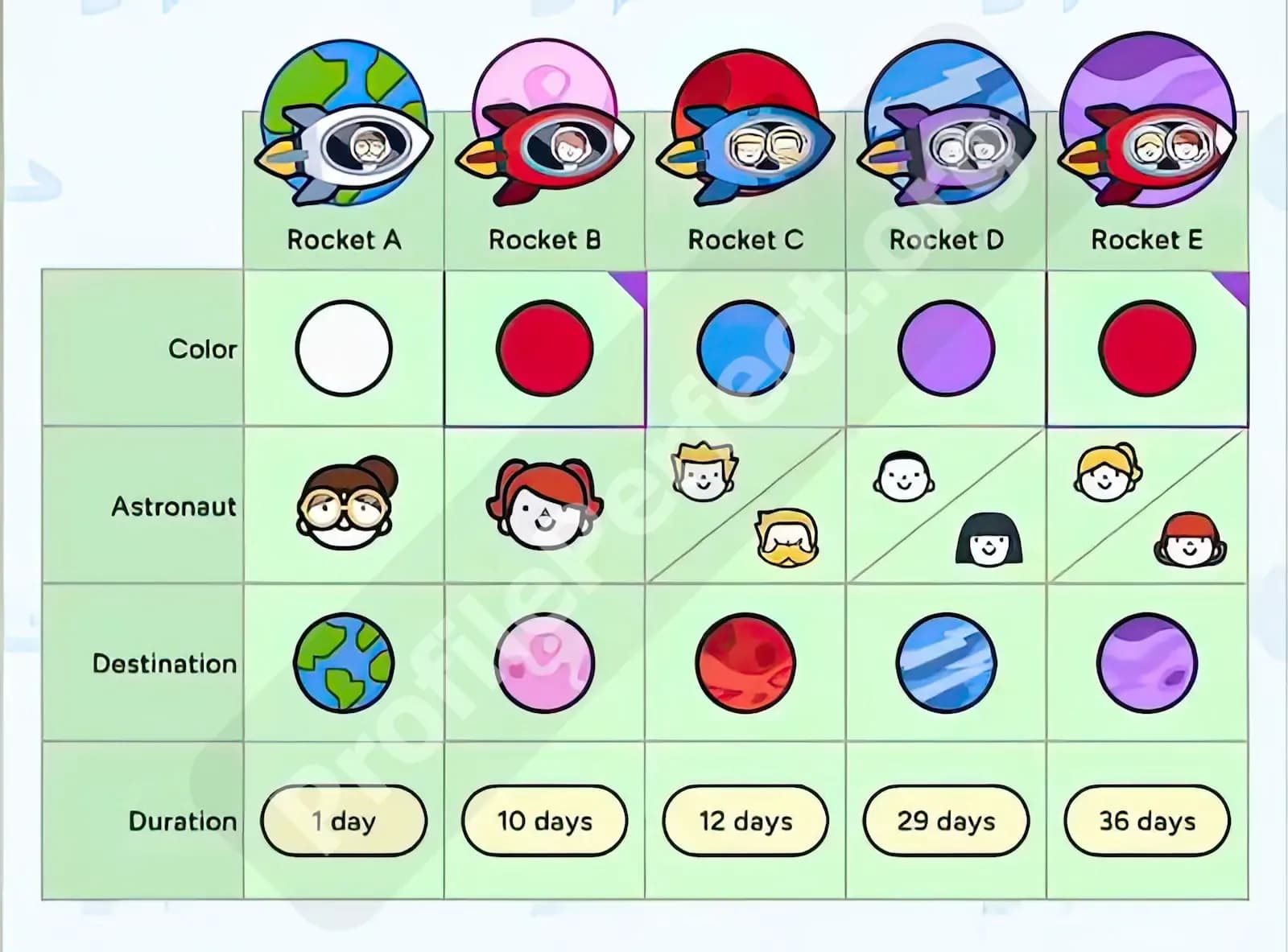
Level 101 is where Profile Perfect starts feeling more cosmic. The rocket puzzle includes White, Red, Blue, and Purple rockets, plus destinations that sound like alien planets. A clue says the Purple rocket’s destination looks like Neptune. Another clue references an iron oxide planet.
This is exactly the kind of clue that makes players overthink. Neptune usually suggests a blue-purple planet vibe. Iron oxide points toward red planet imagery, because iron oxide is tied to rusty red coloring. But the safe play is to translate the association, then check where the grid actually lets it land.
That’s the key difference between guessing and solving. Don’t see “iron oxide” and blindly tap Red. First ask: is this clue identifying a color, a destination, or a relationship between astronauts and planets? In Level 101, the planet clue helps build the destination chain, which then supports the color deductions around Blue, Purple, and Red rockets.
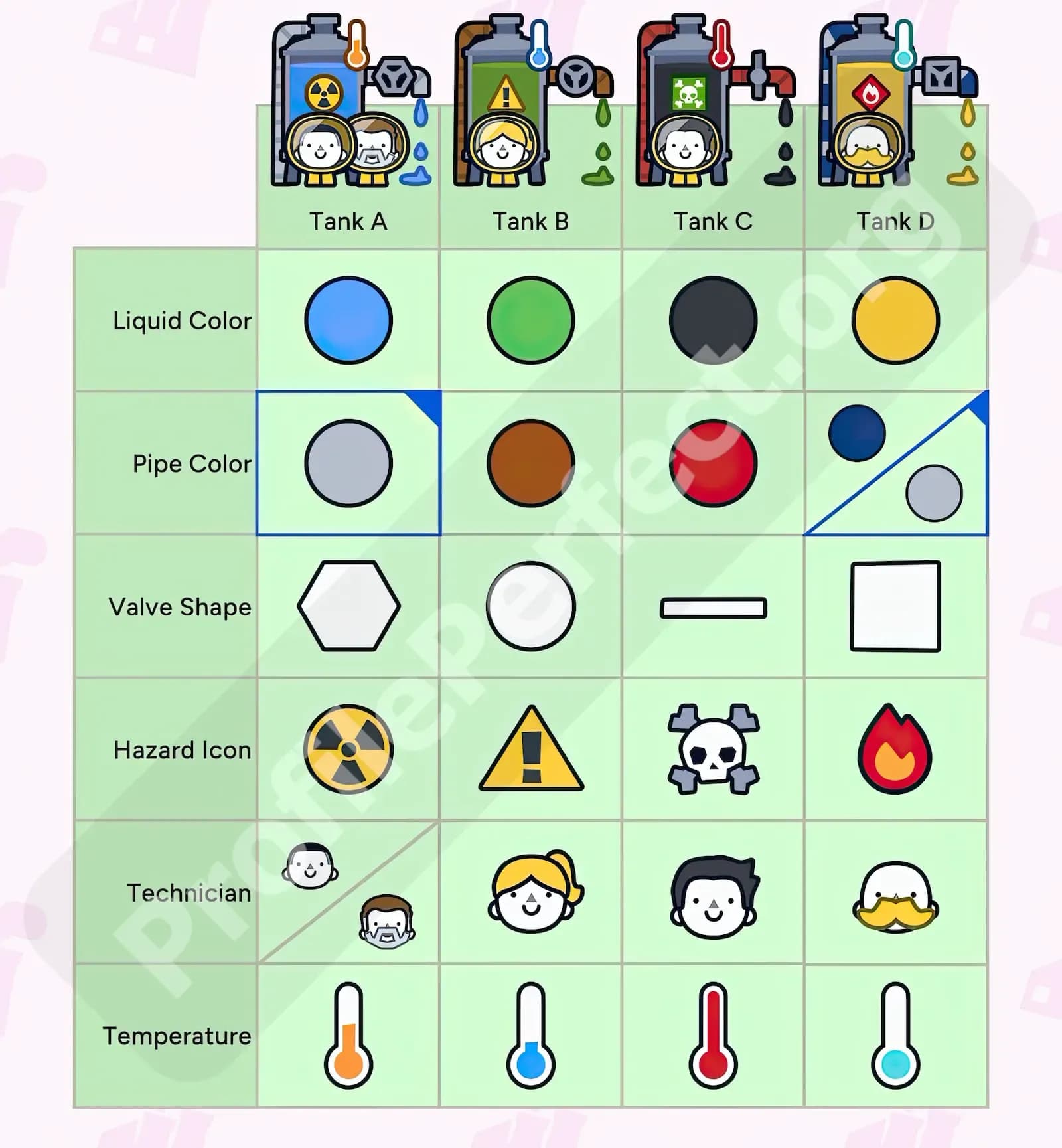
In Level 184, tanks use Liquid Color, Pipe Color, Valve Shape, Hazard Icon, Technician, and Temperature. This level is packed with practical color logic: Blue liquid, Green liquid, Yellow liquid, Red pipe, Brown pipe, Navy pipe, Gray pipes.
Industrial levels usually use color in a more functional way. Brown pipes, Gray pipes, Red pipes, and hazard icons feel like labels from a factory or lab. “Gray pipes have Square and honeycomb shaped valves” is not symbolic; it is structural. But “Blue liquid is not paired with the Navy pipe” is a classic shade trap. Blue and Navy are close enough visually that a tired player may merge them mentally.
Don’t. In Profile Perfect, Blue and Navy are separate values. Same vibe, different cell.
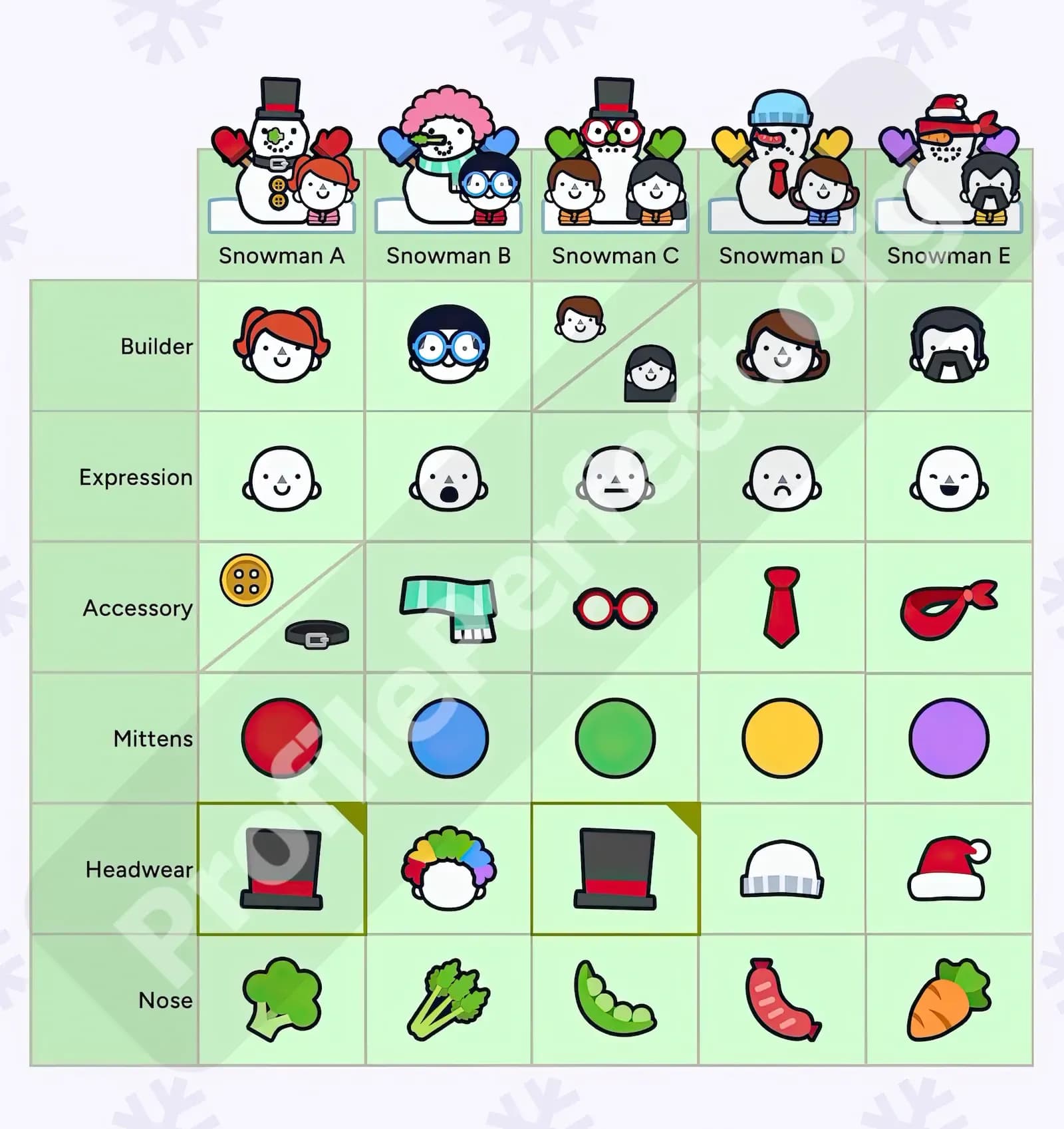
Snowman levels look cute, but they can be sneaky. Level 221 gives mittens in Red, Blue, Green, Yellow, and Purple. Several clues are direct, like Red mittens on Snowman A and Yellow mittens being far from a High Top Hat. But the same level also uses seasonal and object association: Christmas points to a Santa Hat, meat points to Sausage, and Pea connects to food color imagery.
The lesson here is that color clues rarely work alone. Red mittens might be direct, but Christmas, sausage, pea, celery, broccoli, and Santa imagery create a whole color-coded mental map. Profile Perfect loves these little associations because they make a level feel more like a themed dossier than a sterile grid.
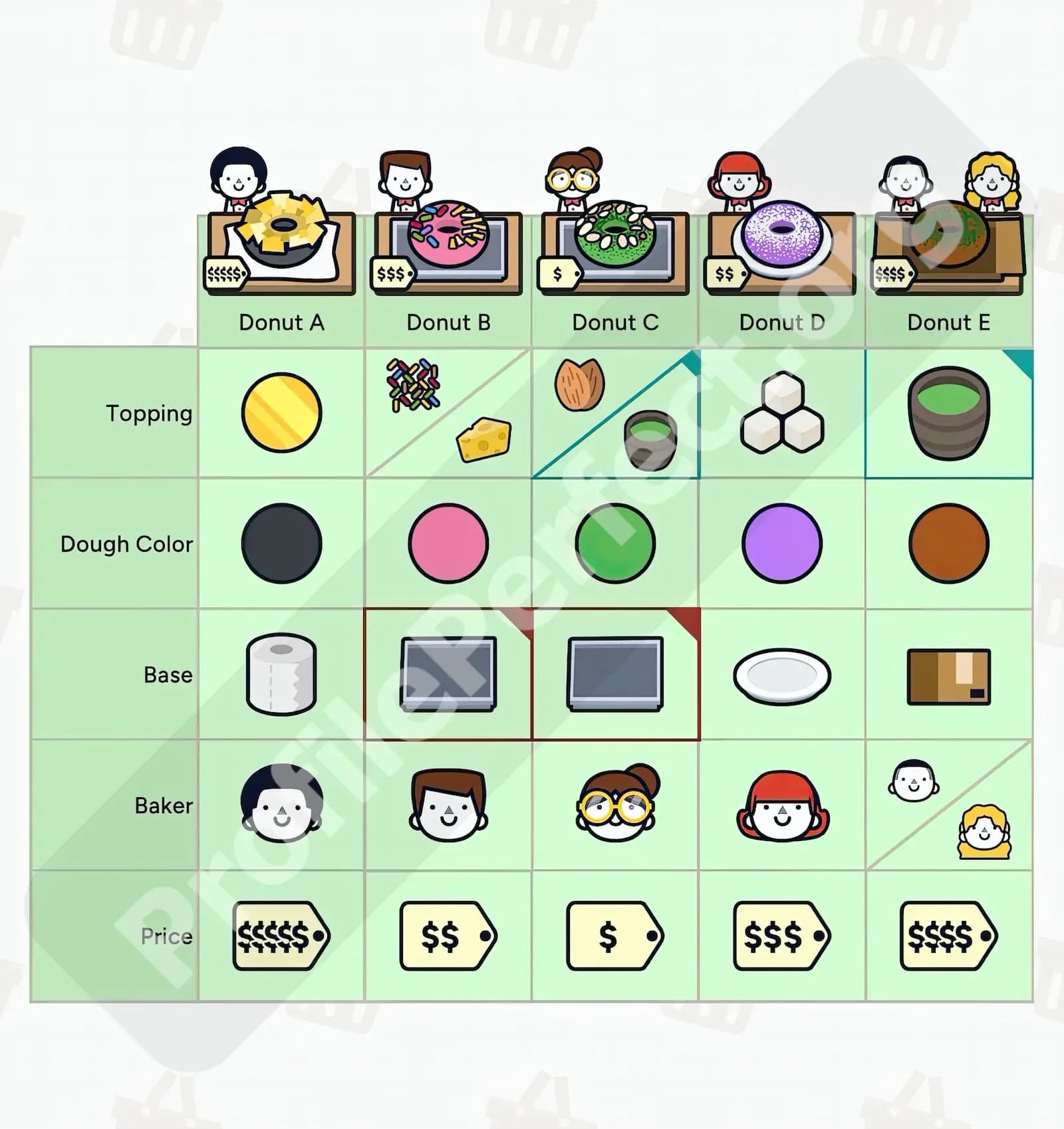
Level 239’s donut puzzle is a masterpiece of edible color association. “Leftmost donut has the darkest dough color” gives Black for Donut A. “People mistook the dough color inside the Box as chocolate” points to Brown for Donut E. Matcha points toward Green. Pink dough is direct, but it still carries that dessert-shop vibe.
This is one of the cleanest examples of how to solve Profile Perfect color clues fast. Food clues often work through common visual memory. Chocolate means Brown. Matcha means Green. Gold topping means luxury. Sugar topping may imply a glazed or sweet look, depending on the clue.
When a level uses food, slow down and translate every ingredient before filling the grid.

Level 300 gives one of the most useful color clue patterns in the game: “Backpack has the color that absorbs light the most.” That means Black. No debate.
This is a science-style clue, but it’s still common knowledge. Black objects absorb more visible light, while white objects reflect more. Profile Perfect uses this to disguise a simple answer as a tiny physics clue.
Once you decode it, the rest of the level becomes smoother. The Backpack is Black, Ava owns the Backpack, and that helps lock the weight and neighboring bag deductions. Color is the anchor, not the final destination.
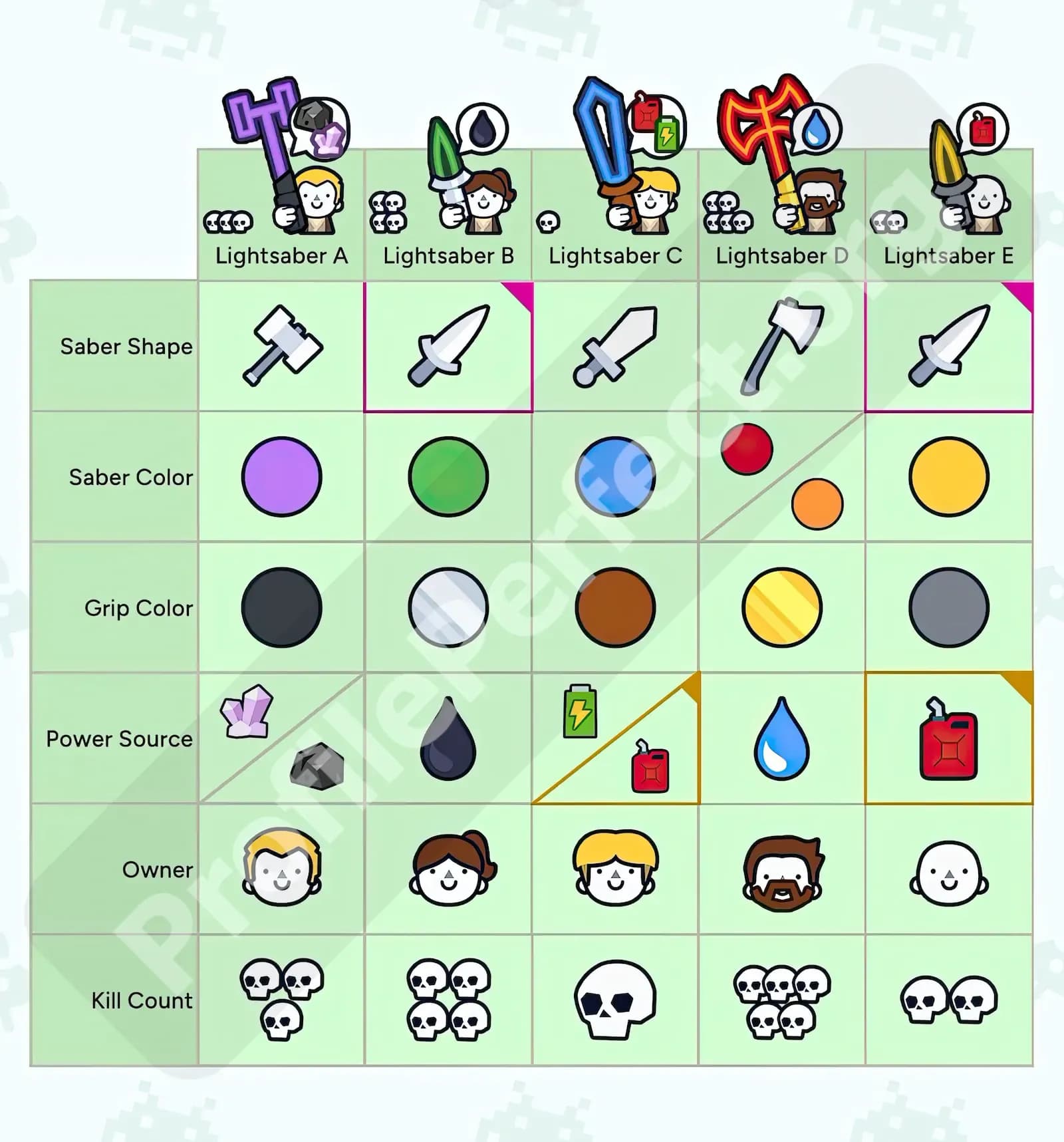
Level 334 is loaded with Star Wars-style saber drama: Purple, Green, Blue, Red, Orange, Yellow, Black, Silver, Gold, Gray, Brown. But the most important lesson is idiom handling.
“Black gold” means Oil. It does not mean the saber is Black and Gold. That’s a trap. The clue says Vespera uses black gold to power her lightsaber, so the power source is Oil. Meanwhile, “darkest hilt” does point to Black grip color for Arakin. Same color family, totally different logic.
This is why I always classify color clues before solving:
Literal color: “Yellow-Dagger lightsaber has a Gray hilt.”
Visual association: “darkest hilt” means Black.
Idiom: “black gold” means Oil.
Theme clue: “dark side” supports the Purple saber apprentice story, but you still need the grid relationships.
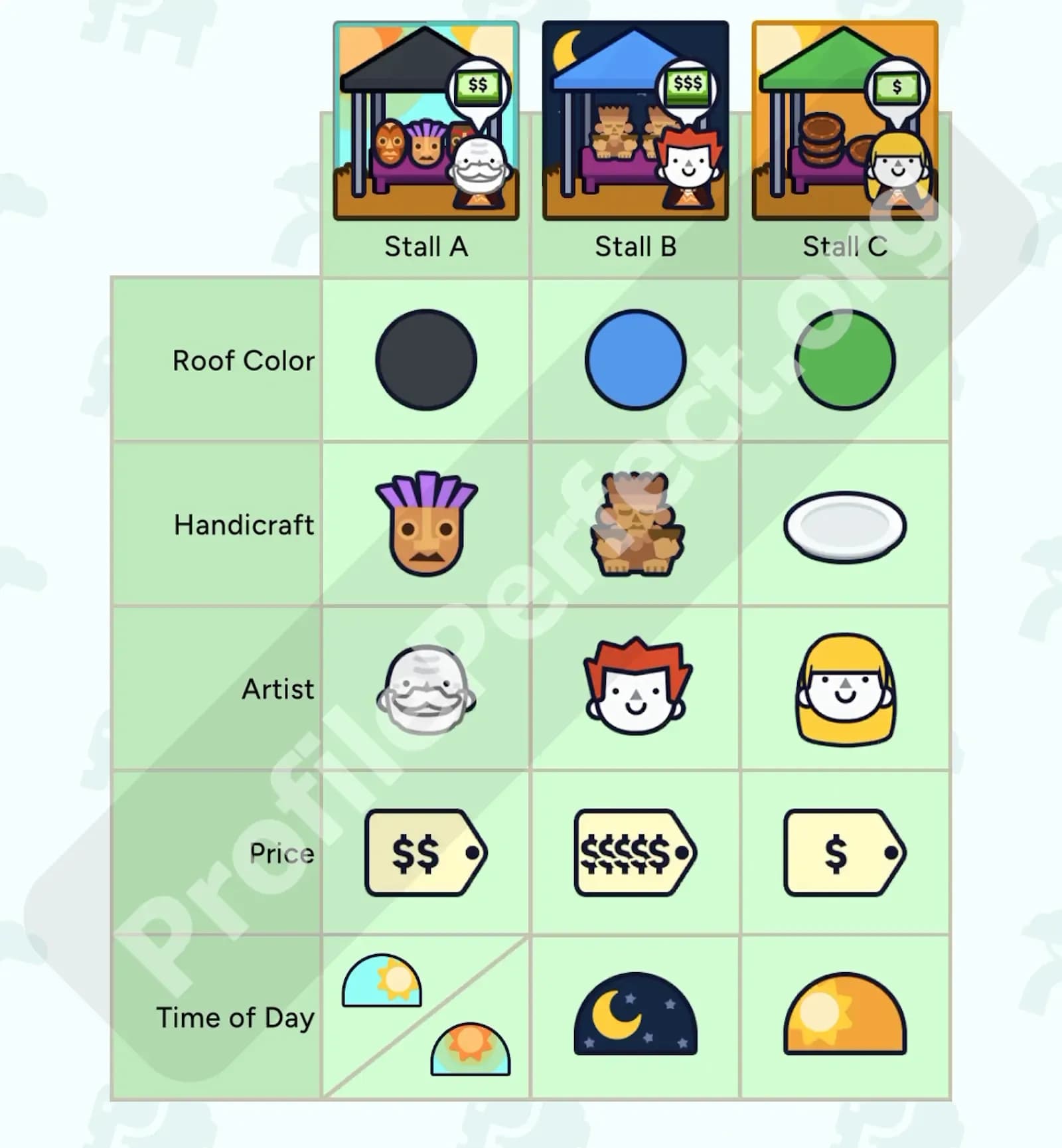
Level 400 is short but very effective. The clue says a female artist uses a Green roof for her go-green campaign. That’s pure symbolism. “Go green” means environmental awareness, and Profile Perfect turns the phrase into the Green roof.
This clue is fair because the phrase is common. It also shows why you should never ignore idioms. If the clue sounds like a slogan, campaign, proverb, or everyday phrase, it probably hides a direct answer.
The best Profile Perfect players don’t just read clues. They translate them. Color association clues are a mini-language inside the game, and once you learn that language, later levels stop feeling random.
Use this quick mental checklist:
If the clue describes light, darkness, or absorption, think Black or White.
If it mentions nature, eco campaigns, matcha, peas, or plants, think Green.
If it mentions rust, iron oxide, fire, rage, danger, or heat, think Red or Orange.
If it mentions water, sky, ice, Neptune, or cold, think Blue, Navy, or Purple depending on the options.
If it mentions chocolate, wood, earth, or dirt, think Brown.
If it says “black gold,” think Oil before you think color.
That last rule saves lives. Literally, in Profile Perfect terms.
Color clues are sneaky because they sit halfway between trivia and logic. But once you translate the clue into a clean grid value, the rest of the puzzle becomes the same satisfying elimination loop we’re here for. Decode first, tap second, and let the grid do the heavy lifting.