
Master Profile Perfect travel clues by turning smart cards, visas, currencies, ticket prices, and card networks into faster, safer grid deductions for wins.


Guide By Liam Stone
Published on June 15, 2026
Liam Stone has played Profile Perfect since the app first launched on the Apple App Store. He spotted its potential early, and that early bet turned into hundreds of hours spent solving levels, testing clue logic, and documenting answers for other players. Liam runs the YouTube channel Puzzle Game Answer where his puzzle walkthroughs have earned over 935,000 views and a growing community of more than 800 subscribers. He covers a wide range of mobile puzzle games beyond Profile Perfect, giving him firsthand experience with how these games design clues, structure levels, and trip up even experienced players. Every guide on this site reflects that hands on experience. Liam plays each level himself, verifies every answer against the in game grid, and rewrites confusing clues into plain language so you don't need to guess. If you want more of his walkthroughs, subscribe to his channel.
Loading calendar...
Some Profile Perfect clues feel like pure logic. Others quietly ask, “Hey, do you know how the real world works?” That’s where travel, tickets, documents, money, and payment clues get spicy.
I actually like this side of Profile Perfect. When it lands, it gives the puzzle a crunchy detective vibe: you’re not just matching colors and names, you’re translating everyday knowledge into grid answers. But when you miss the reference, the whole level can suddenly feel unfair. A clue like “studying abroad” is not just flavor text. It points to a Student visa. “Commuter passengers” is not random worldbuilding. It probably means Smart Card. “Switzerland” in a money level? The game wants you to think Franc.
That’s the loop this guide teaches: stop reading travel clues as decoration. Read them as hidden labels.
Profile Perfect is built around subjects and traits. The subjects are the columns: Station A, Bus B, Plane C, Card D, and so on. The traits are the rows: ticket type, destination, visa type, currency, fare, network, owner, altitude, or time of day.
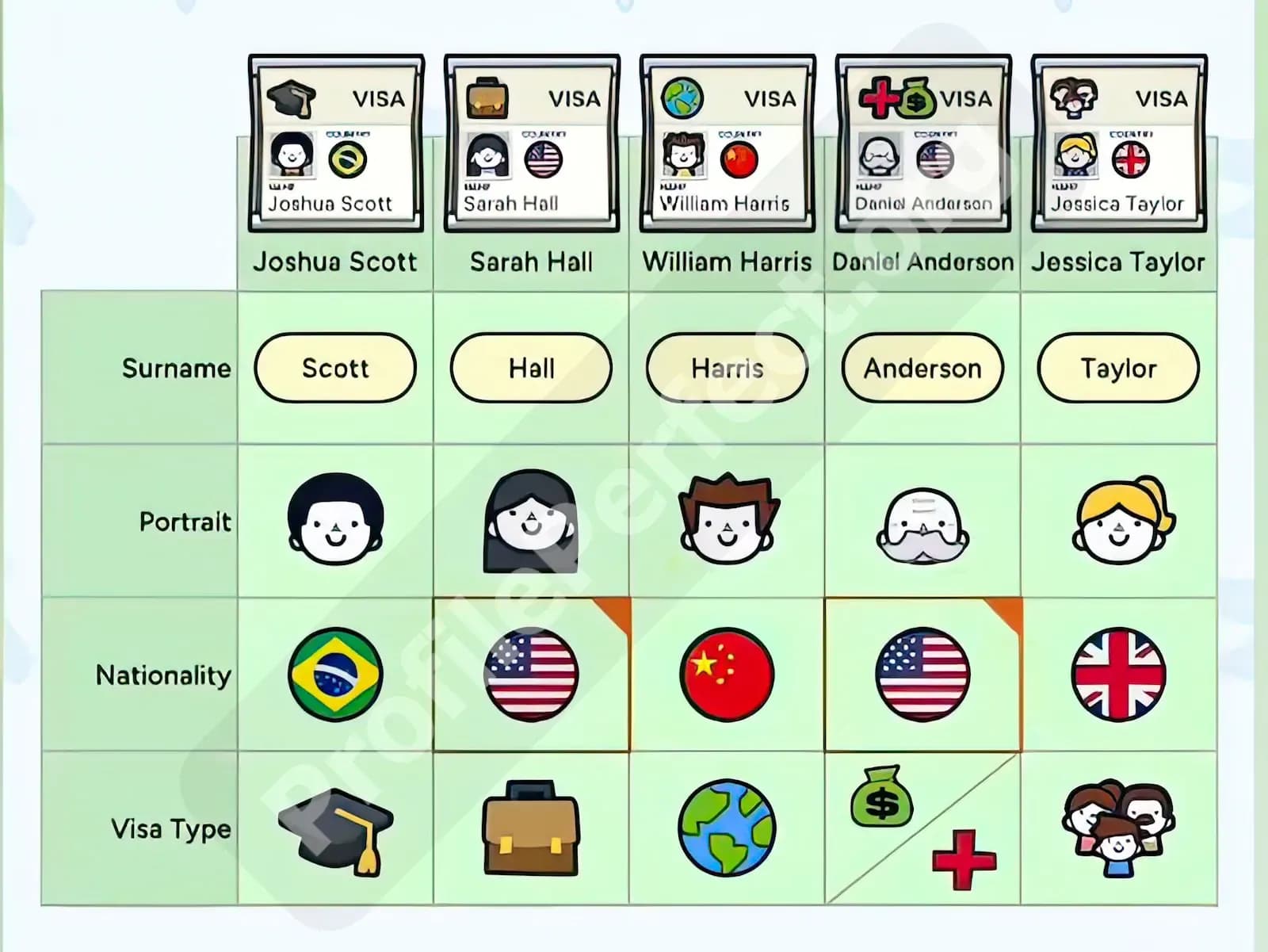
Travel clues mess with that structure because they often use real-world shorthand. They don’t always say “Joshua has a Student visa.” In Level 38, the clue says the Brazilian’s visa type is for studying abroad. If you instantly translate that into Student, you get a safe anchor. If you don’t, the clue sits there like a locked door.
The same thing happens in Level 19. A station clue says commuter train passengers must have a Smart Card. That is a direct match between the Commuter train and the Smart Card ticket row. In Level 20, “ticket to Manchester is the most expensive” turns Manchester into the $$$$$ fare, while “Striped bus to Brighton is the cheapest” gives you Striped, Brighton, and $ in one clean hit. That’s a banger clue if you know how to squeeze it.
Before tapping anything, scan the clue list for travel nouns and payment nouns. Then convert each one into a likely row.
Documents usually map to visa rows. “Studying abroad” means Student. “Month-long holiday” means Holiday. “Business visa” is obvious, but the game may hide it behind a work-trip clue. “Family visa” usually connects to relatives or joining family members. “Investor” and “Medical” are more specialized, so watch for money, treatment, hospitals, or either/or wording.
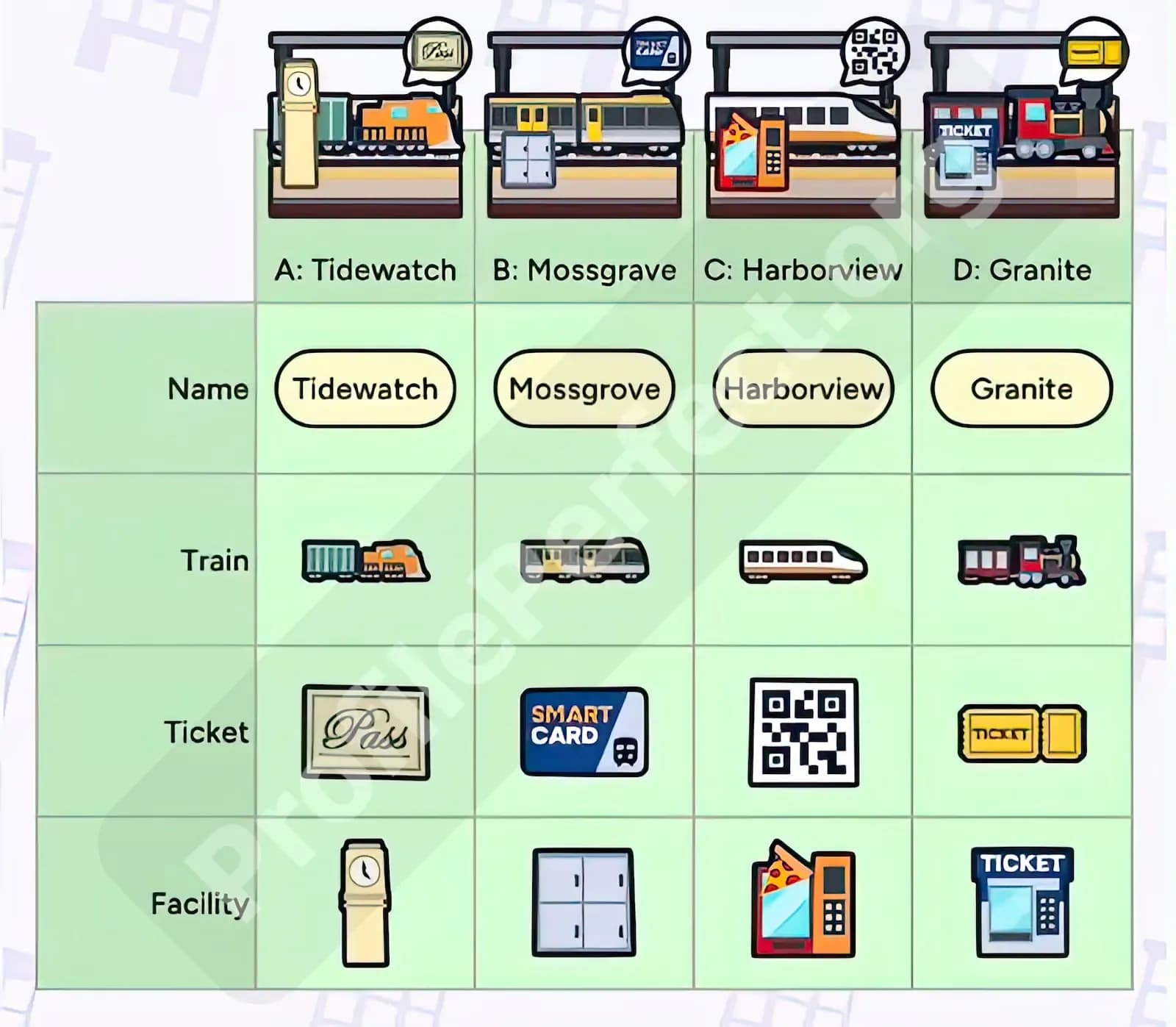
Tickets and transport map to access systems. In Level 19, QR Code, Smart Card, Paper Stub, and Handwritten Pass are all ticket values. A commuter train naturally fits Smart Card. A Ticket Machine printing paper tickets points toward Paper Stub. A Bullet Train with a modern boarding system fits QR Code once the clue chain confirms it.
Money clues map to currency, fare, or card network. Level 190 is basically a currency vocabulary check dressed as a bundle puzzle. “Most famous currency” points to Dollar. “Originates from Switzerland” points to Franc. “Asian currency” points to Yen. Level 191 pushes payment knowledge through card networks: Amex, Mastercard, Visa, JCB, and UnionPay.
One small rule matters a lot: if a solved cell looks like “Black / Red” or “Lounge Access / Discounts,” treat it as two values sharing the same cell. Profile Perfect sometimes stacks two correct values into one subject. Don’t nerf your own deduction by forcing one of them out.
Levels 19 and 20 are the early wake-up call for travel logic. Level 19 gives you stations, train types, ticket types, and facilities. The key is separating “vehicle type” from “ticket technology.”
Commuter belongs in the Train row. Smart Card belongs in the Ticket row. When the clue says commuter passengers must have a Smart Card, connect them immediately. Freight not accepting QR Code is a negative clue, so it helps you avoid a bad tap. Ticket Machine and Paper Stub also belong together through the paper-ticket wording.
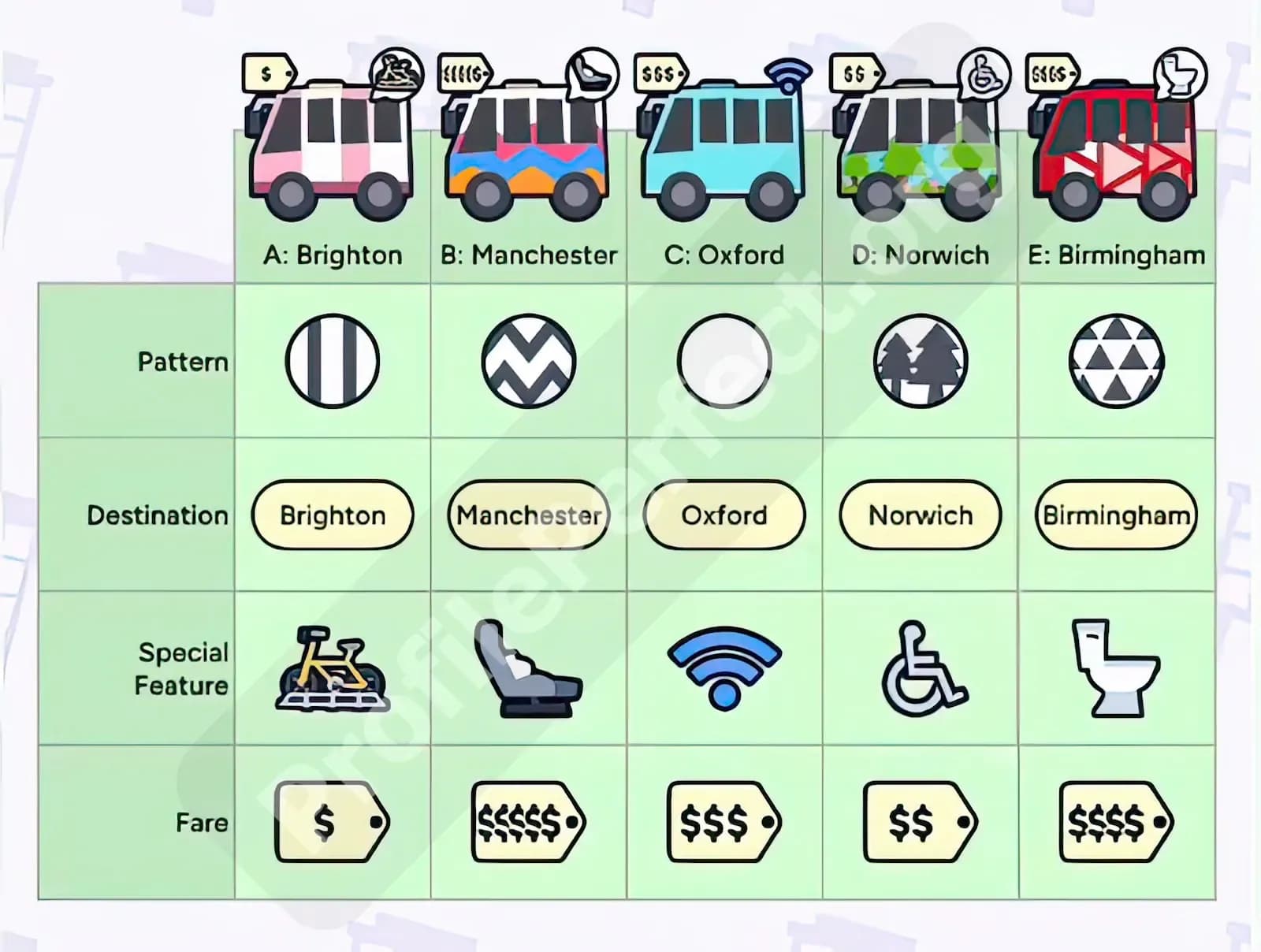
Level 20 shifts the same idea onto buses. Manchester, Oxford, Birmingham, Norwich, and Brighton are destinations. Wi-Fi, Sleeper Seat, Restroom, Wheelchair, and Bike Rack are special features. Fare symbols are the money row, so “most expensive” and “cheapest” matter as much as names. Manchester becomes $$$$$. Brighton becomes $. Solid being more expensive than Nature helps place Oxford and Norwich without guessing.
Level 38 is the big visa example, and it’s where I’d tell new players to slow down. The level includes nationalities, portraits, surnames, and visa types. The trap is that visa clues are written like travel reasons, not paperwork.
The Brazilian’s visa type is for studying abroad, so that’s Student. The Chinese traveler is excited for a month-long Holiday, so that’s Holiday. Mrs. Hall has Business. The Family visa is handled through spacing clues. Mr. Anderson’s clue mentions either investing or business, and later deductions split the remaining visa possibilities.
This is where Profile Perfect feels like a proper logic-grid game instead of a rehash. You’re building a passport file: nationality, portrait, surname, visa purpose, then position. The safe play is to fill direct purpose clues first, then solve the spacing clues after you have anchors.
Money levels can look intimidating because the vocabulary gets dense. Level 190 uses bundles, colors, binders, and thickness. But the currency row becomes much easier once you translate the geography. Switzerland means Franc. Asian currency means Yen. Dollar is described as the most famous currency. Ruble and Euro fall into place through elimination and binder clues.
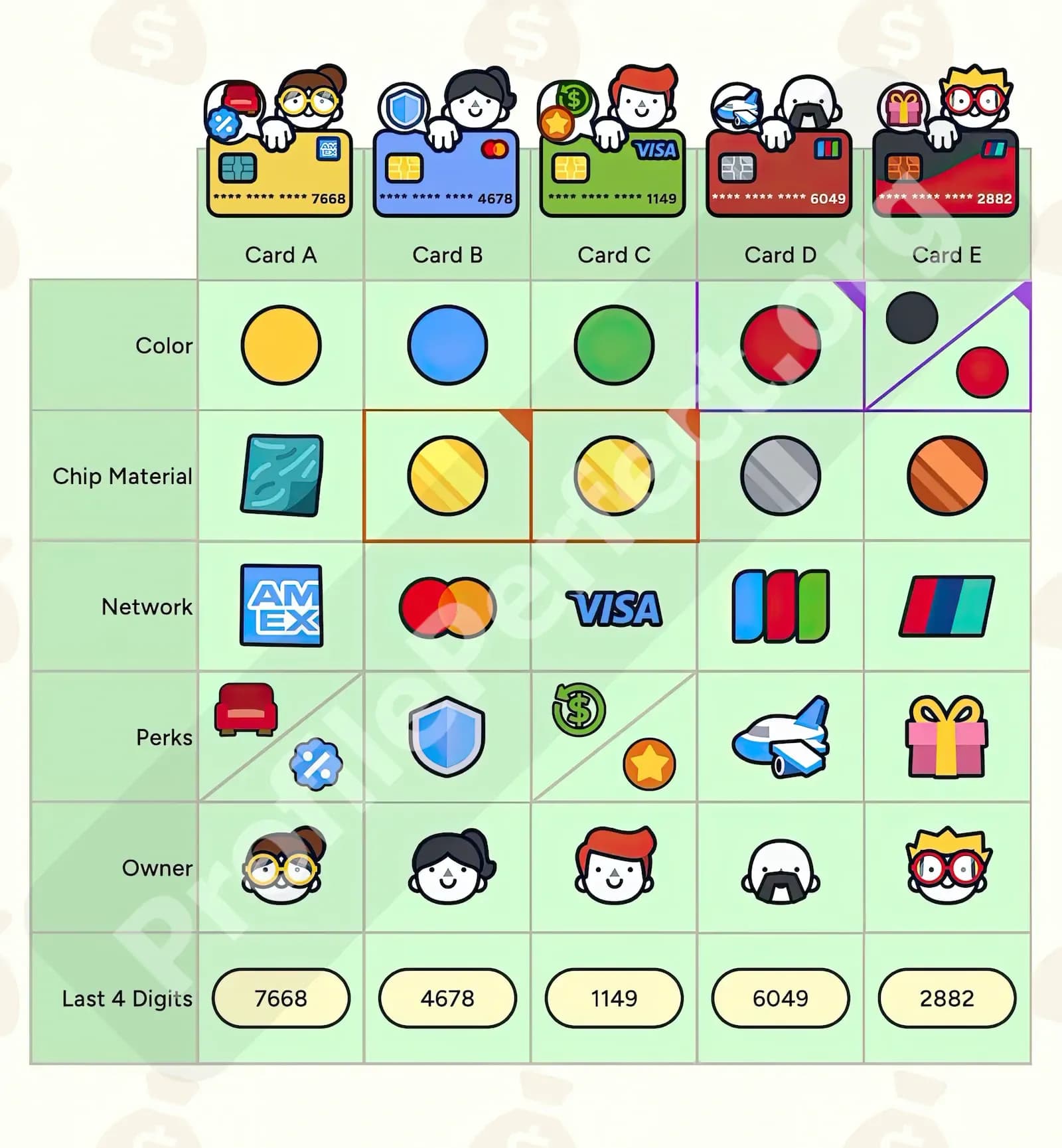
Level 191 is more chaotic. It has card colors, chip materials, networks, perks, owners, and last four digits. This level asks you to know that Amex, Mastercard, Visa, JCB, and UnionPay are payment networks. It also uses benefit language: travel to Europe points toward Travel Miles; surgery cost points toward Insurance; points being stacked means Points; Amex gets Lounge Access and Discounts.
My rule for payment levels is simple: networks are brands, perks are rewards, digits are identity locks, and colors are visual anchors. Don’t mix those rows. If you read “Visa” as a travel document instead of a card network in this level, the whole grid can tank fast.
Later travel-adjacent clues get a little sneakier. Level 214 is about couriers, but it still uses transport logic. “12pm” means Noon. “Breakfast hours” means Dawn or Morning. “Moonlight” means Night. “Sun is setting” points to Evening. These are time translations, not vibe clues.
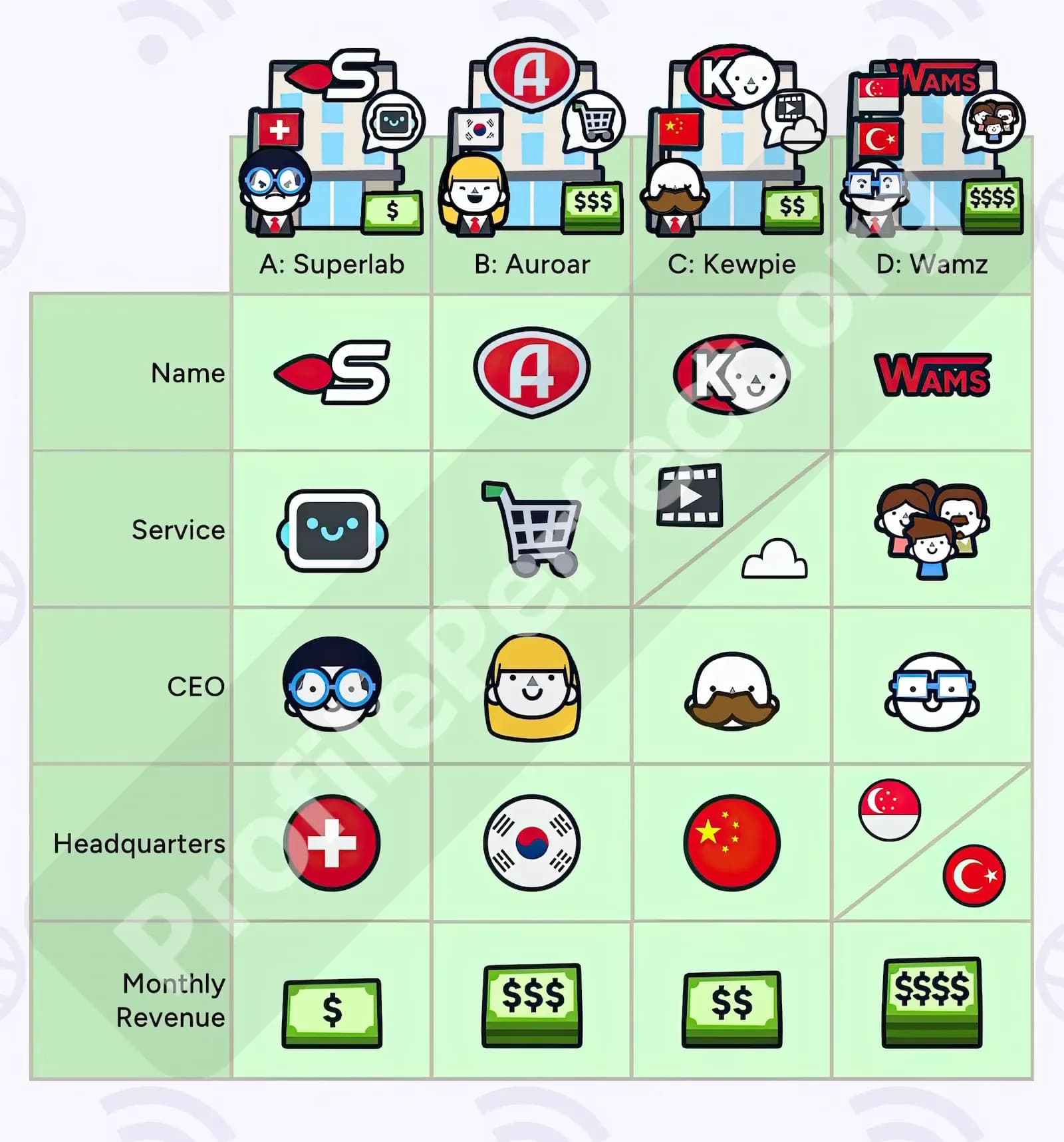
Level 284 uses headquarters and business knowledge. A nation that lacks a de jure capital points to Switzerland. K-Pop points to South Korea. “Attention as its currency” points to Social Media. Again, the trick is row discipline: headquarters, service, revenue, and CEO are separate rows.
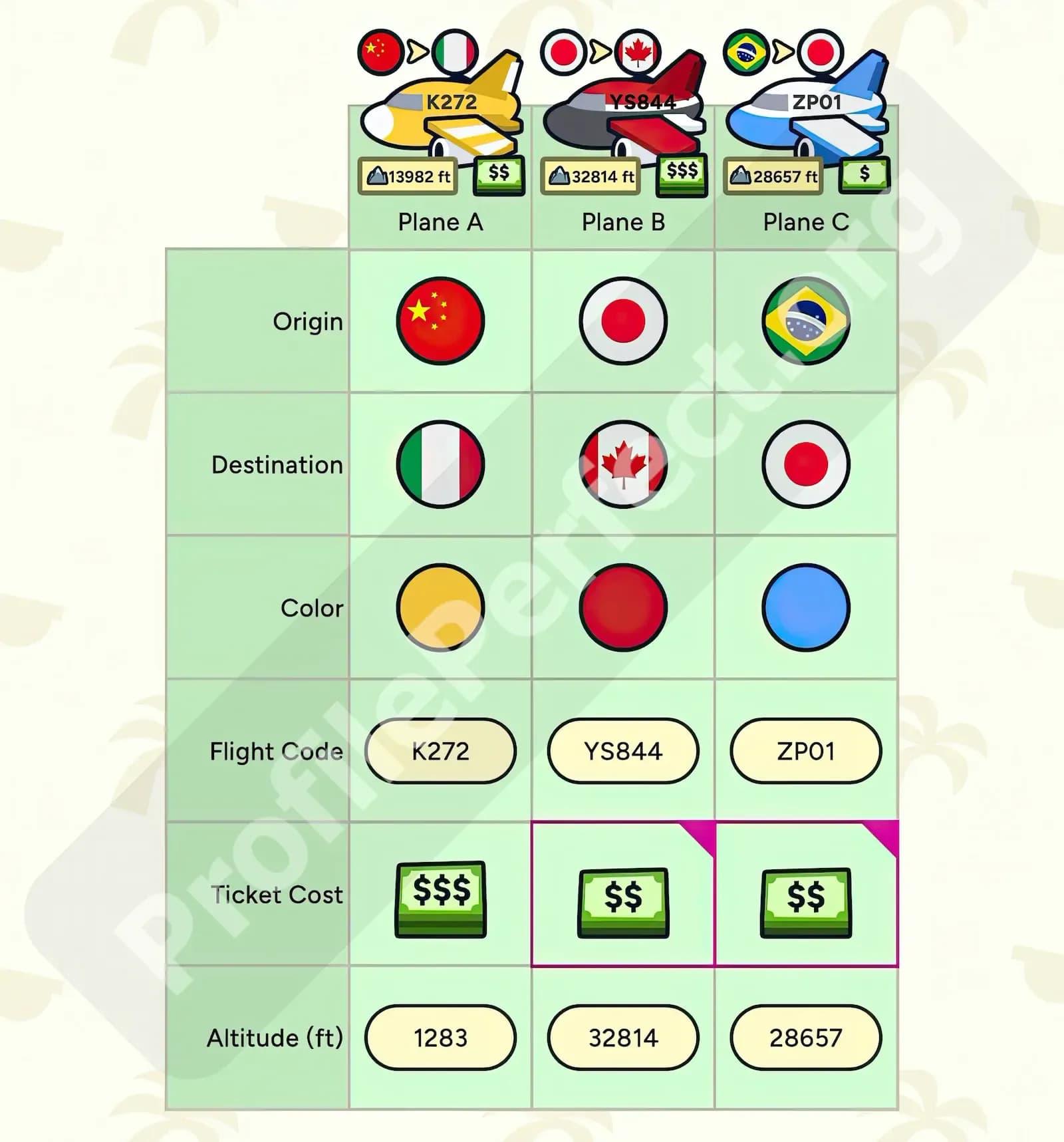
Level 291 brings the travel category back into flight routes. “Largest wine producer” points to Italy, so the most expensive plane is heading there. The rightmost plane departs from Brazil. The Blue plane arrives in Japan. A flight from China to Italy that is taking off gets the low altitude clue. Don’t guess altitude here; let the route clue do the work.
Use this mental cheat sheet whenever a travel or payment phrase shows up:
The best way to beat these Profile Perfect levels is to make a tiny vocabulary pass before making any taps. Scan for countries, transport words, ticket formats, time-of-day phrases, and payment terms. Then label the row each word probably belongs to.
After that, place only the safest anchors: Student visa, Smart Card, Dollar, Franc, QR Code, Manchester’s highest fare, Brighton’s cheapest fare, Italy, Noon, and Night. Once those anchors are in, the row-reduction loop starts doing work. The remaining cells become much less scary.
The big mistake is treating these clues as trivia first and logic second. They’re both. Profile Perfect wants you to know basic travel vocabulary, but it still expects clean deduction. Translate the clue, place the row, check the neighbors, and let elimination finish the job.
That’s the trick. Travel clues aren’t there to confuse you. They’re shortcuts hiding in plain sight.