
Learn how to solve Profile Perfect object function clues by turning purpose-based hints into clear answers across levels 19, 20, 35, 79, 103, 107, 181, 235, 300, and 399.


Guide By Liam Stone
Published on June 15, 2026
Liam Stone has played Profile Perfect since the app first launched on the Apple App Store. He spotted its potential early, and that early bet turned into hundreds of hours spent solving levels, testing clue logic, and documenting answers for other players. Liam runs the YouTube channel Puzzle Game Answer where his puzzle walkthroughs have earned over 935,000 views and a growing community of more than 800 subscribers. He covers a wide range of mobile puzzle games beyond Profile Perfect, giving him firsthand experience with how these games design clues, structure levels, and trip up even experienced players. Every guide on this site reflects that hands on experience. Liam plays each level himself, verifies every answer against the in game grid, and rewrites confusing clues into plain language so you don't need to guess. If you want more of his walkthroughs, subscribe to his channel.
Loading calendar...
Some Profile Perfect clues don’t hand you the answer. They describe what an object does, what it is used for, or what kind of person would need it. That sounds simple, but this is exactly where a lot of players burn lives. The clue never says “Kitchen.” It says “tools to make food.” The clue never says “Ticket Machine.” It says something that prints paper tickets. The game is asking you to translate function into identity.
That’s the whole loop of object function clues: don’t ask, “What word appears in the clue?” Ask, “What object, feature, or category does this description point to?” Once you make that mental switch, Profile Perfect starts to feel much less floaty and much more rock-solid.
Object function clues are hints that describe purpose instead of naming the answer directly. They usually involve tools, machines, bags, locks, furniture, transport features, storage spaces, or amenities. The game gives you a function, then expects you to connect it to the correct trait.
For example, a room with “tools to make food” is probably a Kitchen. A machine that prints tickets is probably a Ticket Machine. A bag that holds travel clothes for a family is probably a Suitcase. A key that opens a Vault probably needs the right key type. These clues feel like common knowledge checks, but they are still logic clues. The trick is to translate them before tapping anything.
In Profile Perfect, that matters because a wrong checkmark costs a life. I’ve had moments where I rushed a clue because the vibe felt obvious, only to realize the clue was pointing at a related object, not the object I tapped. That’s frustrating, and honestly, it’s the kind of mistake this game loves to punish.
Here’s the technique I recommend for these clues:
Read the clue once for the sentence. Read it again for the function. Then ask: “What job is being described?”
Do not lock the cell just because a word sounds familiar. In Level 3, “tools to make food” points to Kitchen because the function is food preparation. That is a clean example. But later levels get crunchier. They may describe something by its effect, by who uses it, by what it stores, or by what it opens.
Before you tap, separate the clue into three parts:
Object or subject: Which column is being discussed? Function: What is the thing used for? Answer category: Is the clue solving type, feature, purpose, content, material, or location?
That last question is huge. A clue about a “Bike Rack” on a bus is not solving the bus destination. A clue about a “Number Lock” on luggage is not solving the luggage type. The function tells you which row to target.
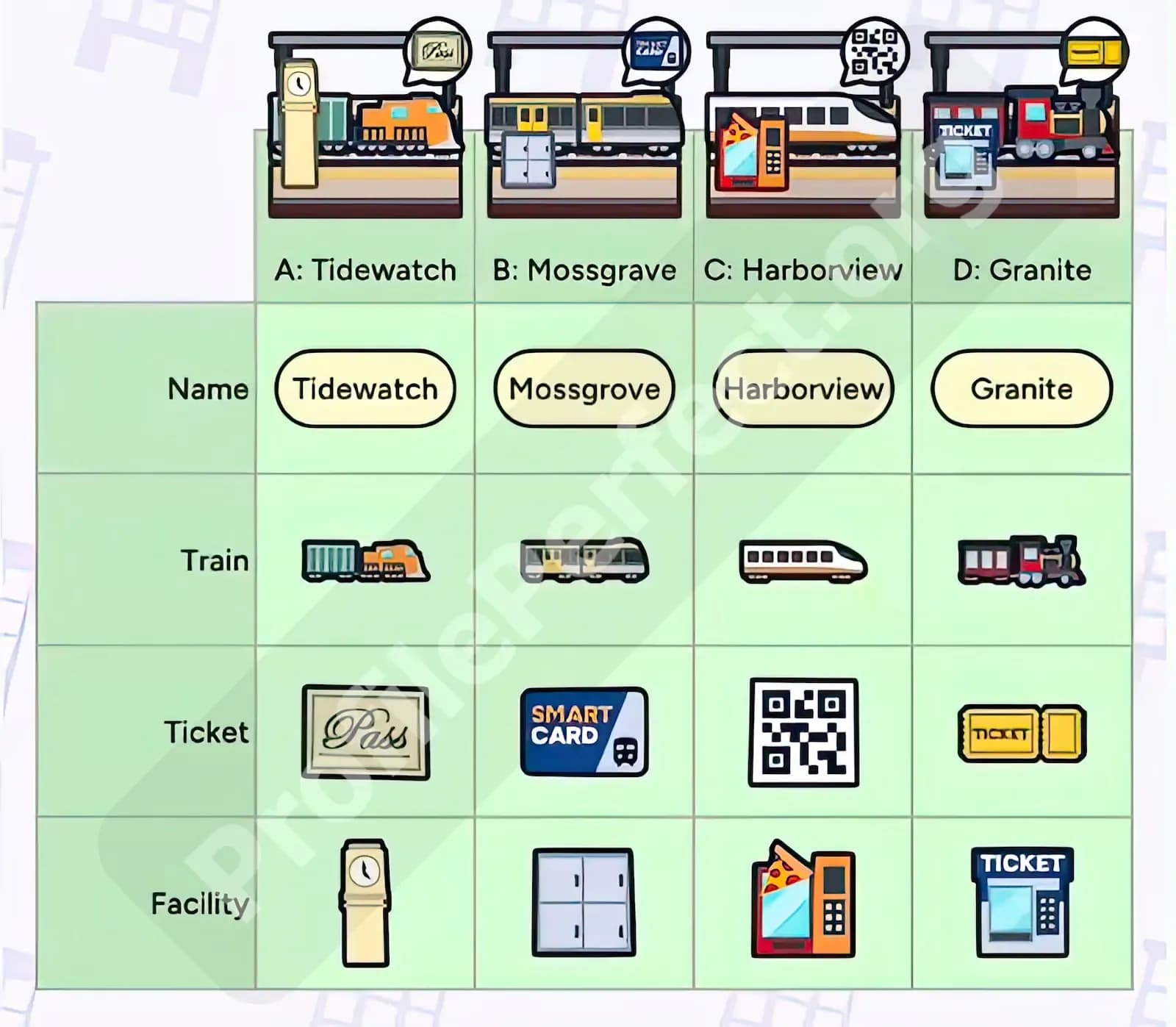
Level 19 is a great object function lesson because the station facilities are described through what they do. “Ticket Machine prints hundreds of Paper Tickets daily” points to the Ticket Machine facility and connects it with the Paper Stub ticket. You’re not just identifying a machine; you’re linking machine function to ticket type.
The same level uses “Pizza at the touch of a button” to identify the Pizza Machine. That clue has a fun, slightly goofy vibe, but the logic is clean. A machine that gives pizza when activated is a Pizza Machine. Once you place that facility, you can use neighboring and distance clues to finish the station layout.
The key takeaway: machines are usually solved by output. Ask, “What does this machine produce or provide?”
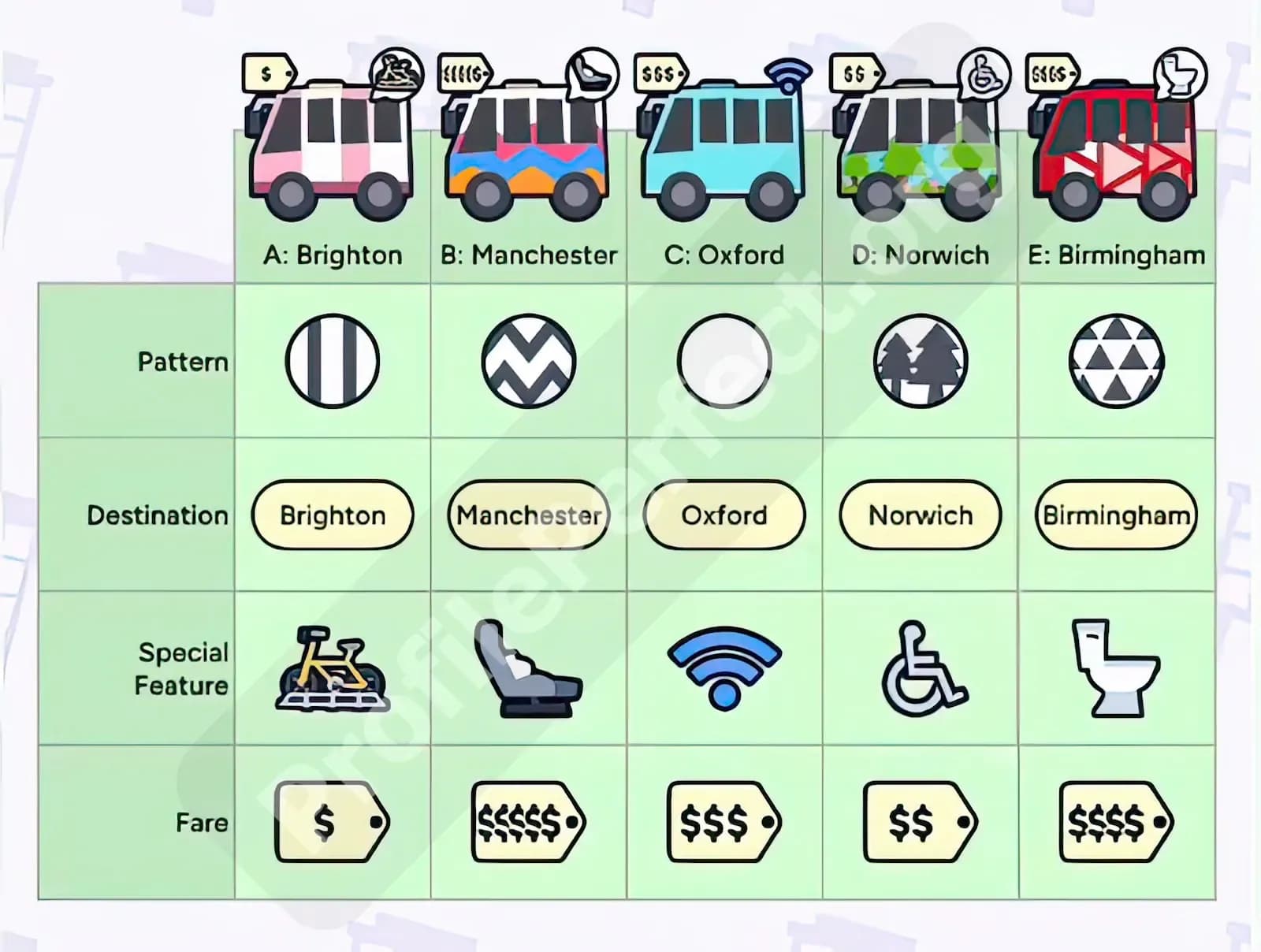
Level 20 uses bus features in a more practical way. A Bike Rack is mounted on the leftmost bus. Wi-Fi belongs to the bus in the middle and later links to Oxford. A Sleeper Seat sits to the left of the Oxford bus. A Restroom goes with the Geometric bus heading to Birmingham. A Wheelchair-friendly bus is not going to Brighton.
These are not random decorations. Every feature describes a passenger use case. Bike Rack means cycling support. Wi-Fi means internet access. Sleeper Seat means long-distance comfort. Restroom means travel convenience. Wheelchair means accessibility.
When a level gives you transport features, think like a passenger. What service does this vehicle offer? Then lock the feature only when the clue clearly identifies the bus.
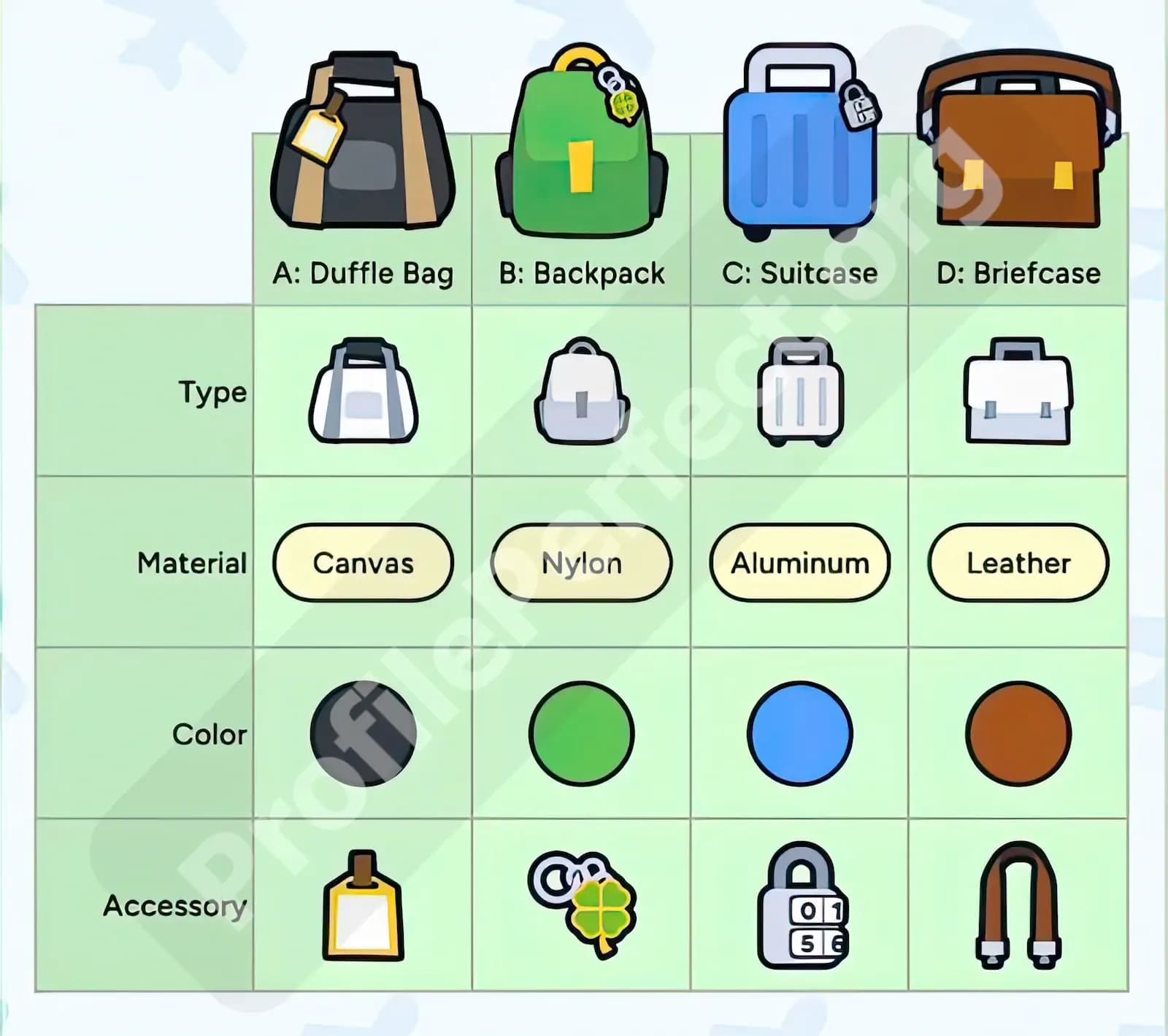
Level 35 is one of the cleanest bag-function levels. The clue “Luggage C holds the travel clothes for a family of 4” points to Suitcase. Why? Because a suitcase is the luggage type built for larger travel storage. The clue doesn’t say “Suitcase,” but the function gives it away.
The “009” PIN clue points to the Number Lock on the Blue luggage. “Duffle Bag has a Tag for its forever-forgetful owner” connects Duffle Bag with Luggage Tag. “Lucky symbol accessory is not attached to the Leather bag” helps separate Keychain-style logic from the Leather Briefcase.
For bag levels, ask: “What would this bag carry, protect, or attach?” That one question cuts through a lot of noise.
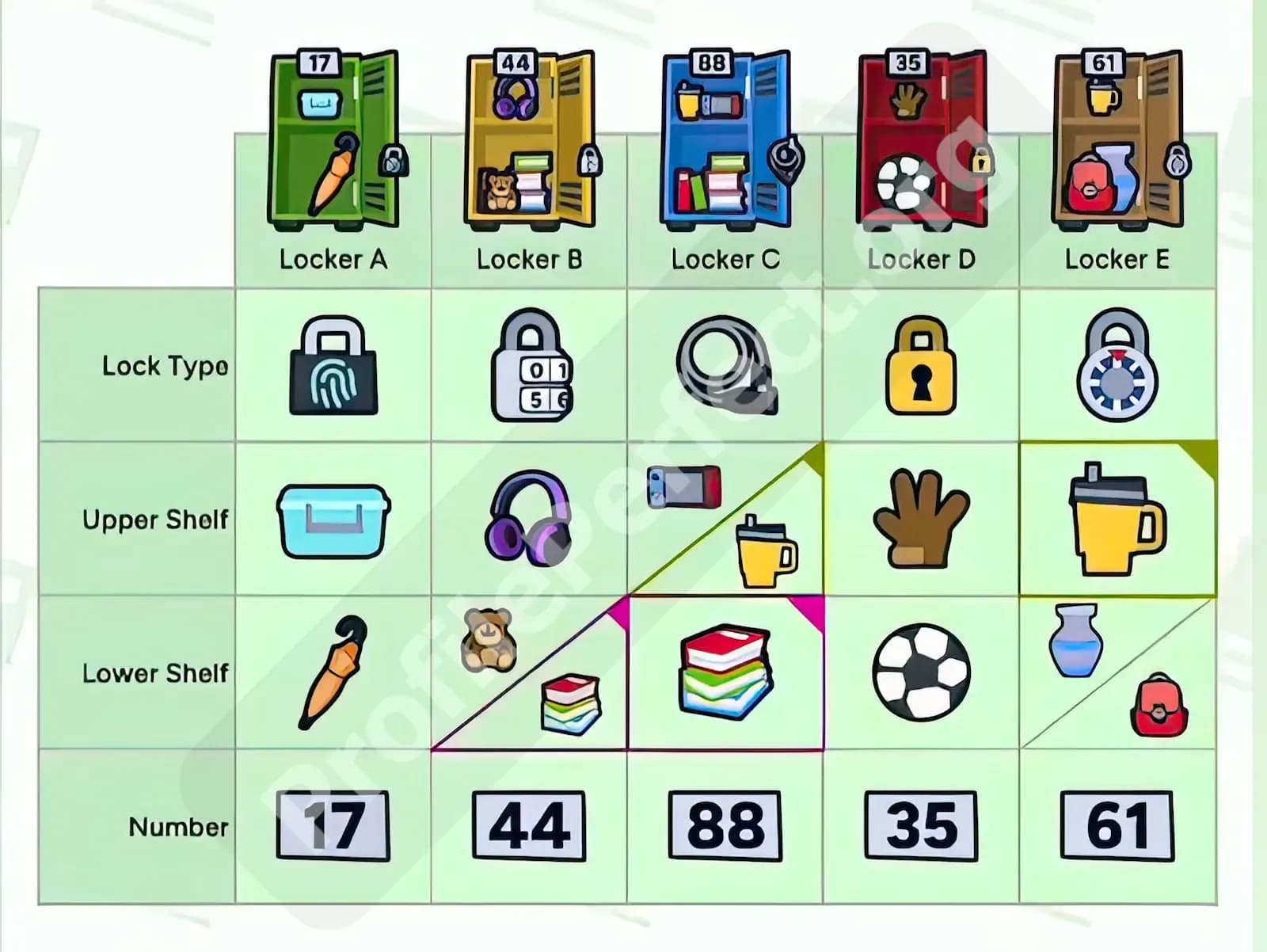
Level 79 gets much crunchier because lockers contain objects that imply owners or lock types. “Locker B unlocks with a number code” means Number Lock. That’s a pure function clue: how it opens defines the lock type.
Then the clue “The goalkeeper stores the Ball alongside his Glove” links Glove and Soccer Ball. It’s not just storage; it’s a role clue. Goalkeepers use gloves and balls, so the function of the items identifies a sports-related locker.
Later, “Locker with the Glove does not have any sensor” helps eliminate Fingerprint, because fingerprint locks are sensor-based. This is a banger example of negative function logic. The clue does not name Padlock directly, but removing sensor-based locks pushes you toward a more mechanical option.
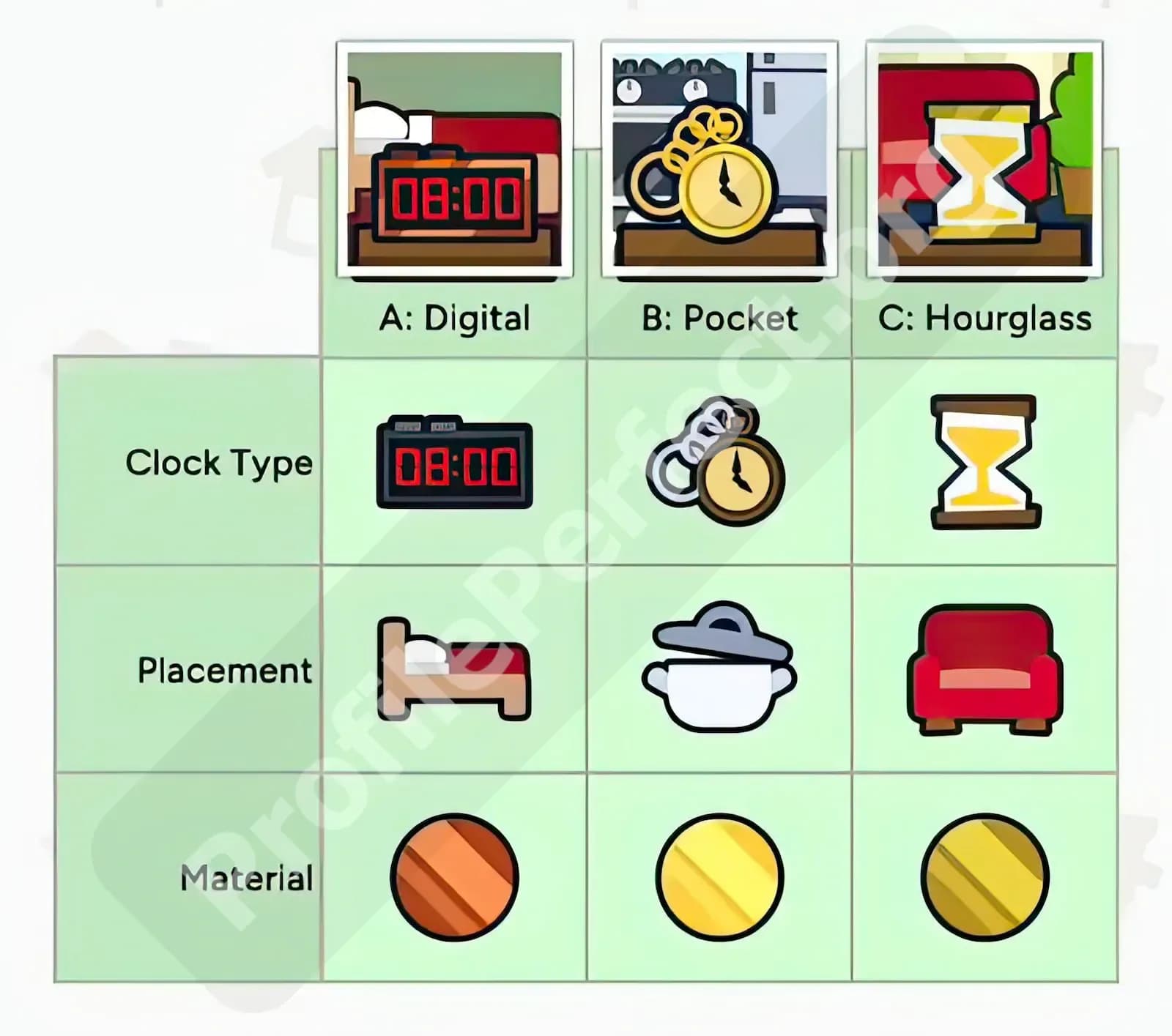
Level 103 uses clock function in a quieter way. “Clock A is more precise than Clock C” points toward Digital for Clock A and Hourglass for Clock C. This clue is about performance, not appearance. Digital clocks are associated with precision, while hourglasses are older, less exact timing tools.
Then “Clock A is in the room people go to when they want to rest” points to Bedroom. Again, the clue does not simply say the room name. It describes the room’s purpose.
For object function clues involving clocks, appliances, or room placement, ask two things: “What does this object do best?” and “Where would people use it?”
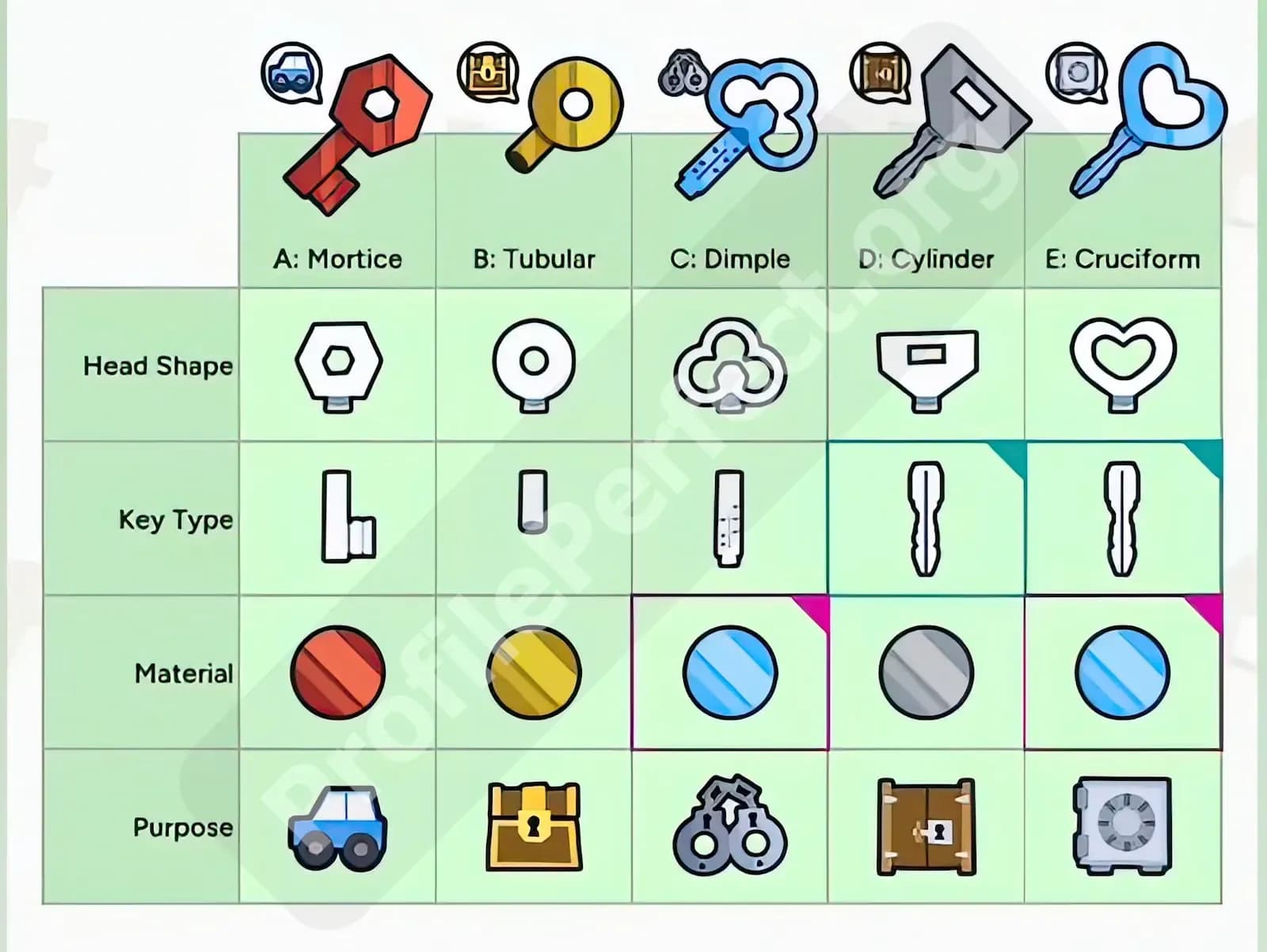
Level 107 is basically a masterclass in purpose clues. Every key has a Purpose row: Car, Treasure Chest, Handcuff, Gate, Vault. The clue “Circular-head key opens the Treasure Chest” directly connects head shape and purpose. “Key for Handcuff is next to the Treasure Chest” turns purpose into position. “Opening the Vault would need a Cruciform key type” links purpose to key type.
This is where players should slow down. Keys are naturally function-based objects, so almost every clue can hide a relationship between shape, material, type, and target. A Vault is high-security, so the game pairs it with Cruciform. A Gate is not made from Titanium. Handcuff is not Brass. Each clue narrows the purpose web.
The best technique here is to create a mental sentence: “This key is used to open ___, so its purpose is ___.” Then connect the type or material only when the clue explicitly supports it.
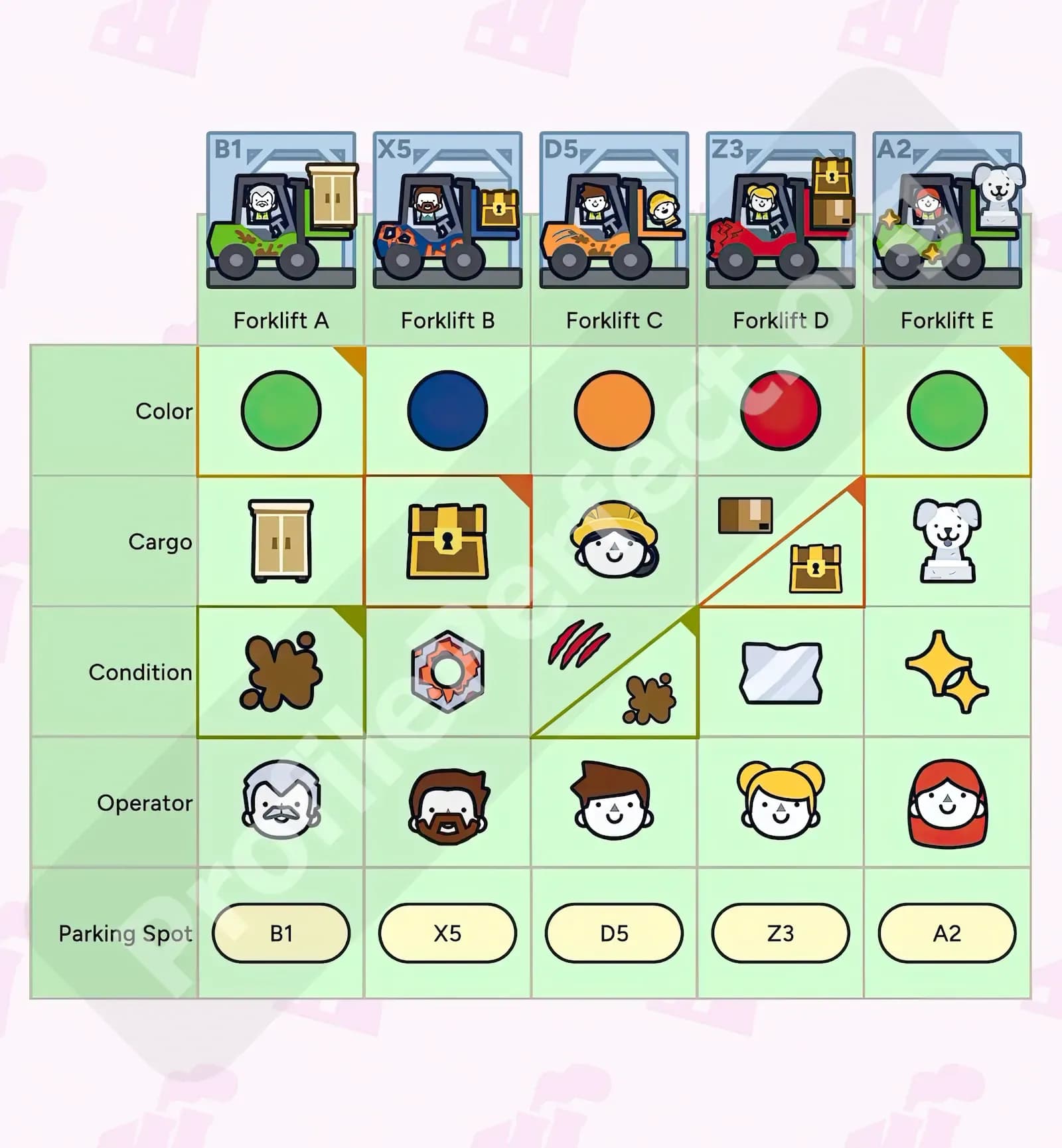
Level 181 shifts from handheld objects to machines. Forklifts are defined by what they carry, where they park, and what condition they are in. A forklift moving a heavy Statue tells you about cargo. A forklift carrying a Wardrobe also signals transport function. “The Box currently is being moved by Rebecca” links cargo with operator.
This level can feel messy because there are colors, operators, parking spots, cargo, and conditions all running at once. The function clue helps anchor the grid. Forklifts move cargo. So when a clue describes what is being lifted or transported, go straight to the Cargo row. Don’t get distracted by color or operator until the clue gives you that connection.
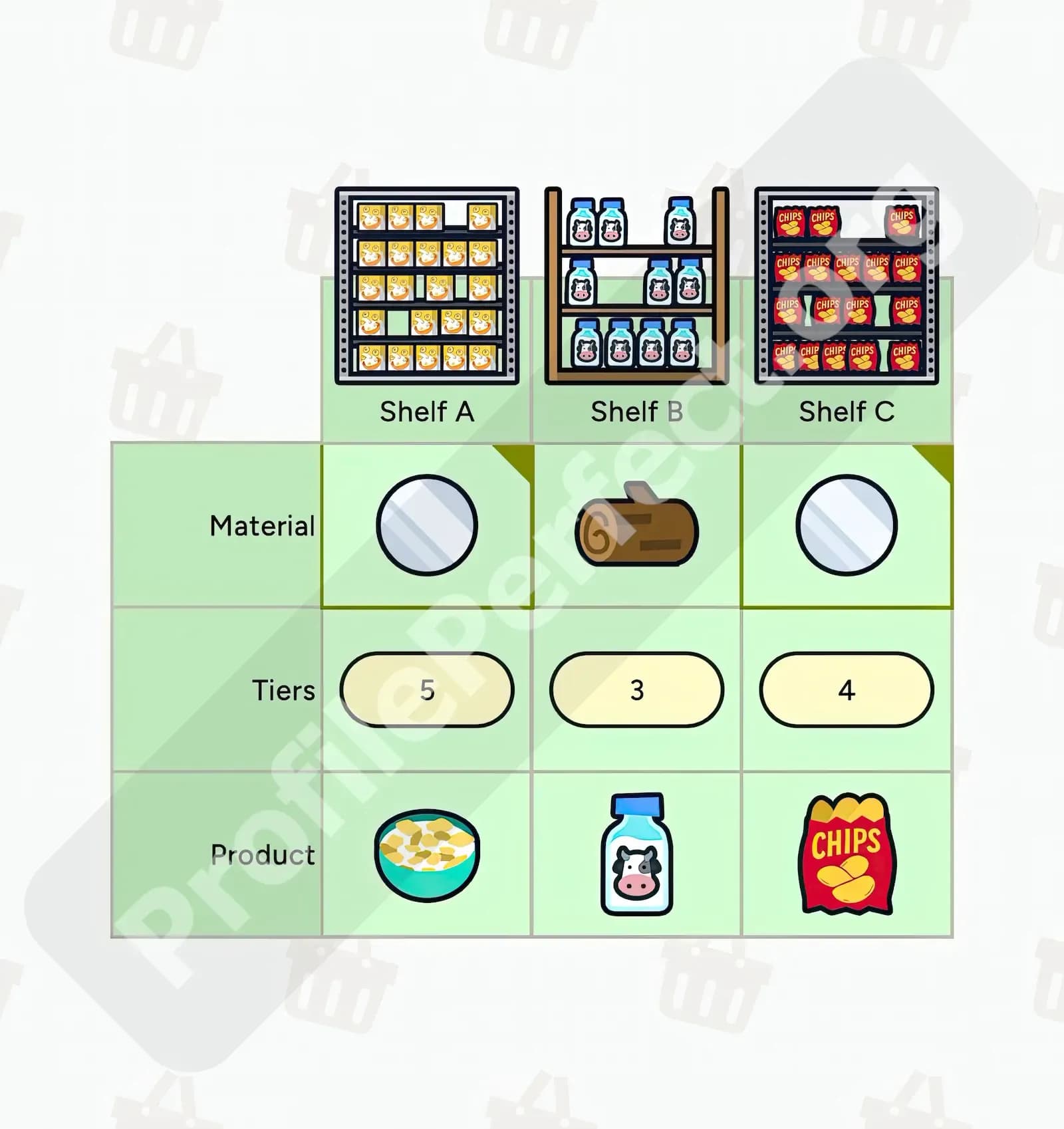
Level 235 looks simple, but it teaches a subtle furniture-function idea. Shelves are defined by material, tiers, and product. “Shelf B can fit less items than the other two” hints at capacity. Fewer tiers mean less storage. “Leftmost shelf has the most tiers” tells you which shelf has the largest storage function.
Then product clues do the cleanup: Chips are not inside the biggest shelf, and Cereal and Chips are not in the center. This is a nice reminder that furniture clues often revolve around capacity. Ask, “How much can it hold?” before deciding where products belong.

Level 300 is a chaotic bag level, but the object function clues are excellent. A Trolley bag’s neighbor is Black. The Backpack has the color that absorbs light the most, which means Black. The Drawstring bag weighs less than its neighbors. The Tote Bag owner is hungry yet unable to buy food, which points to a forgotten Wallet. The hungry pair see their bag and think of mac and cheese, pointing to a Lunch Box clue.
This level is not only about what a bag is used for. It is about what missing contents imply. If someone is hungry and cannot buy food, Wallet is the missing object. If someone thinks of mac and cheese, Lunch Box becomes the likely forgotten content. The logic is semantic, but still fair if you translate the situation carefully.
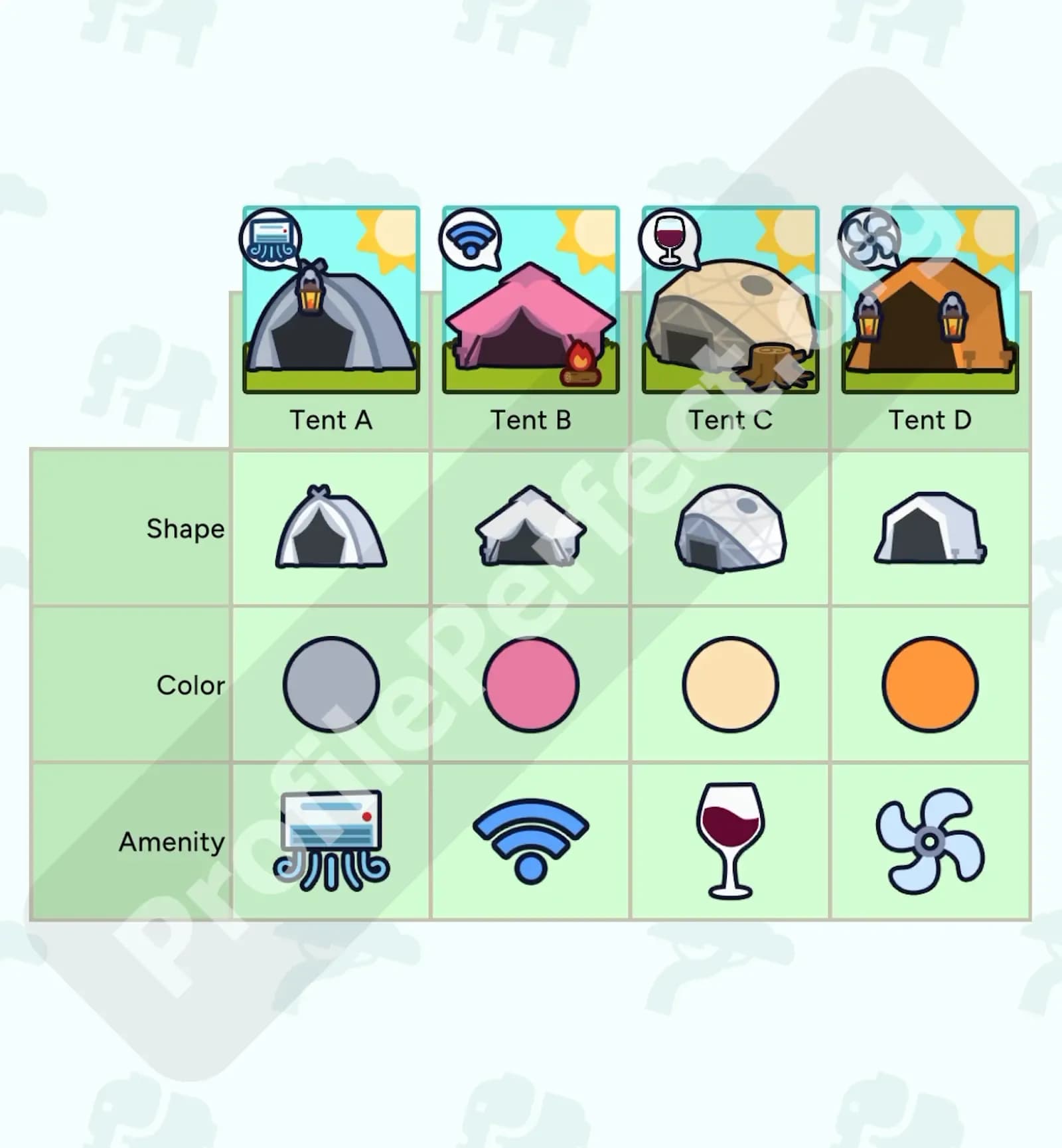
Level 399 uses tent amenities: Air Conditioning, Wi-Fi, Minibar, and Fan. “Pink tent is equipped with a military-grade internet” points to Wi-Fi. “Tents A and D have similar amenities, but Tent A’s is more modern” compares Air Conditioning and Fan. Both cool the tent, but Air Conditioning is the modern version.
That comparison is the whole trick. Some function clues are not about one object alone; they ask you to compare two objects with similar purposes. Fan and Air Conditioning both solve heat, but they do it at different tech levels. That’s the clue’s hidden bite.
Object function clues are some of the most satisfying clues in Profile Perfect once you get used to them. They reward real-world common sense, but they still need careful grid discipline. Don’t guess from vibe alone. Identify the function, choose the correct row, then place the answer only when the clue is clear.
The fastest players don’t memorize every answer. They translate. Machine output becomes facility. Storage purpose becomes bag type. Opening target becomes key purpose. Passenger need becomes bus feature. Room activity becomes room type. Once you train that reflex, these levels stop feeling like traps and start feeling like a clean, crunchy deduction loop.