
Learn how to solve Profile Perfect health, allergy, X-ray, warning sign, side effect, and hazard icon clues faster with examples from tricky levels.


Guide By Liam Stone
Published on June 15, 2026
Liam Stone has played Profile Perfect since the app first launched on the Apple App Store. He spotted its potential early, and that early bet turned into hundreds of hours spent solving levels, testing clue logic, and documenting answers for other players. Liam runs the YouTube channel Puzzle Game Answer where his puzzle walkthroughs have earned over 935,000 views and a growing community of more than 800 subscribers. He covers a wide range of mobile puzzle games beyond Profile Perfect, giving him firsthand experience with how these games design clues, structure levels, and trip up even experienced players. Every guide on this site reflects that hands on experience. Liam plays each level himself, verifies every answer against the in game grid, and rewrites confusing clues into plain language so you don't need to guess. If you want more of his walkthroughs, subscribe to his channel.
Loading calendar...
Some Profile Perfect clues don’t feel like puzzle clues at first. They feel like tiny pieces of real-world common sense: someone is allergic to gluten, a patient is dizzy, a tank has a radioactive icon, an X-ray shows something stuck in a skull, or a package has a flammable label. Miss that connection, and the level suddenly turns from a smooth logic loop into a shambling corpse of wrong taps and wasted lives.
That’s why health, safety, body, and warning clues are some of the most important clue types to master in Profile Perfect. They show up early, they keep coming back, and they get crunchier as the levels stack more traits into the grid. The trick is not to treat them as random flavor text. In Profile Perfect, a cough, rash, allergy, X-ray, side effect, or warning icon is usually a direct category marker.
The fastest way to solve these levels is simple: translate the clue into a safety category before touching the grid.
When I hit a health or warning clue, I immediately ask: what kind of real-world category is this pointing to?
A symptom usually points to a condition. A person sneezing, coughing, feeling dizzy, or having stomach trouble is not just “story.” It’s probably linking that subject to Flu, Diarrhea, Fever, Headache, Rash, or another condition row.
A warning sign points to a rule or safety restriction. No Smoking, No Pets, No Photos, Keep Dry, Fragile, Flammable, and Radioactive are all labels that belong in sign, hazard, or package-label rows.
A body part points to an X-ray category. If the clue says skull, chest, leg, arm, or head, don’t overthink it. That clue is probably mapping the image to the Body Part row.
A medicine clue often points to side effects. Nausea, diarrhea, sleepiness, dizziness, and sweating are not vibes. They are answer values.
Once you start reading the clues this way, Profile Perfect becomes much less floaty. You stop guessing and start sorting.
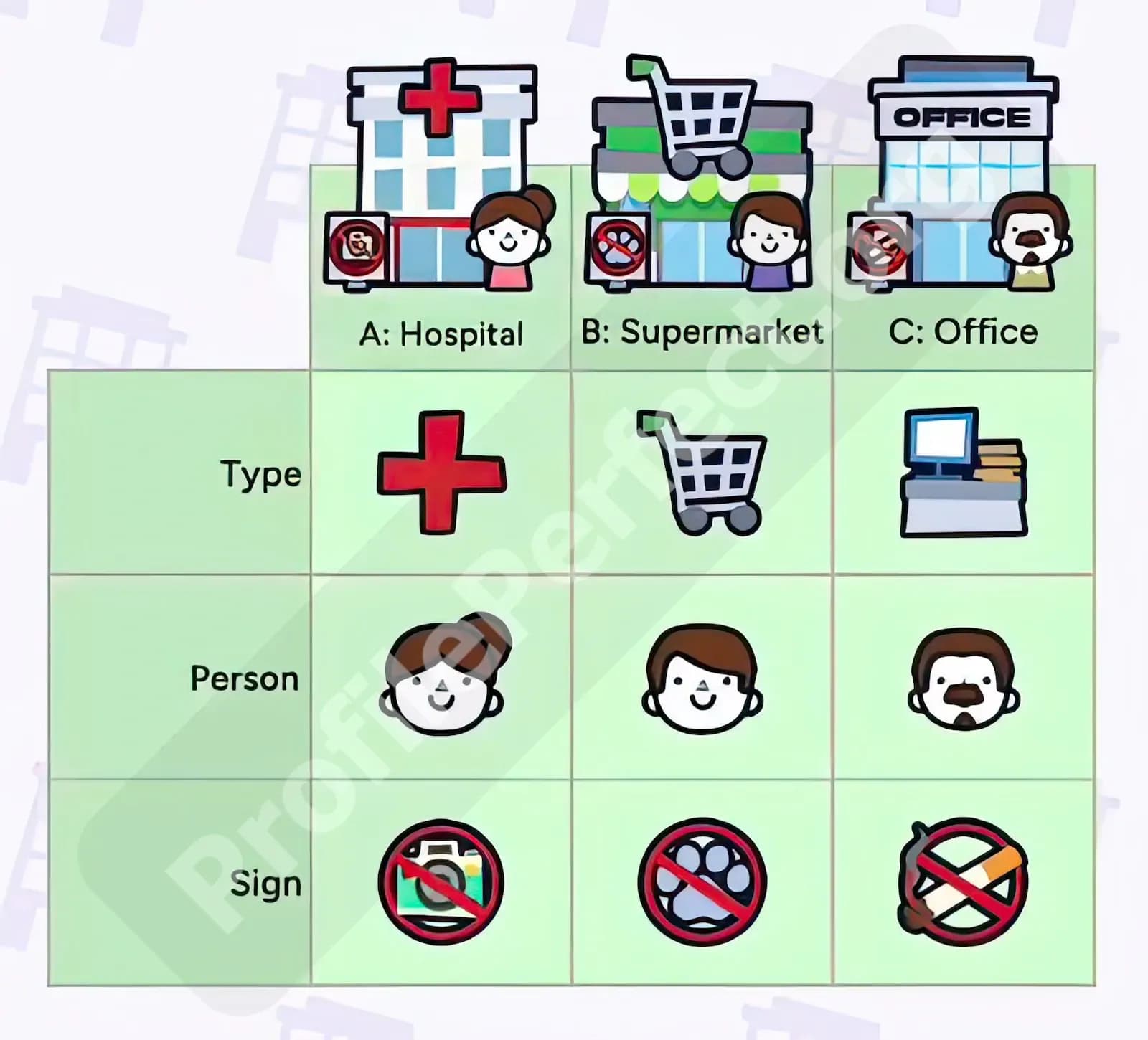
Level 16 is a great early example because it uses everyday signs inside a building puzzle. The solved logic includes a hospital, supermarket, and office, with signs like No Photos, No Pets, and No Smoking.
The important clue pattern here is that signs often pair with location behavior. “Smoking is prohibited in the rightmost building” is not just a safety note; it anchors the rightmost building to No Smoking. “There is a No Photos sign in Building A” gives another direct sign placement. Then “Mom is visiting her bedridden friend” points toward Hospital, because bedridden is a medical context.
This is the clean beginner version of the technique: read the public rule, then lock the sign row. If a clue sounds like something you’d see on a wall, door, gate, or package, it probably belongs to a sign or label trait.
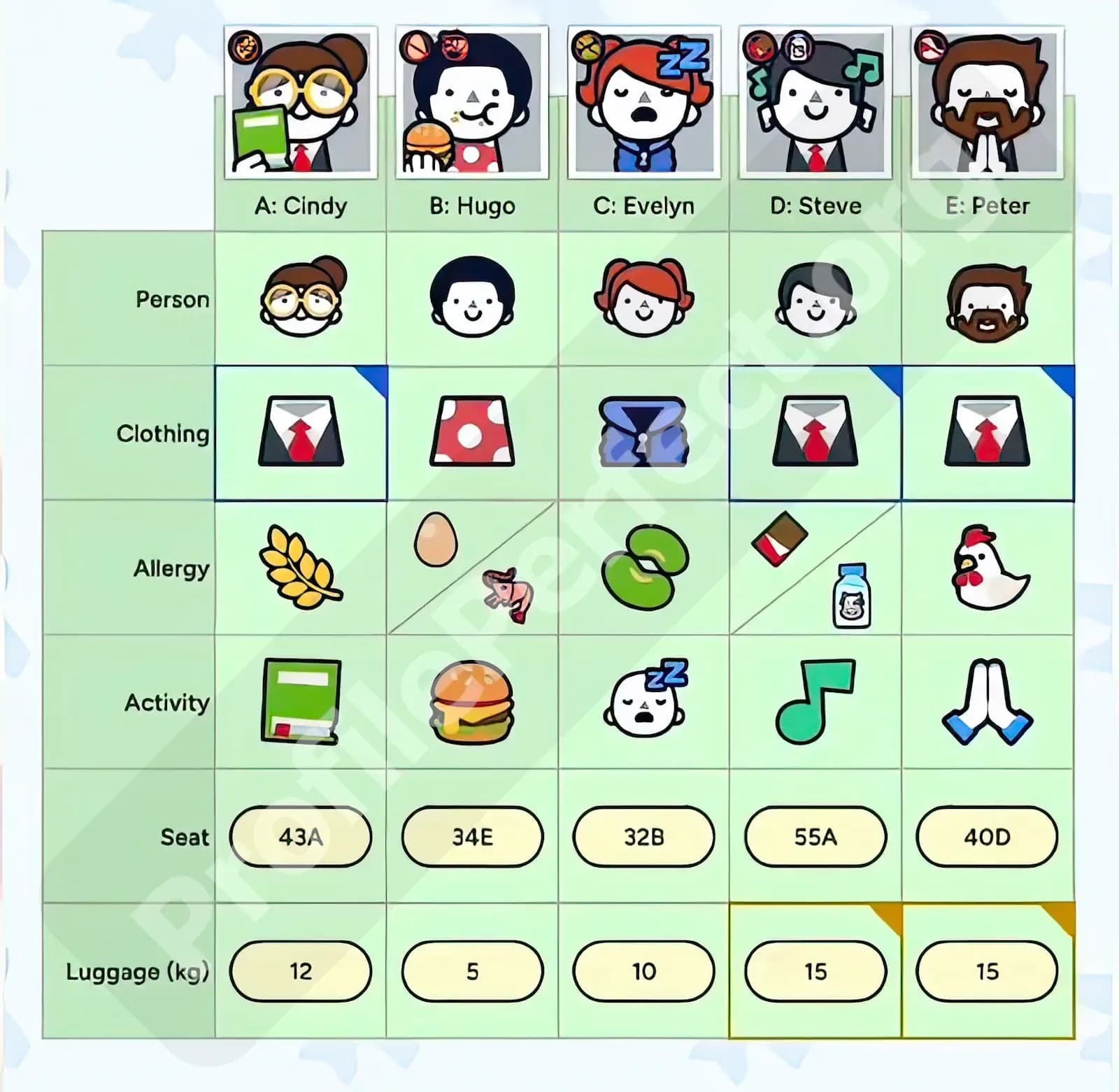
Level 40 is where Profile Perfect starts making this category more demanding. It has passengers, clothing, allergies, activities, seats, and luggage. That’s a lot of moving parts, and the allergy row can get nasty if you treat it casually.
The key clue type is food safety. “Passenger A has Gluten allergy” is a direct anchor. “Hugo is double checking that his food does not contain Egg” links Hugo, Eating, and Egg allergy logic. “People with multiple allergies are not allergic to Beans” matters because some cells contain two values, like Egg / Shrimp or Chocolate / Dairy. In Profile Perfect, a split cell like that means the subject carries both values, not one or the other.
This is where I slow down. Allergies are dangerous clues because they often combine direct identity, activity, and negation. “Not allergic to Shrimp and Chicken” can eliminate two options from one subject. “Not neighbor with Dairy” can turn the clue into an adjacency puzzle. The smart move is to mark the direct allergy first, then use food-related negatives to prevent bad taps.
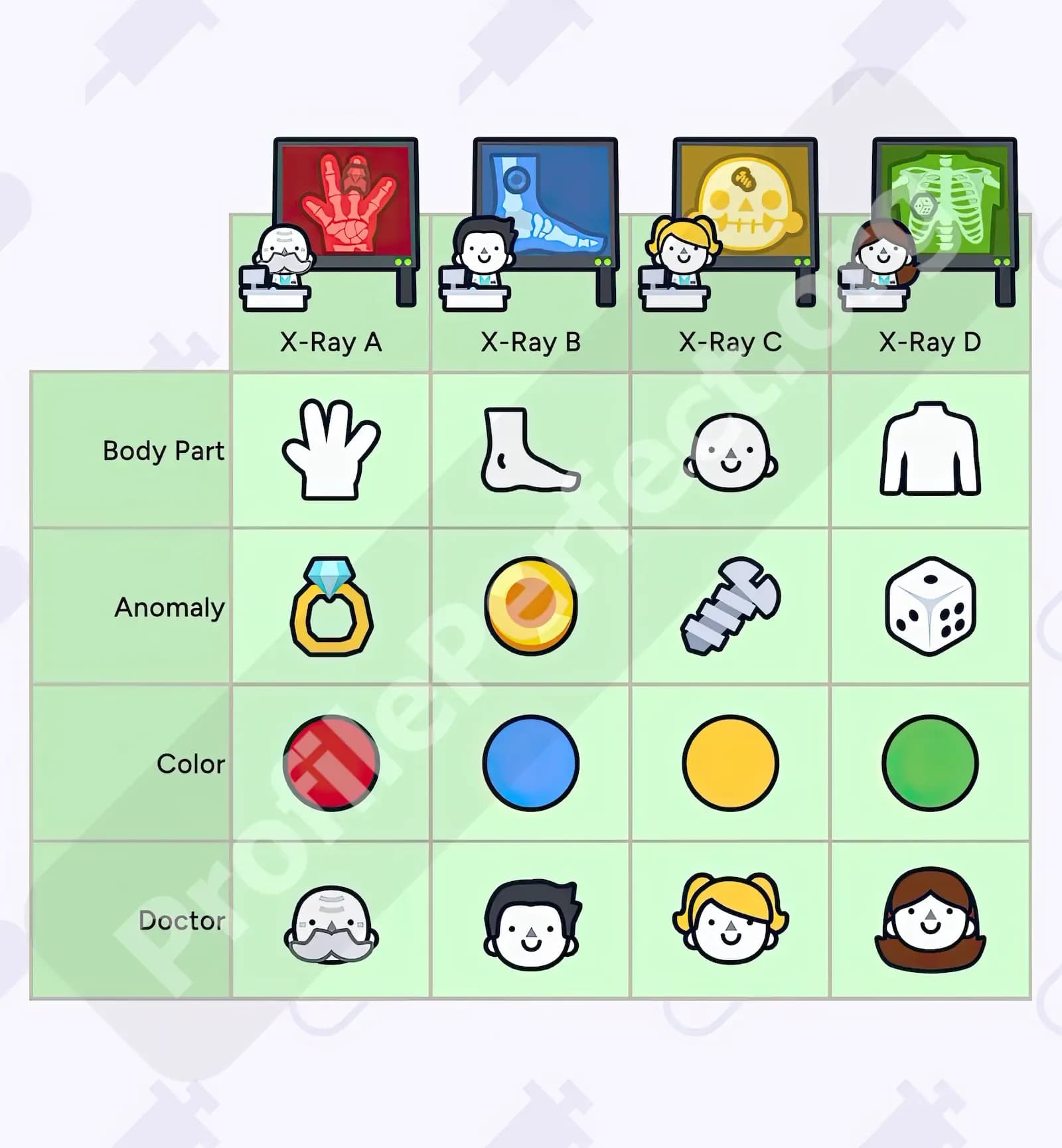
Level 148 is one of the cleanest body-clue levels. The subjects are X-Ray A through D, and the traits include Body Part, Anomaly, Color, and Doctor. This is a perfect example of the body part → X-ray clue pattern.
“Ben is showing X-ray of his patient’s Leg” gives you Body Part and Doctor in one shot. “One of the X-rays shows a Screw stuck inside the skull” translates to Head plus Screw. The word “skull” is the important common-knowledge bridge. The game doesn’t need to say “Head” directly because it expects you to understand that the skull belongs to the head.
The same thing happens with “missing wedding Ring.” That clue points to the Anomaly row, not the Doctor row or Color row. In X-ray levels, I split each clue into two questions: where is the body part, and what object or anomaly appears inside it?
That little habit makes the level much more rock-solid.
Patient and clinic levels are where symptom translation becomes the main event. Level 149 includes conditions like Fever, Injury, Headache, Flu, and Rash. Level 299 uses student illnesses like Diarrhea, Fever, Flu, and Rash.
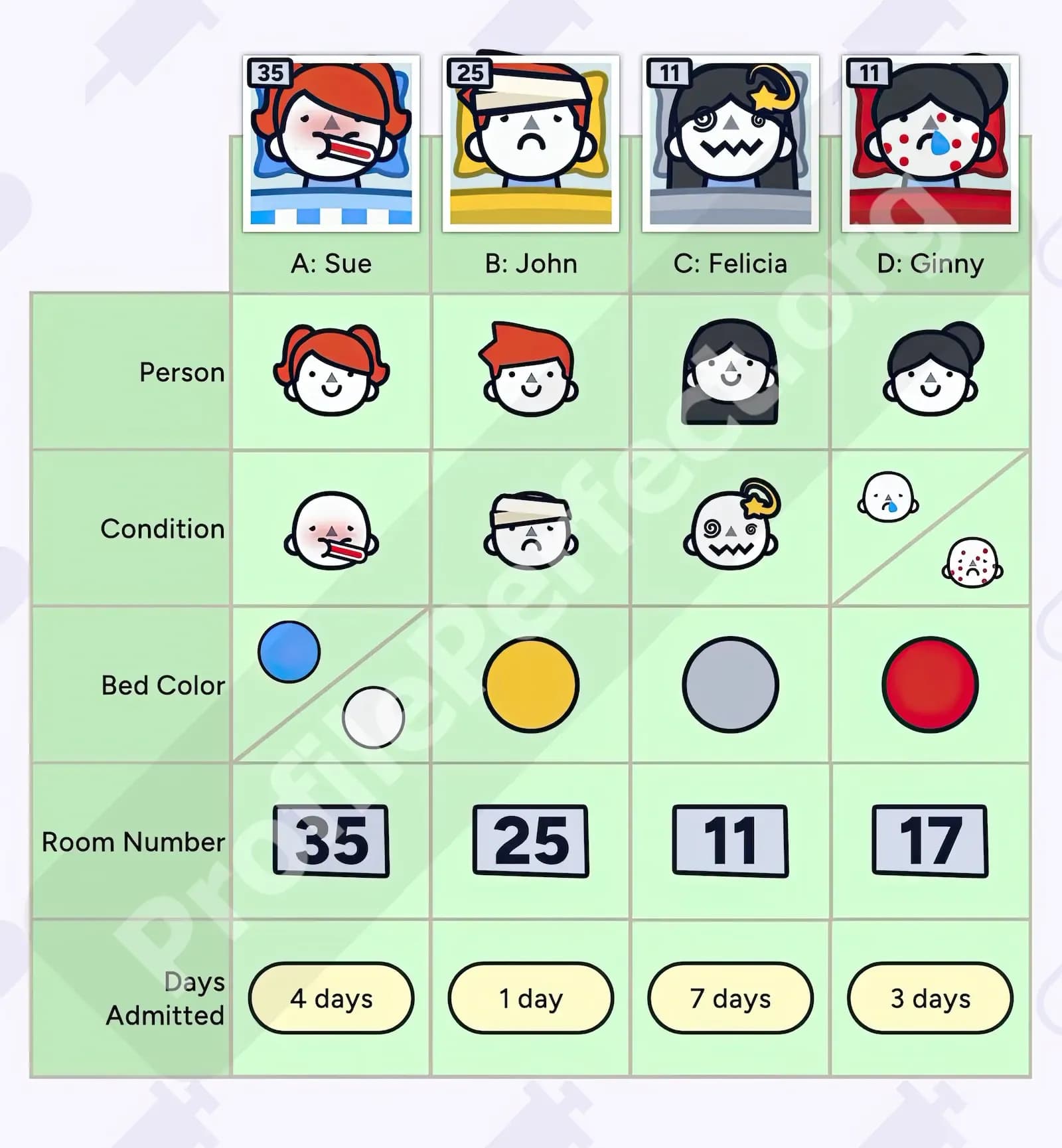
The game loves soft wording here. In Level 149, “Even after a week, the patient’s head is still spinning” points to Headache and also connects to 7 days admitted. “Ginny has multiple symptoms, she sneezes a lot” pushes you toward Flu. “John had an accident yesterday” points toward Injury. “Sue’s symptom does not affect her skin” helps rule out Rash.
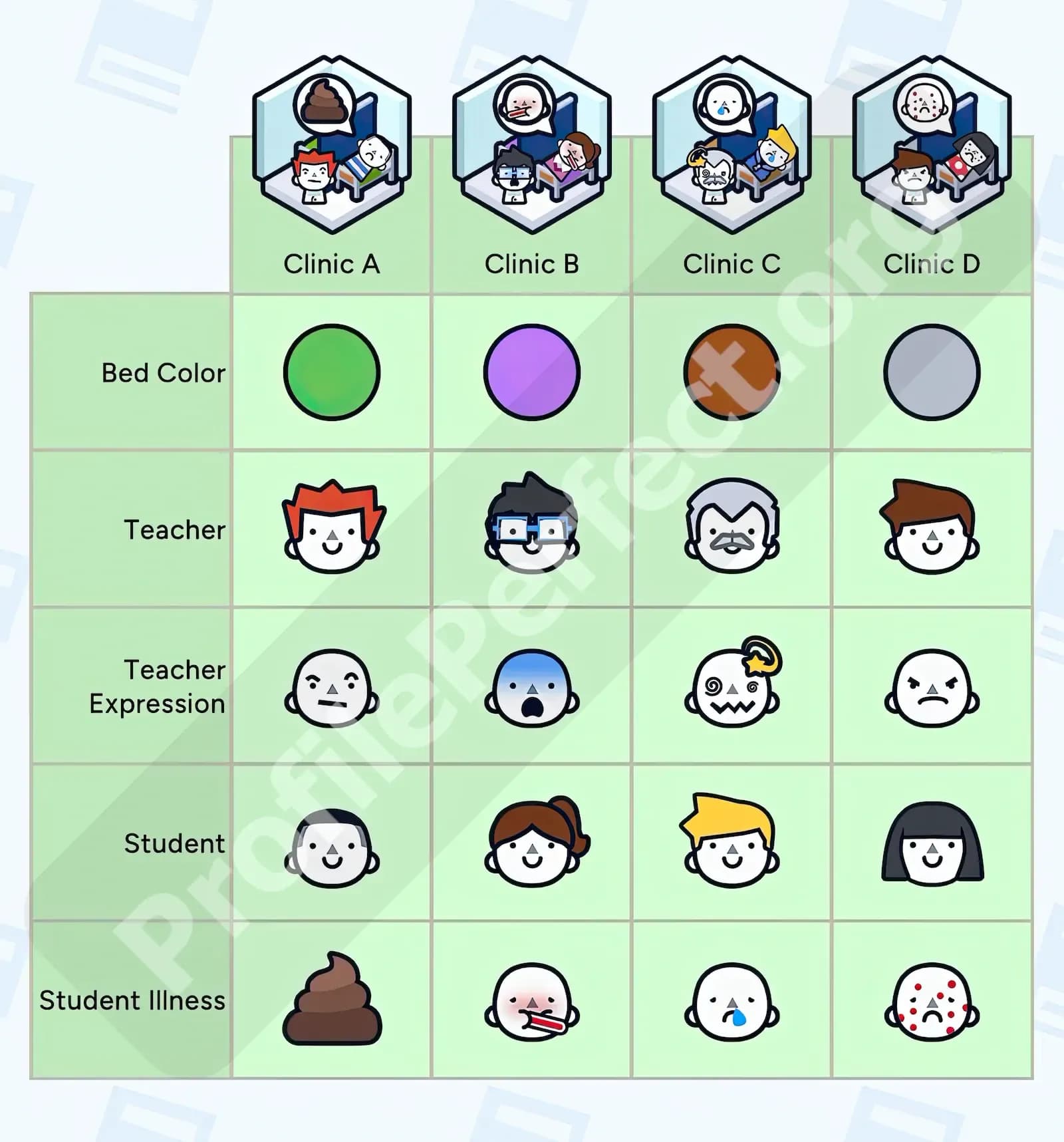
Level 299 does the same trick in a school clinic setting. “Ethan is experiencing an issue with his digestive system” means Diarrhea. “While Sam treats a Rash, the neighboring room erupts in coughs” links Sam to Rash and the neighbor to Flu. These clues are not medical tests. They’re vocabulary tests wrapped in logic-grid form.
The technique is to convert the sentence before solving the relationship. Digestive system means Diarrhea. Coughs and sneezing usually point to Flu. Skin problem points to Rash. Hot body or illness language may point to Fever. Once translated, the clue becomes much less scary.
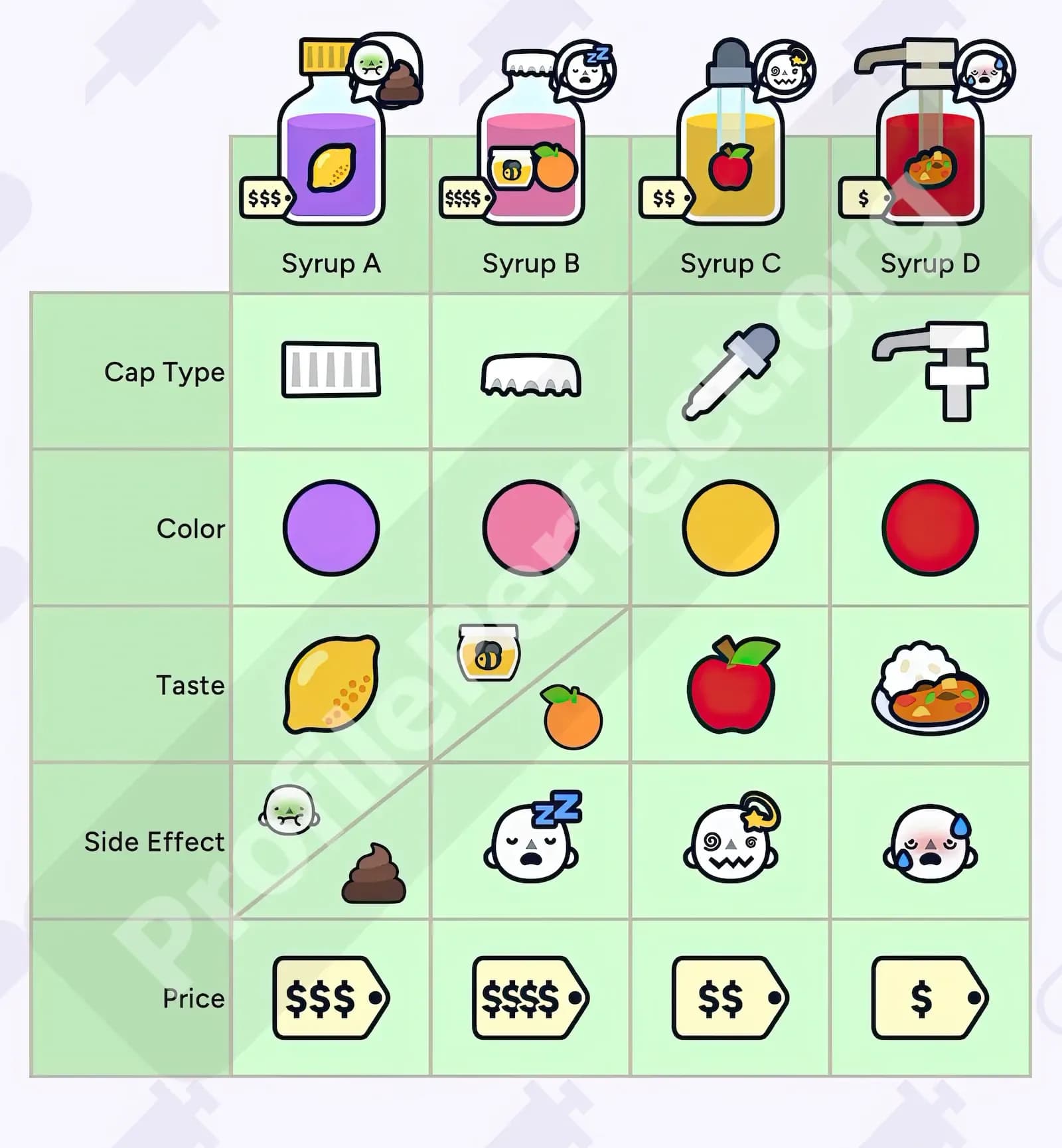
Level 153 uses syrups with cap type, color, taste, side effect, and price. This level has a banger clue set because it mixes medicine, taste, color, and cost.
“Purple syrup with Screw cap causes stomachache” points toward a stomach-related side effect, specifically Diarrhea in the solved grid. “Drinking Honey flavored syrup will make you Sleepy” directly connects taste and side effect. “Red syrup that causes Sweating does not have Dropper cap” combines a side effect with a cap-type elimination. “Syrup on the right of the Orange flavored causes Dizziness” turns the side effect into a position clue.
The lesson is that side effects behave like hazard labels. They tell you what the item does to the body, and that effect belongs in its own row. Don’t mix up Taste and Side Effect just because the clue mentions both in one sentence.
Hazard clues are the safety version of boss mechanics. They look simple, but they often connect to temperature, equipment, package shape, or nearby positions.
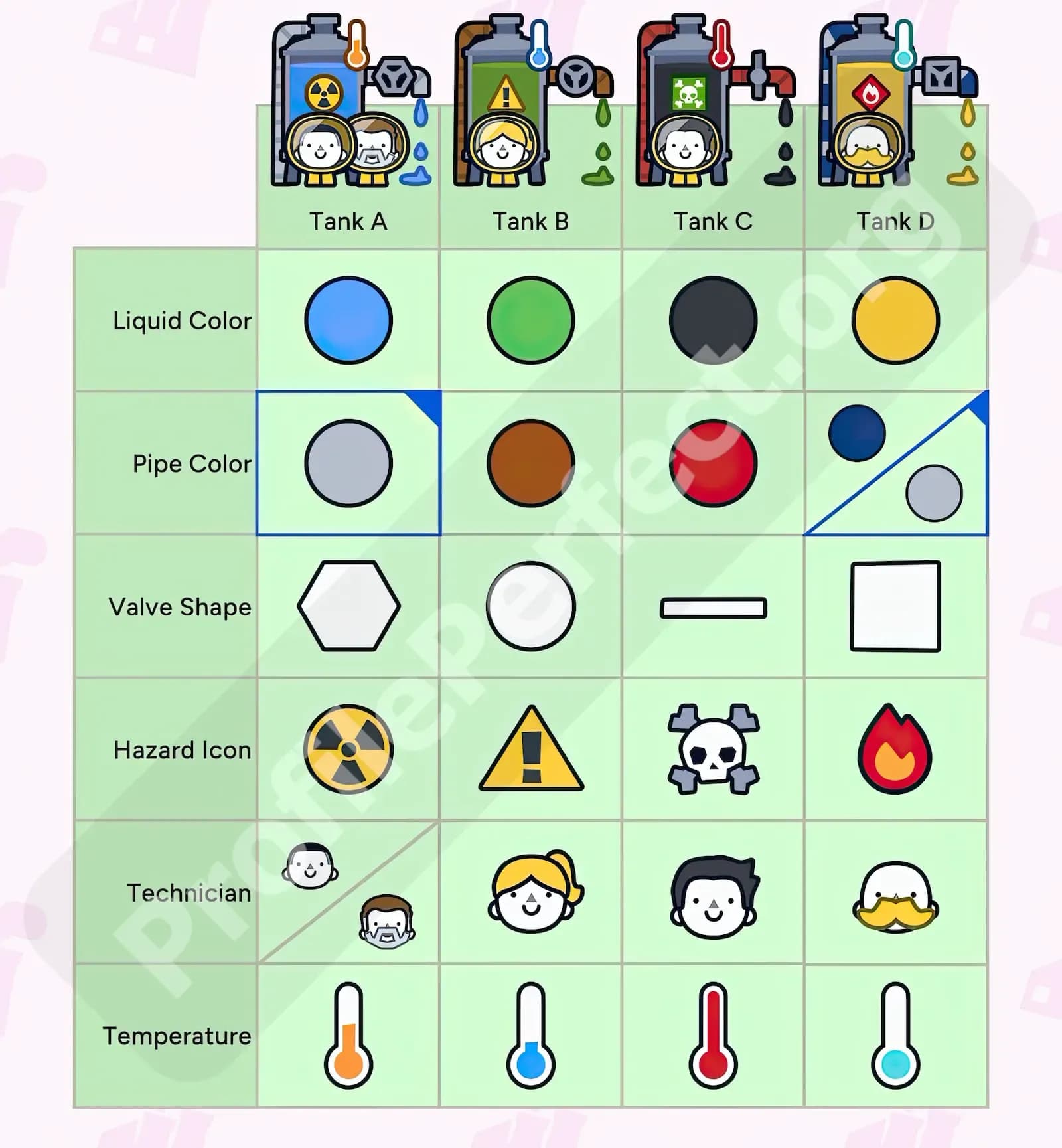
Level 184 uses tanks with hazard icons like Radioactive, Caution, Toxic, and Flammable. “Special equipment is used to handle Radioactive-Warm tank” is a huge anchor because it links Temperature and Hazard Icon. “Eddy always checks his items before handling Flammable tank” connects a person to a hazard. “Tank with the Brown pipe has a Caution symbol on it” maps pipe color to icon.
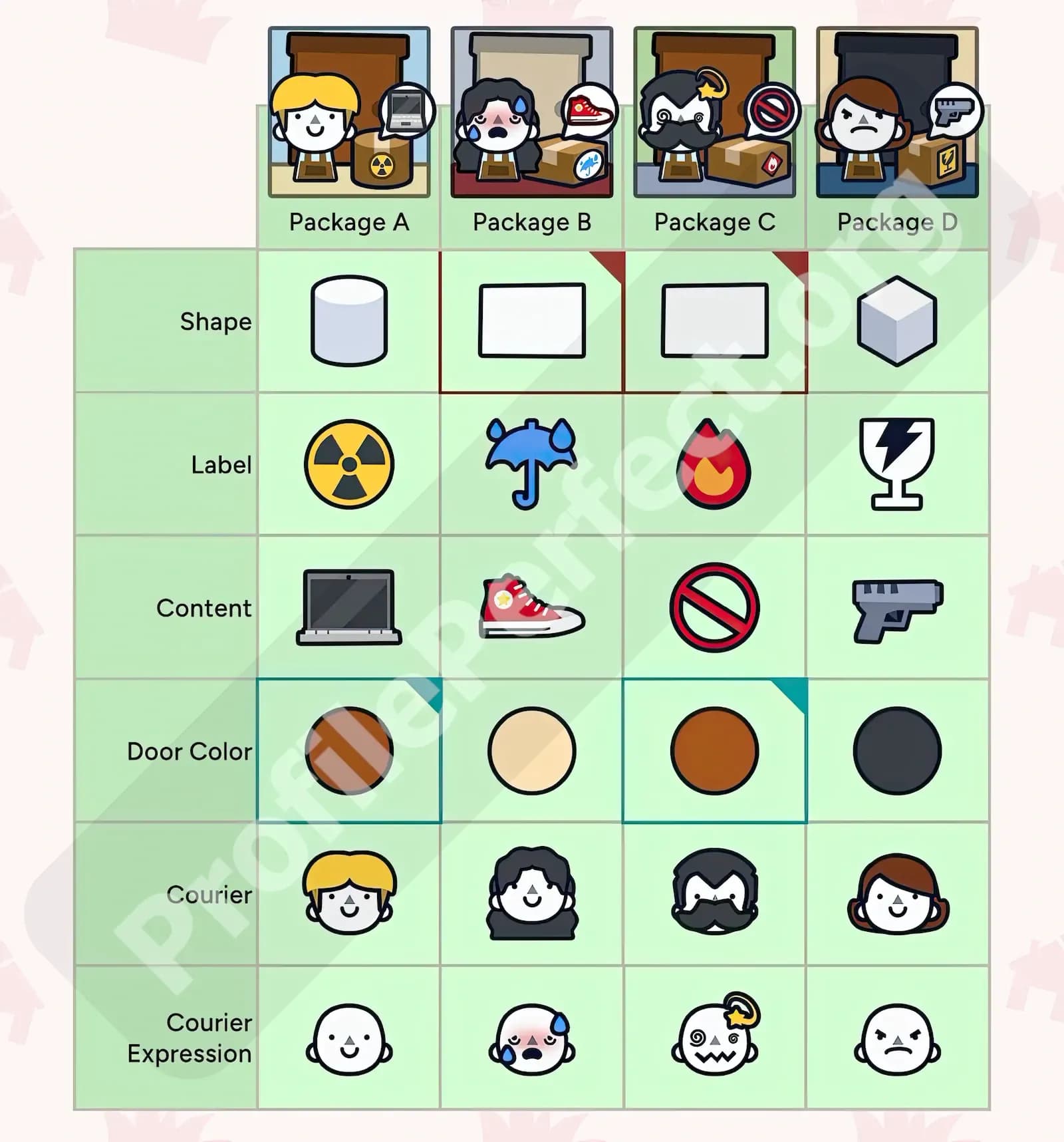
Level 342 shifts the same concept into packages. Labels include Radioactive, Keep Dry, Flammable, and Fragile. “Package on the right of the Flammable one is placed on Black door” makes Flammable a position anchor. “The courier is irked to carry the rightmost frail package slowly” points to Fragile and an annoyed expression. “Special equipment must be used to deliver the one” signals Radioactive.
Here’s the rule: if the clue sounds like a workplace safety poster, it’s probably a hazard or label clue.
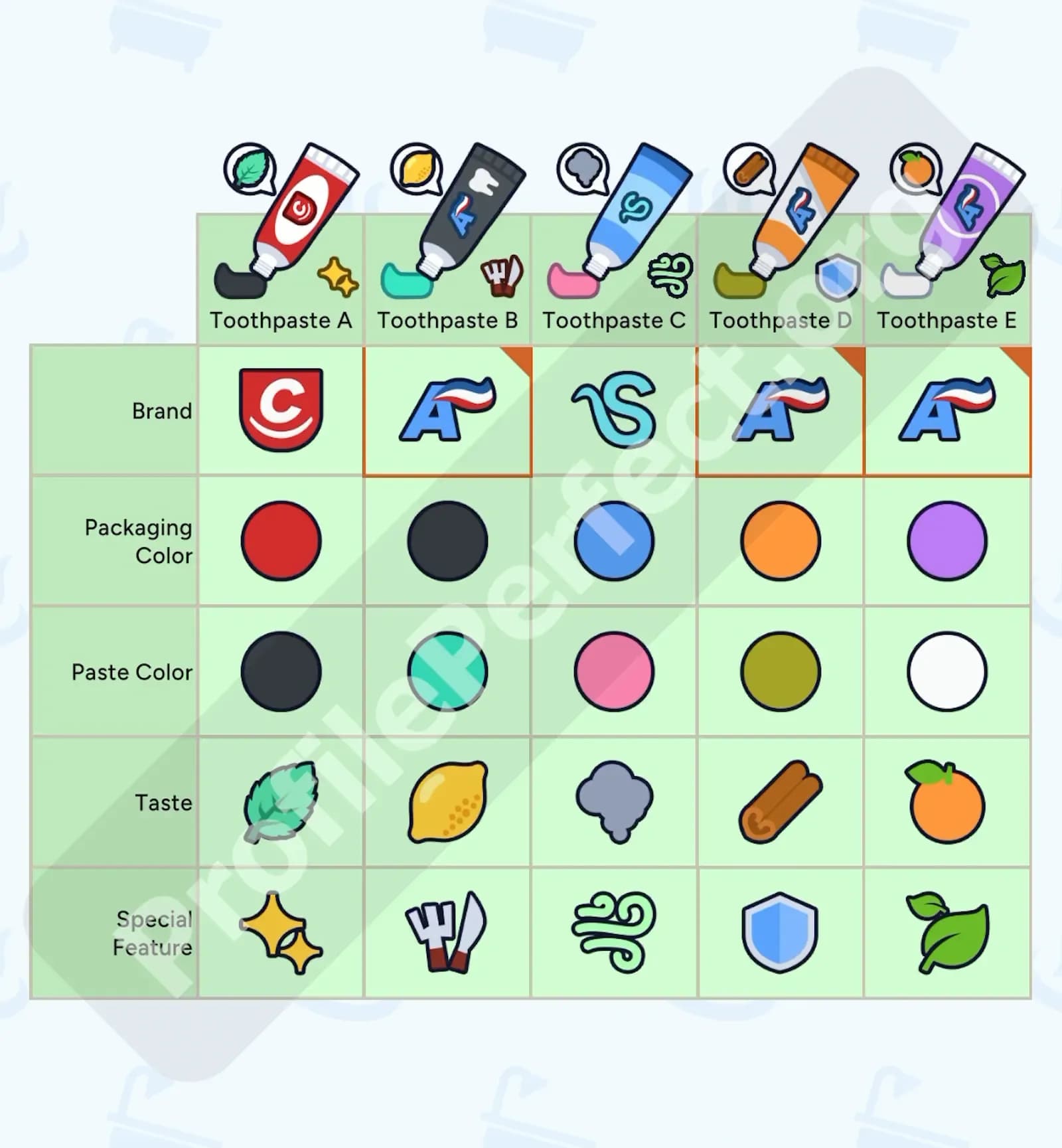
Level 369 is technically a toothpaste level, but it still uses health-adjacent clue logic. “The one next to the Edible one helps you feel confident around others” points to Fresh Breath. “Toothpaste in Blue cannot make your teeth brighter” rules out Whitening. “Cinnamon-flavored one protects your teeth from bacteria” points to Extra Protection.
This is the softer side of health logic. Instead of illness and hazards, the game uses body-care benefits: whitening, breath, protection, edible paste, and bacteria defense. It’s not as dramatic as a bomb scanner or radioactive tank, but the same translation skill applies.
When a Profile Perfect level uses health, safety, body, or warning clues, I use this loop:
First, identify the real-world category. Is it a symptom, sign, body part, side effect, allergy, or hazard icon?
Second, translate it into the actual trait row. “Skull” becomes Head. “Digestive system” becomes Diarrhea. “Special equipment” may signal Radioactive. “Frail package” means Fragile.
Third, lock direct clues before touching relative ones. Direct clues are safer. Relative clues like “next to,” “on the right of,” or “between” should come after you have anchors.
Fourth, respect negatives. “Not allergic to,” “not beside,” and “does not have” are not filler. They’re often the clue that prevents the wrong answer.
Finally, let the row-reduction loop finish the puzzle. Once most of a row is solved, the remaining value often falls into place without guessing.
Health and safety clues can feel intimidating because they pull from common knowledge outside the grid. But once you learn the translation layer, they become some of the most satisfying Profile Perfect clues in the game. You’re not just reading text. You’re decoding symptoms, labels, warnings, and body clues into clean logic.
That’s the real trick: don’t guess what sounds right. Translate the clue, anchor the category, then let the grid do the rest.