Solve Profile Perfect culture clues faster by grouping fashion, TV, awards, celebrities, music tours, bars, and opera hints before wasting your lives.

Guide By Liam Stone
Published on June 15, 2026
Liam Stone has played Profile Perfect since the app first launched on the Apple App Store. He spotted its potential early, and that early bet turned into hundreds of hours spent solving levels, testing clue logic, and documenting answers for other players. Liam runs the YouTube channel Puzzle Game Answer where his puzzle walkthroughs have earned over 935,000 views and a growing community of more than 800 subscribers. He covers a wide range of mobile puzzle games beyond Profile Perfect, giving him firsthand experience with how these games design clues, structure levels, and trip up even experienced players. Every guide on this site reflects that hands on experience. Liam plays each level himself, verifies every answer against the in game grid, and rewrites confusing clues into plain language so you don't need to guess. If you want more of his walkthroughs, subscribe to his channel.
Loading calendar...
Some Profile Perfect levels are pure logic. A clue says someone is next to someone else, a color is farthest from another color, or one item sits in the middle. Crunchy, clean, satisfying. But then the game throws in a fashion show, a celebrity meet-and-greet, a TV schedule, an opera scene, or an awards ceremony, and suddenly the puzzle isn’t just asking, “Where does this go?” It’s asking, “Do you understand the cultural world this clue is pointing at?”
That’s where culture, art, fashion, and entertainment clues become a different kind of beast.
I actually like these levels because they give Profile Perfect more personality. They make the game feel less like a dry spreadsheet and more like a set of tiny social scenes. But they can also be frustrating if you treat every clue as a literal grid command. The trick is to identify the cultural domain first, then translate the clue into a chain:
Object → Event → Role → Reaction
Once you start reading clues this way, levels like 41, 89, 90, 91, 143, 209, 233, 380, 381, 382, 383, and 384 become much easier to control.
In Profile Perfect, each level gives you subjects, traits, clues, and a solved grid hidden behind deduction. Most puzzles can be solved by matching columns to rows: person, item, color, location, reaction, price, score, and so on.
Culture clues are different because they often use lifestyle language instead of direct labels.
For example, a normal clue might say, “Stage B has a T-shaped runway.” Easy. That gives you a direct match. But a culture clue might say, “The show begins with the Princess lost in the Jungle.” That sounds like story flavor, but it’s actually giving you three useful pieces: Princess, Jungle, and a performance position.
The mistake many players make is reading these clues as decoration. In Profile Perfect, flavor text is rarely just flavor. If the clue mentions a runway, curtain, fan reaction, celebrity, signed item, opera character, or award category, it is probably pointing to a grid trait.
Before tapping anything, ask: what world is this level using?
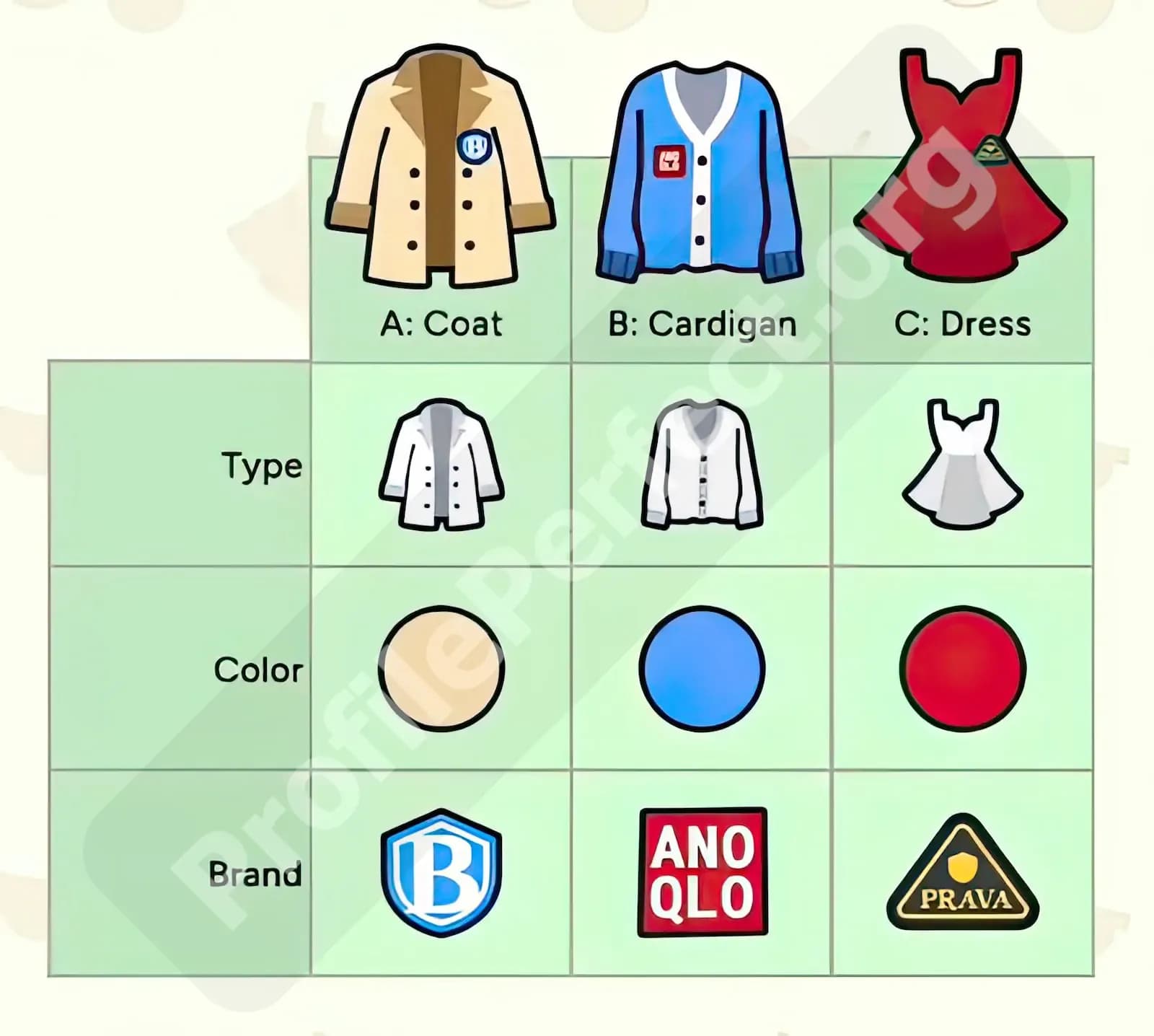
Level 89 is a clothing puzzle, so the domain is fashion retail. That means words like coat, cardigan, dress, beige, red, blue, and brand names all matter. Level 90 is a runway puzzle, so theme, runway layout, and brand become the core triangle. Level 381 is an award trophy puzzle, so shape, material, category, and year are the important cultural markers.
This sounds basic, but it’s a banger habit. Once you know the domain, the clue vocabulary becomes easier to decode.
Here’s how I group the best examples:
| Level | Cultural Domain | What To Watch |
|---|---|---|
| 41 | Beauty brands and shopping | Brand preference, membership, shopper identity |
| 89 | Clothing and fashion retail | Type, color, brand |
| 90 | Runway fashion shows | Theme, runway layout, brand |
| 91 | Dresses and occasions | Pattern, fabric, accessory, occasion, price |
| 143 | Theme park entertainment | Attraction, mood, accessory, spending |
| 209 | Cooking competition | Dish, chef hat, judge reaction, score |
| 233 | Bar nightlife | Lighting, stool type, signature drink, bartender |
| 380 | TV programming | Show type, channel, airing time |
| 381 | Awards | Trophy shape, material, category, year |
| 382 | Celebrity meet-and-greet | Celebrity, signed item, fan, expression |
| 383 | Music world tour | Band and destinations |
| 384 | Opera performance | Character, background, curtain color, audience reaction |
That domain scan is your first anchor. Don’t skip it.
Culture clues often start with an object. A dress, a trophy, a signed T-shirt, a curtain, a runway, a cocktail, a hat. The object usually tells you which event or scene it belongs to.
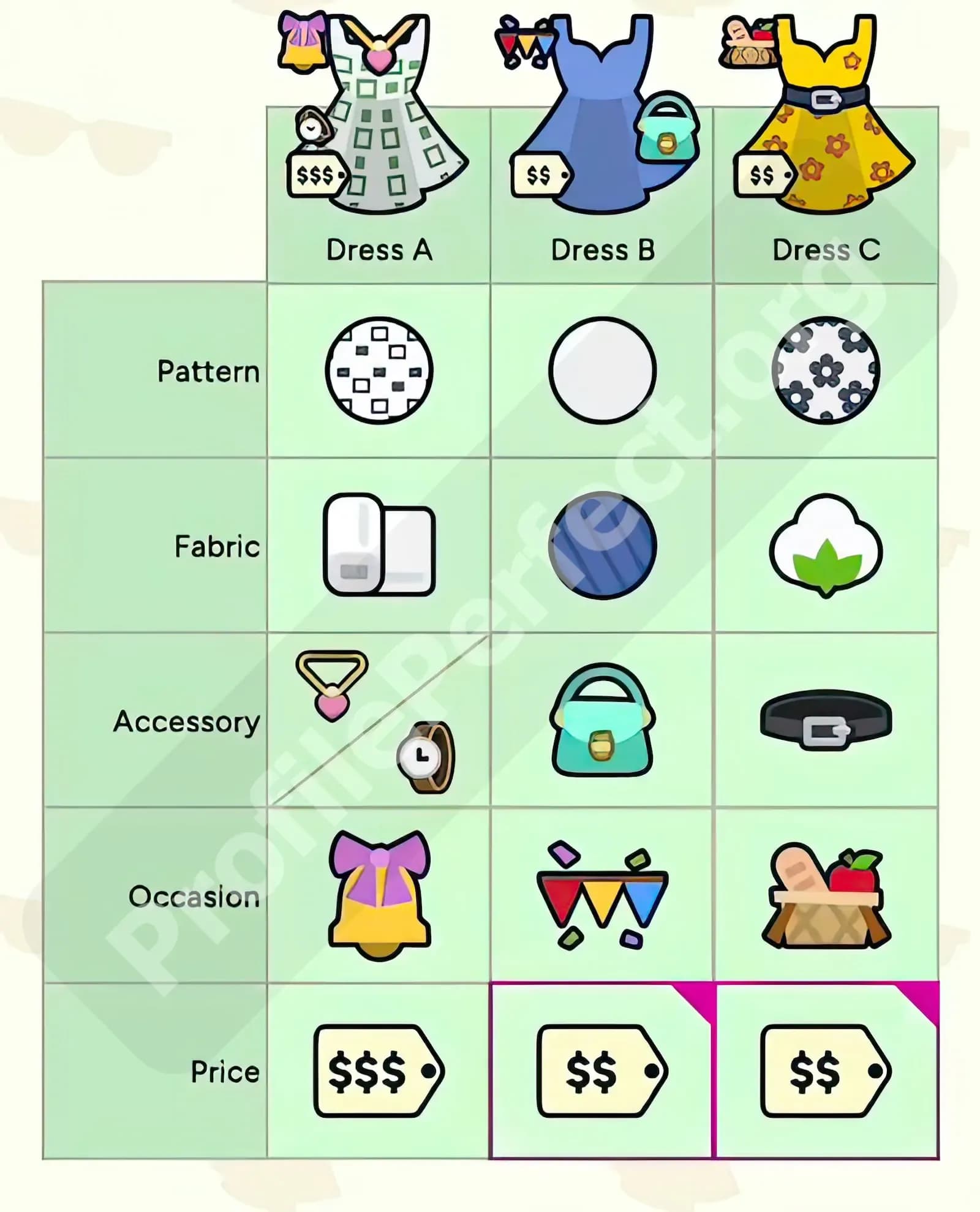
Level 91 is a great example. Dresses are not just “Dress A, Dress B, Dress C.” Each dress has a pattern, fabric, accessory, occasion, and price. When the clue says the dress on the right is great for a picnic, it links a position to an occasion. When another clue says the dress with the handbag is beside the silk dress, it links an accessory to fabric through position.
That’s the object → event step.
The handbag isn’t just an accessory. It tells you where to look. The picnic isn’t just a cute outing. It defines the dress’s occasion. The wedding clue also gives a price relationship, because the wedding dress is more expensive than the picnic dress.
This is where Profile Perfect gets clever. It makes the grid feel like a tiny fashion magazine spread, but under the vibe, it’s still strict deduction.
Once you know the event, identify the roles inside it.
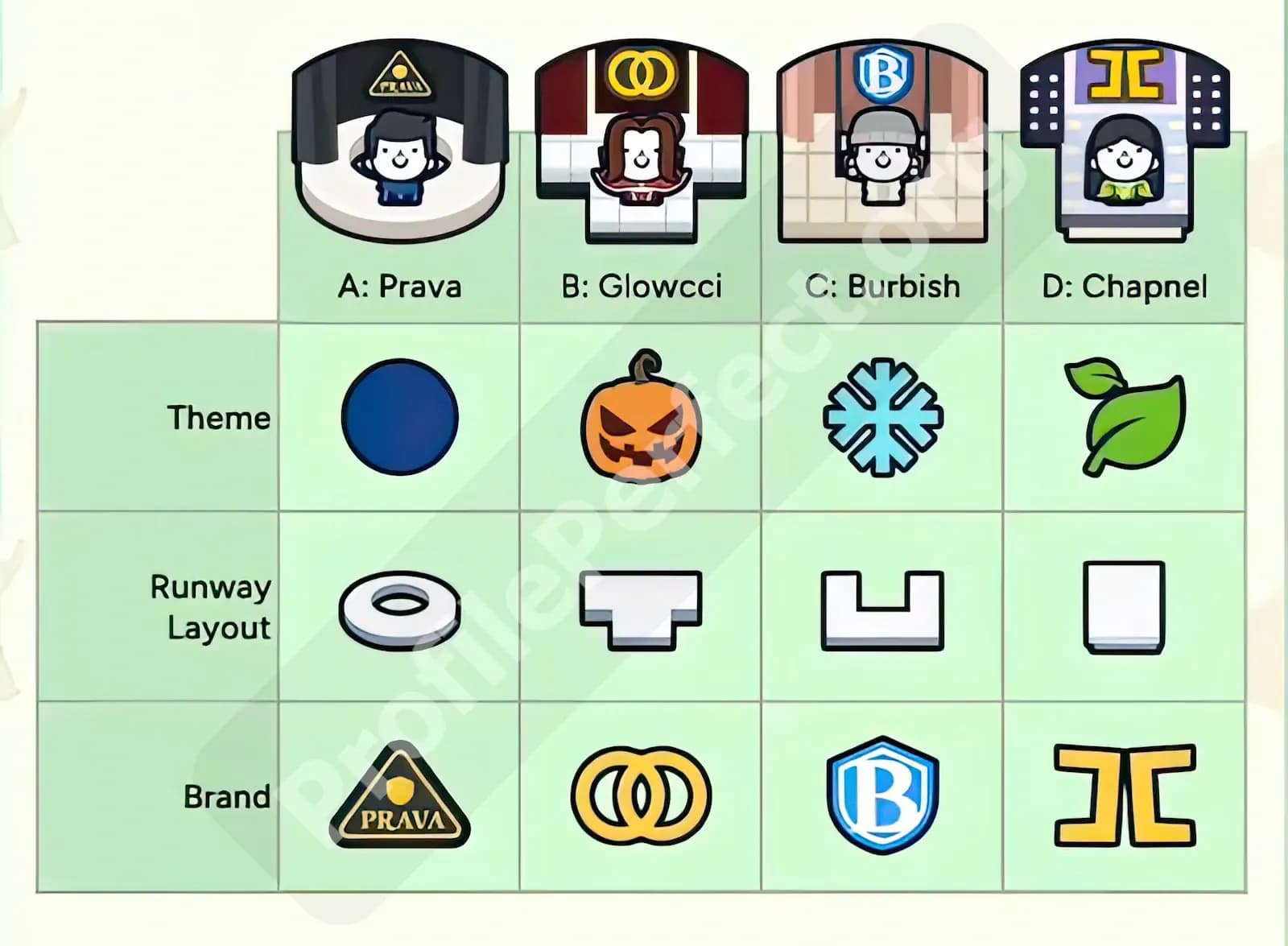
In Level 90, the event is a fashion show. The roles are the stage, theme, runway layout, and brand. “Halloween themed show” is not separate from “T-shaped runway.” The clue ties them together. “Winter themed show is run by Burbish” ties theme to brand. “Chapnel is doing a Nature themed fashion show” ties brand to theme.
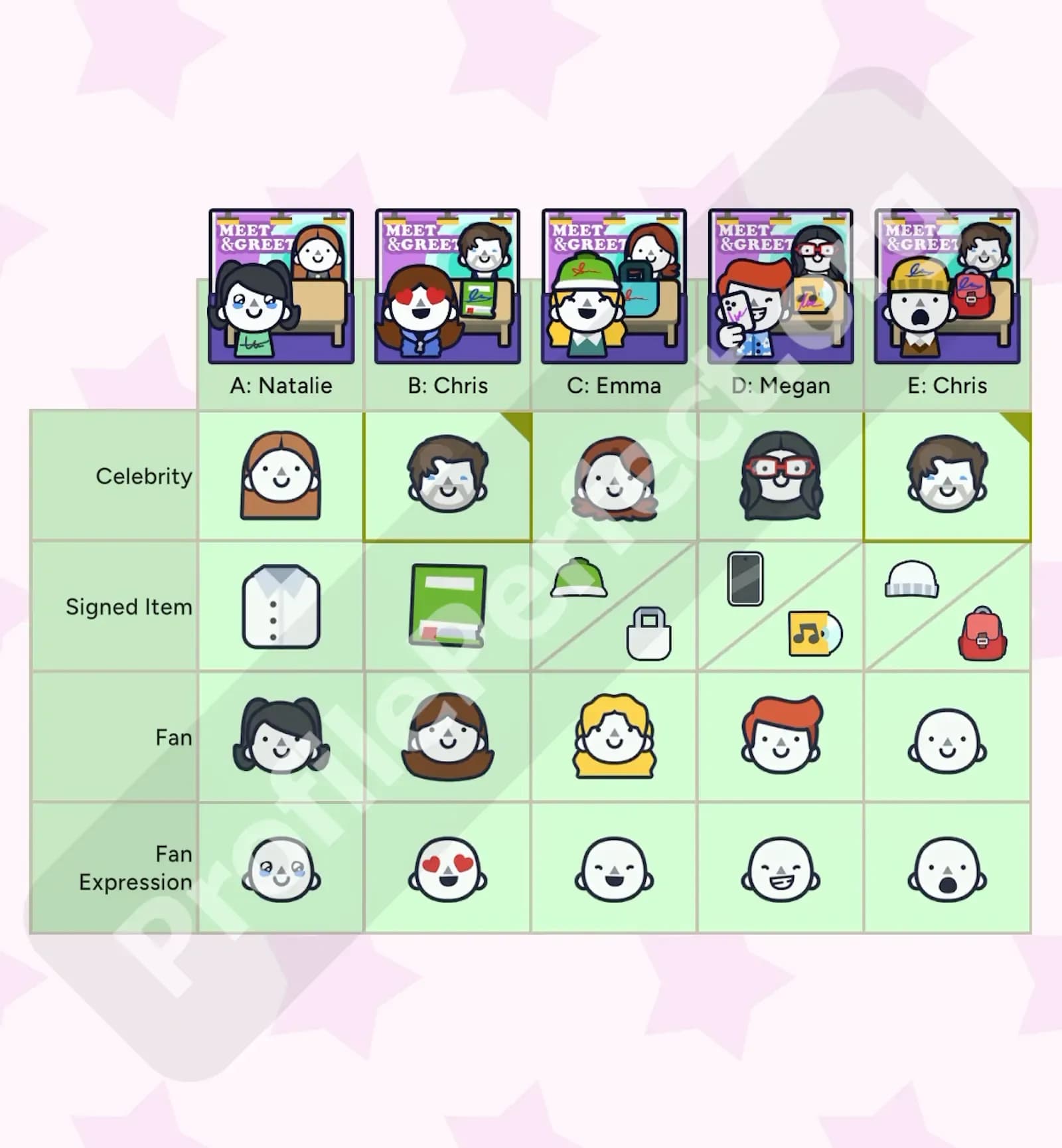
In Level 382, the event is a celebrity meet-and-greet. The roles are celebrity, fan, signed item, and fan expression. Natalie signing a T-shirt immediately links celebrity and item. Finn supporting Megan since her first song links fan and celebrity. Ava crying when her wish comes true links fan and expression.
This is the part I find most satisfying. Once the role map clicks, the whole grid starts to collapse in your favor. Profile Perfect’s best entertainment levels work because every “scene” has a cast list. Find the cast list, and you find the solution path.
Audience and judge reactions are easy to underestimate. Don’t. In culture levels, reactions are often just as important as names or colors.
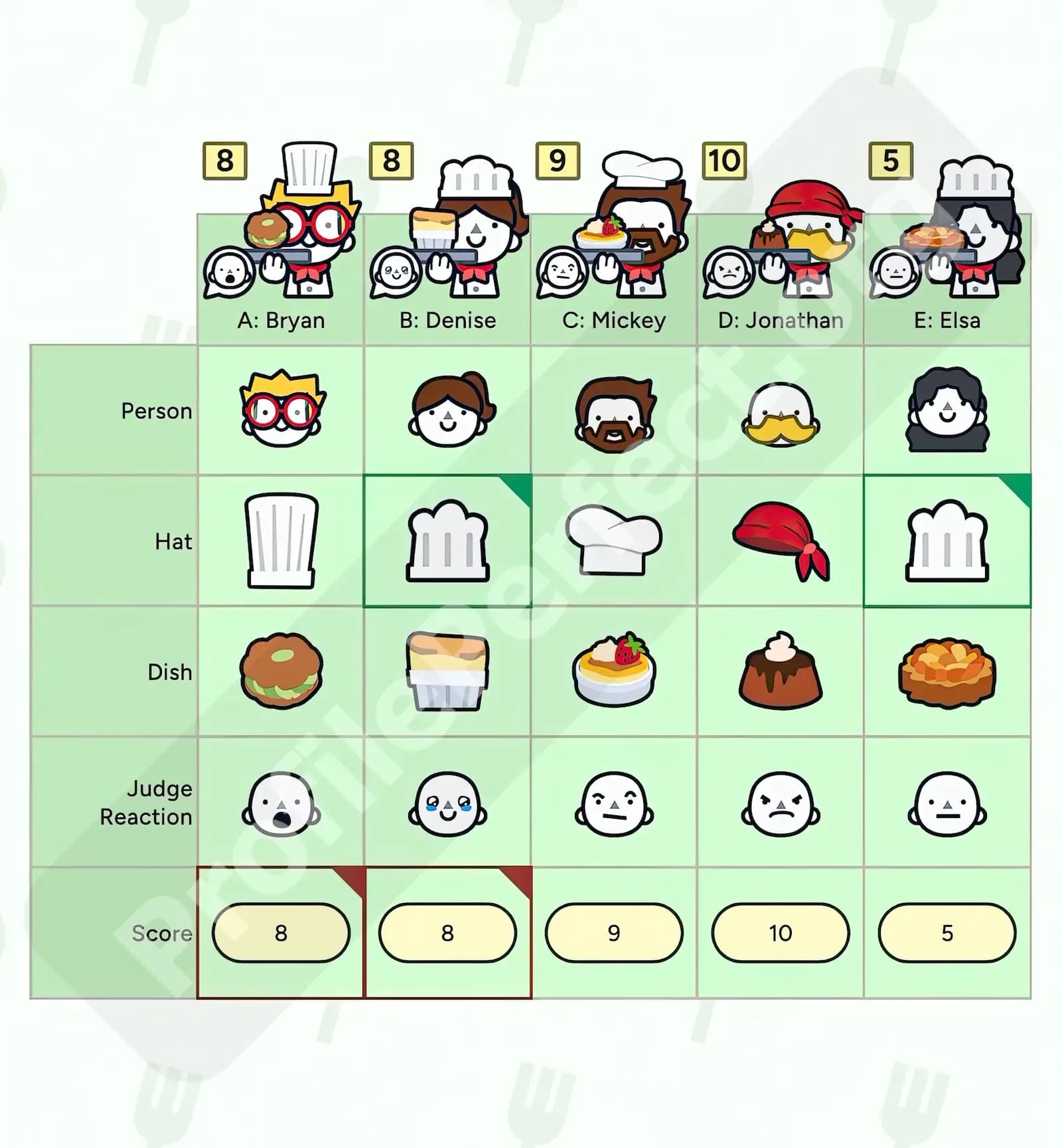
Level 209 uses judge reactions in a cooking competition. The judge can be astonished, teary-eyed, thinking, angry, or speechless. Those emotions aren’t vague. They are grid values. A Soufflé made by a Toque Hat chef brings tears to the judge’s eyes. That links dish, hat, and reaction in one move. A judge being angry at Chef D gives you another hard match.
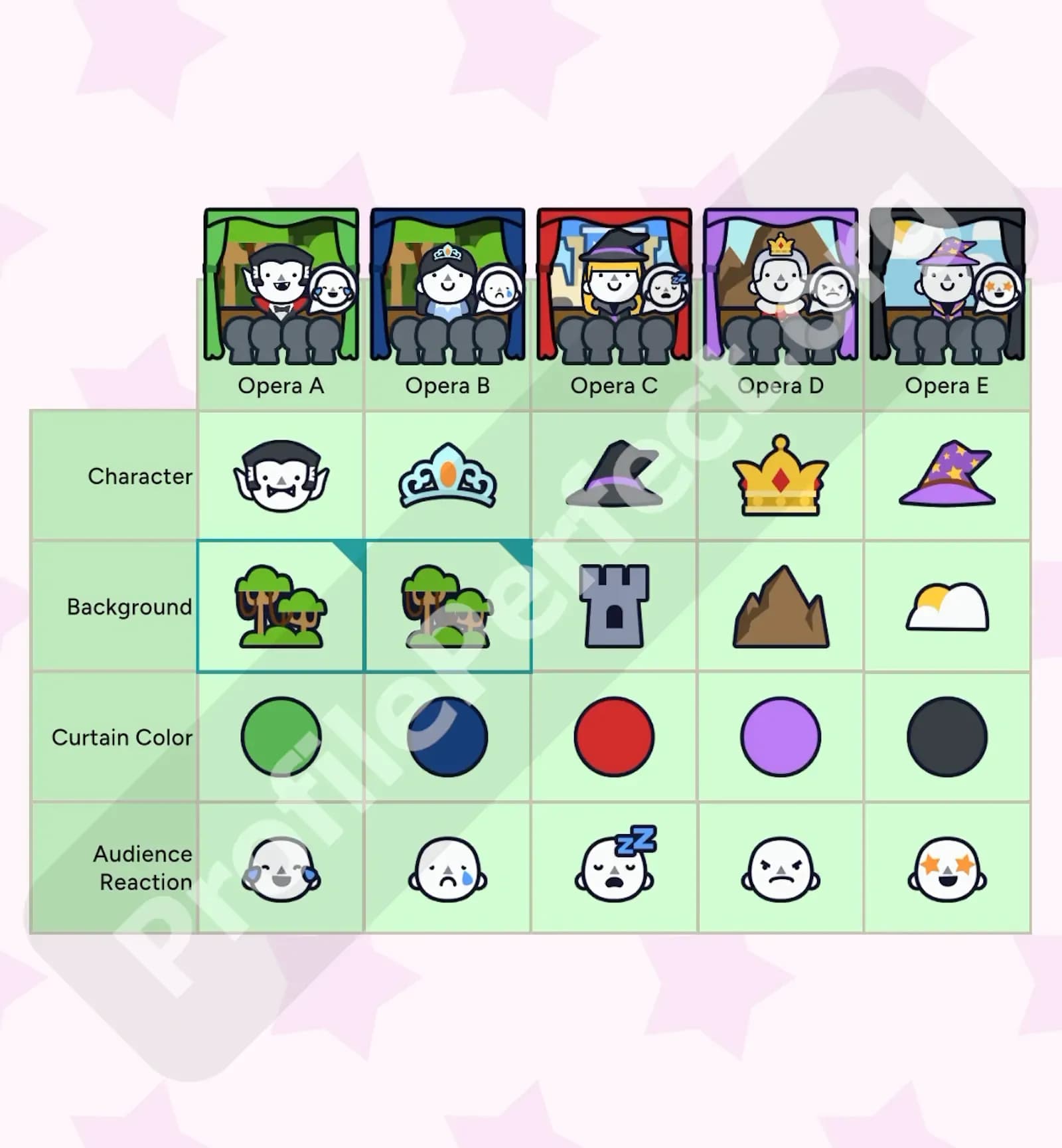
Level 384 does the same with opera. The Vampire makes the audience laugh. The middle show has an audience that is sleeping. The audience is angry because the ruler’s role is played poorly, which points to the King. The audience is excited during a flying aerial battle scene, which points to the Sky background.
That’s object → event → role → reaction in full form.
Vampire → opera scene → character → laughing audience.
King → opera scene → ruler role → angry audience.
Sky → aerial battle → background → excited audience.
Once you see reactions as evidence, these levels stop feeling floaty.
Fashion and beauty levels also love fake brand names. Level 41 has Lohreal, Revline, Dori, and Maybelle. Level 89 has Burbish, Anoqlo, and Prava. Level 90 uses Prava, Glowcci, Burbish, and Chapnel.
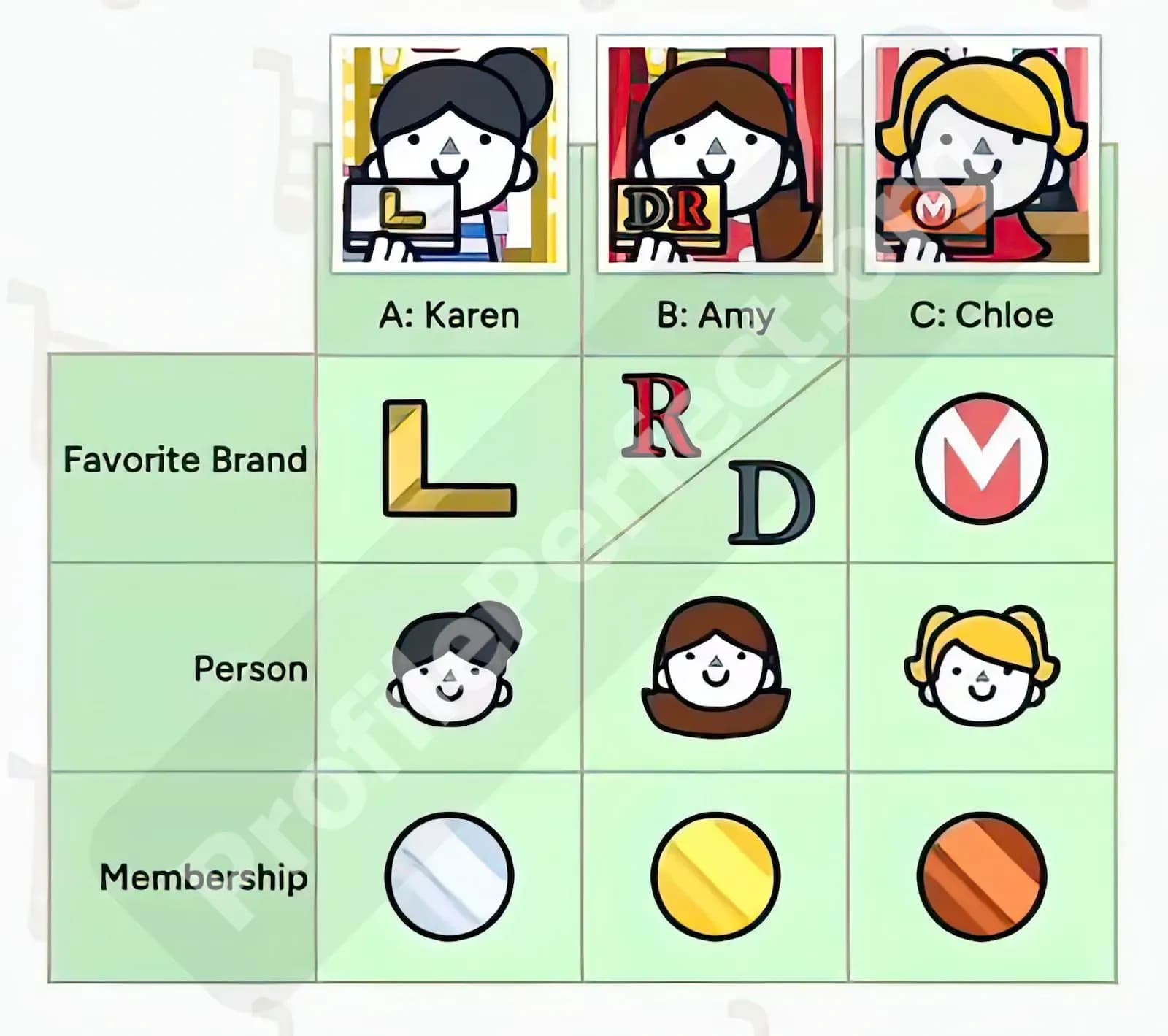
My advice: don’t overthink the parody names. They are usually there to create a fashion or beauty vibe, not to test real-world brand knowledge. Treat them as labels unless the clue gives you a category connection.
In Level 89, the “Red-Dress” clue directly creates a type-color pair. The blue outfit sits between beige and red, so position matters. The beige coat is on discount, so type and color lock together. The brand clue then becomes easier because the clothing items already have a shape.
Fashion levels are often solved by this order:
That keeps you from wasting lives on a guess.
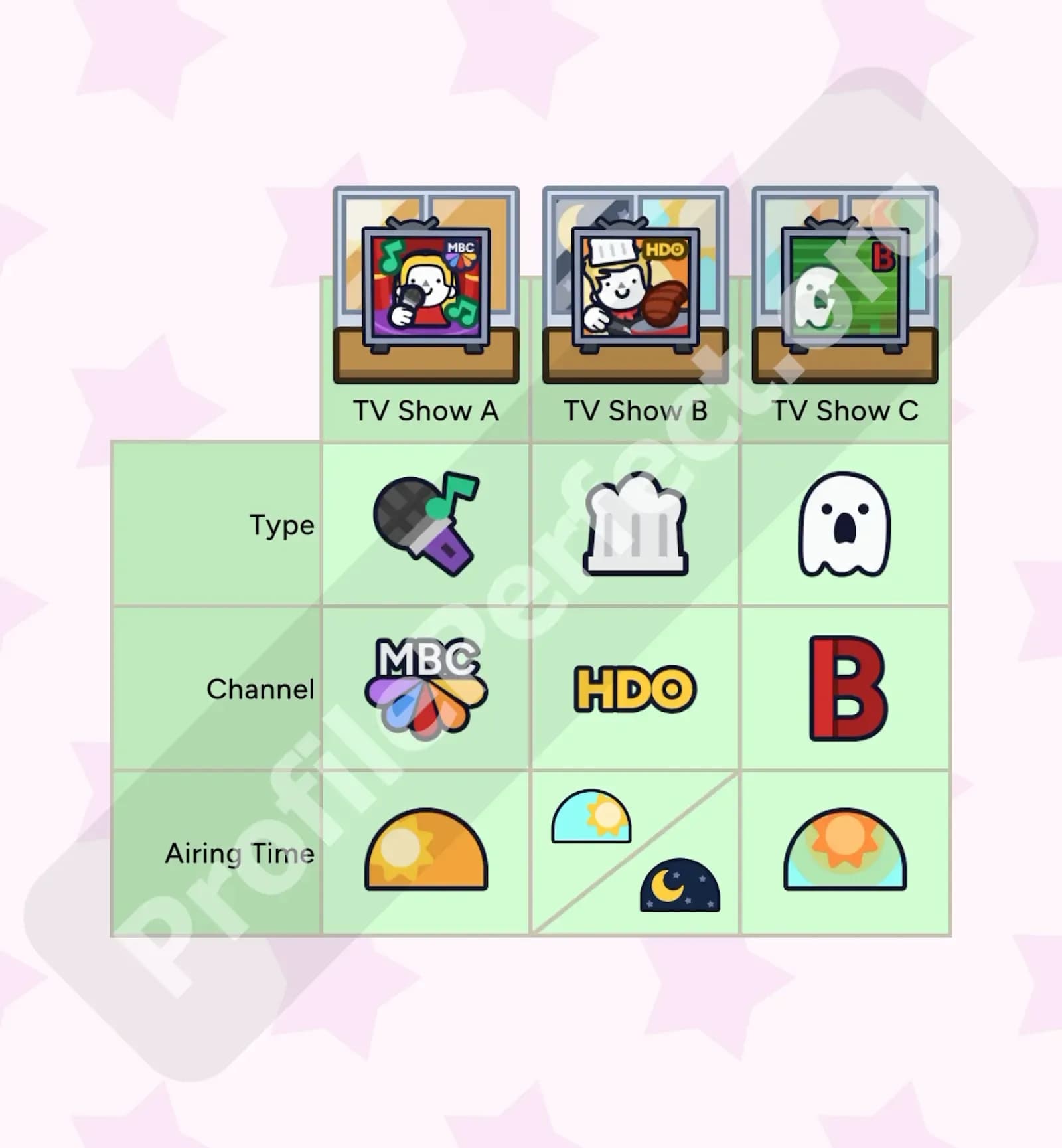
Level 380 is a media scheduling puzzle. Show type, channel, and airing time all feed into each other. The cooking show airs multiple times, which means it can take more than one time slot. The supernatural show is linked to ghost stories. The talent show ends up filling the remaining entertainment role.
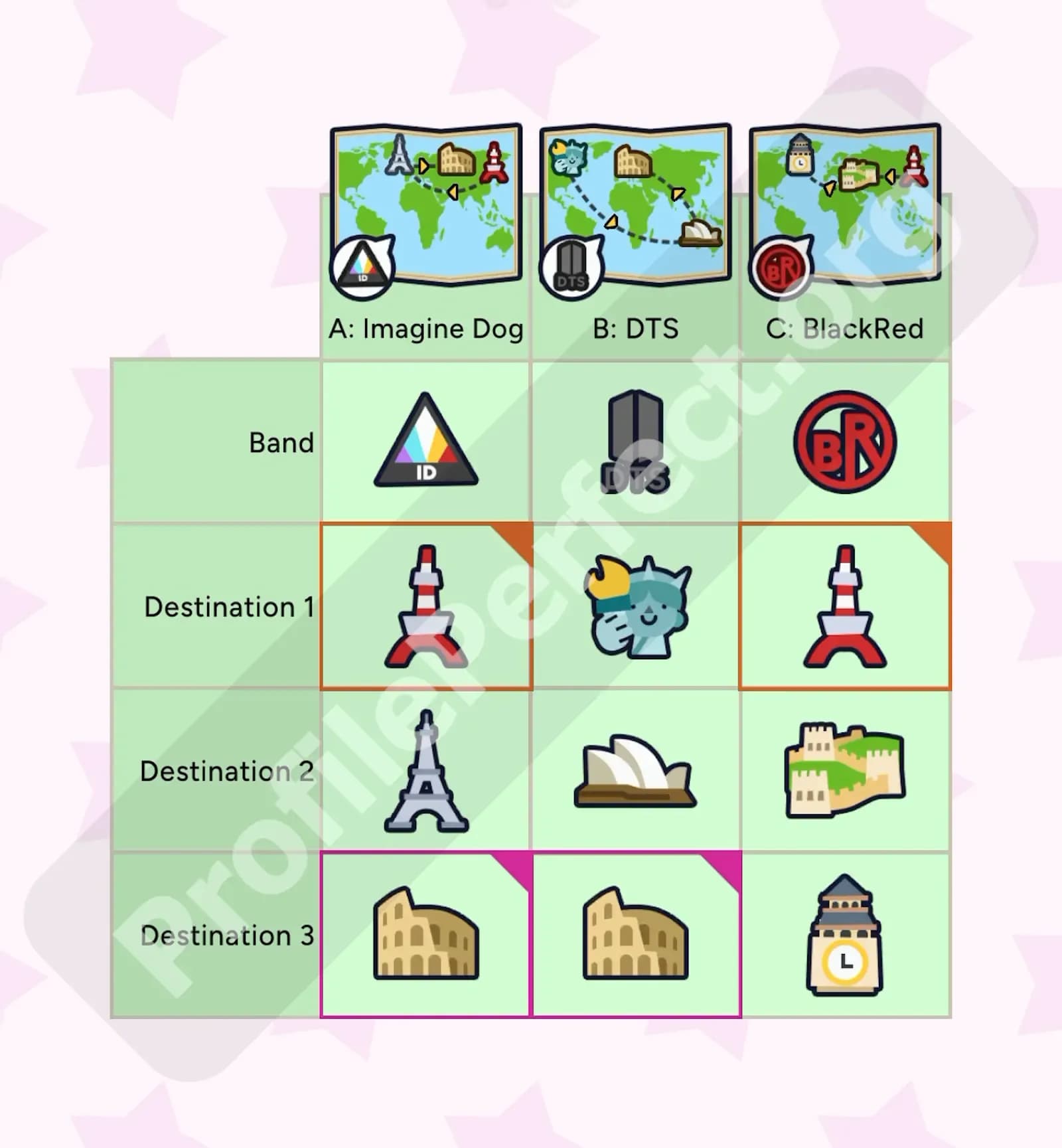
Level 383 is a world tour puzzle, and it’s secretly about geography plus music logic. DTS starts in New York. Another clue says the band performs at the opera house after New York, pointing to Sydney. The rightmost band focuses its tour in Asia, which helps isolate Beijing and Tokyo. You don’t need to be a travel expert, but you do need to notice when a city clue is also a culture clue.
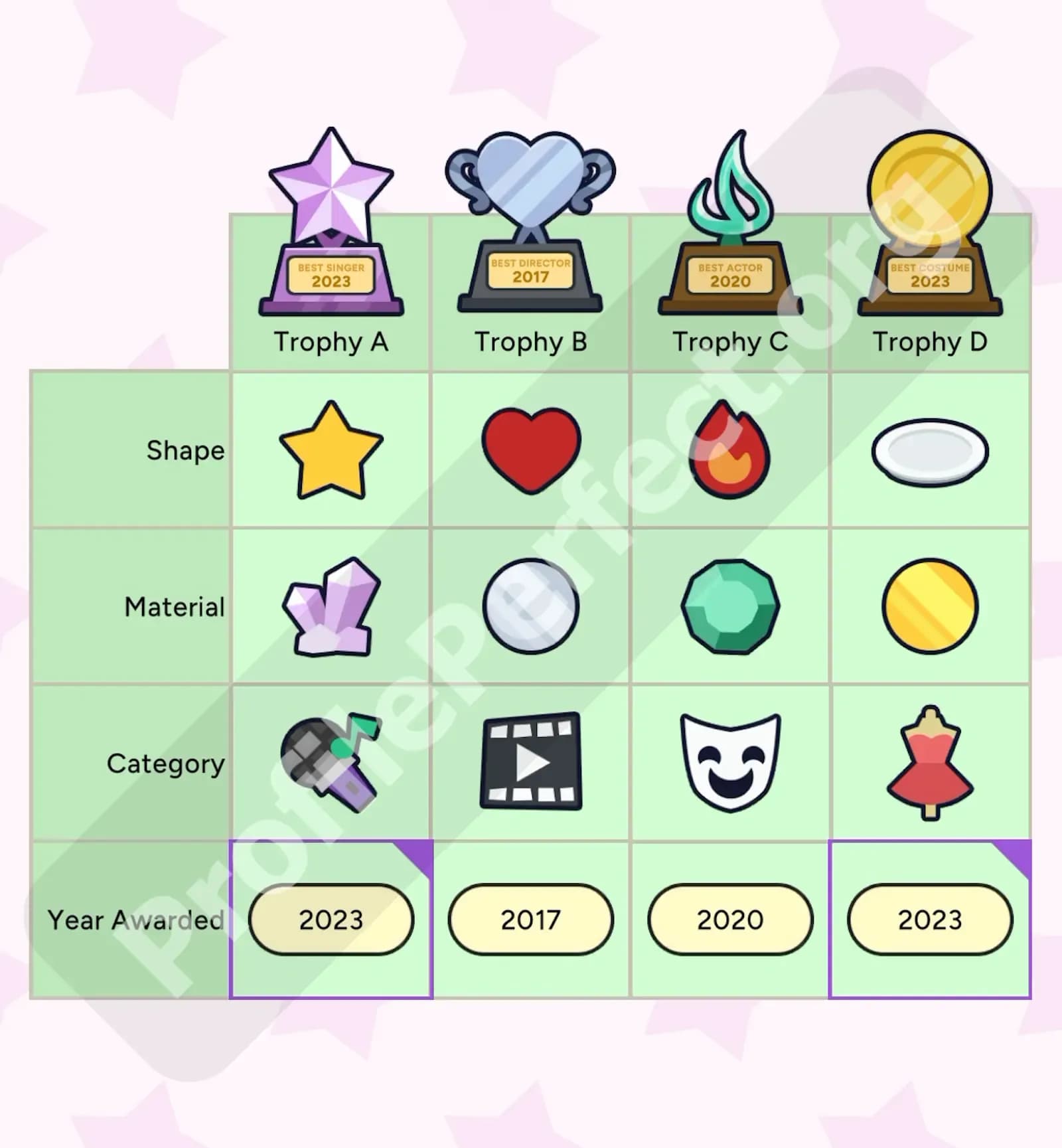
Level 381 is awards logic. Trophy shapes, materials, categories, and years all act like status symbols. A star trophy connects to Best Singer. A gold circular plate connects to Best Costume. Emerald connects to Best Actor. The oldest year and newer years then clean up the timeline.
For media levels, I use a simple rule: if the clue sounds like a headline, translate it into categories. “Best soundtrack” means award category. “Ghost stories” means show type. “World tour” means destination order.
Because Profile Perfect only gives you two lives, culture clues punish lazy tapping. I never tap after reading just one stylish sentence unless it gives a direct match. Instead, I build a chain in my head.
Take Level 384:
The clue says the Vampire cracked his joke. That means Vampire = Laughing. Then the Witch is the middle opera. Middle audience is sleeping. Red curtain belongs to the Witch. Crying audience is left of Sleeping. Red and Navy curtains are neighbors. Suddenly, one opera scene gives you character, curtain, and reaction structure.
That’s not guessing. That’s building a chain.
Try this pattern:
Domain: Opera Object: Curtain / background / character Event: Performance scene Role: Vampire, Witch, Princess, King, Wizard Reaction: Laughing, Sleeping, Crying, Angry, Excited
Now solve from direct clues outward.
The big lesson is that Profile Perfect culture clues are not about being a celebrity expert or fashion nerd. They’re about translation. The game uses lifestyle language to hide strict logic.
When you see a fashion clue, look for clothing type, color, brand, occasion, and price. When you see a performance clue, look for character, background, curtain, and audience reaction. When you see a celebrity clue, separate the star, the fan, the item, and the expression. When you see a TV or music clue, map the schedule, channel, band, and destination order.
And when a clue sounds like fluff? Don’t ignore it. In Profile Perfect, fluff usually has teeth.
That’s what makes these levels fun. They dress the logic grid in culture, but the solving loop stays rock-solid: identify the domain, translate the objects, assign the roles, confirm the reactions, then let elimination do the heavy lifting.