
Solve animal clues in Profile Perfect with a simple fact-chain method. Learn how breed, habitat, diet, predators, and traits unlock tricky levels fast.

Guide By Liam Stone
Published on June 15, 2026
Liam Stone has played Profile Perfect since the app first launched on the Apple App Store. He spotted its potential early, and that early bet turned into hundreds of hours spent solving levels, testing clue logic, and documenting answers for other players. Liam runs the YouTube channel Puzzle Game Answer where his puzzle walkthroughs have earned over 935,000 views and a growing community of more than 800 subscribers. He covers a wide range of mobile puzzle games beyond Profile Perfect, giving him firsthand experience with how these games design clues, structure levels, and trip up even experienced players. Every guide on this site reflects that hands on experience. Liam plays each level himself, verifies every answer against the in game grid, and rewrites confusing clues into plain language so you don't need to guess. If you want more of his walkthroughs, subscribe to his channel.
Loading calendar...
Animal levels in Profile Perfect look cute at first. A dog tag here, a fish diet there, maybe a bird with pink feathers. Easy, right?
Then the game starts doing that classic Profile Perfect thing where one innocent clue quietly connects three different rows. Suddenly, “the animal that eats fruit is hunted by a weasel” is not just a diet clue. It is also a predator clue, a species clue, and probably a position clue waiting to snap into place. That is when animal puzzles stop being fluffy and start getting crunchy.
The good news: animal clues follow one of the most reliable solving loops in the entire game. I call it the animal fact chain.
Species → habitat → diet → predator or special trait.
Once you learn to build that chain, levels about dogs, birds, fish, rodents, sheep, arctic animals, bats, and deep-sea creatures become much easier to read. You are no longer guessing what the clue means. You are asking, “Which animal fact is this clue trying to attach to the grid?”
That shift is huge.
Profile Perfect is still a logic-grid puzzle at its core. Each level gives you subjects, such as Dog A, Fish B, Bird C, or Animal D. Then it gives you traits, such as breed, habitat, diet, predator, lifespan, food, resting spot, conservation status, or wake-up time.
The trap is that animal levels often mix pure logic with real-world knowledge. In a normal family-name puzzle, “Joyce is Miller” is direct. In an animal puzzle, the game may say “the insect eater has whiskers like a cat,” and you need to realize that points toward catfish. That is not hard biology, but it is still outside knowledge. If you miss that little connection, the whole grid can feel floaty.
That is why animal levels reward players who slow down and translate every clue into a fact chain before tapping cells.
Whenever you see an animal level, do not start by filling random rows. Build the chain in this order.
First, identify the species or breed. This is usually the strongest anchor. Husky, Pomeranian, catfish, salmon, flamingo, owl, capybara, shark, manatee, arctic fox, snowy owl, blobfish, gulper eel, and vampire bat all carry built-in clues.
Second, connect habitat. Many animals are strongly linked to where they live: salmon with rivers, clownfish with coral reefs, capybara with marshes, manatee with rivers, blobfish with abyss zones, arctic hare with ice caves, or bats with caves, bridges, trees, and tunnels.
Third, connect diet. Diet clues are some of the best in Profile Perfect because they often create multiple links. Flamingos eat shrimp or algae. Sardines eat plankton. Whales eat krill and plankton. Manatees eat seagrass. Rodents may eat fruit, seeds, grass, nuts, or grains. Bats may eat insects, nectar, seeds, or even blood.
Fourth, attach predator, behavior, or special trait. This is where the level usually locks. Owls hunt rodents. Crocodiles prey on capybaras. Falcons hunt small animals. Great hammerhead sharks can connect to “critically endangered.” Long-eared bats connect to the “long ears” trait. Leaf-nosed bats connect to a shaped nose clue.
Once those four parts line up, the grid starts solving itself.
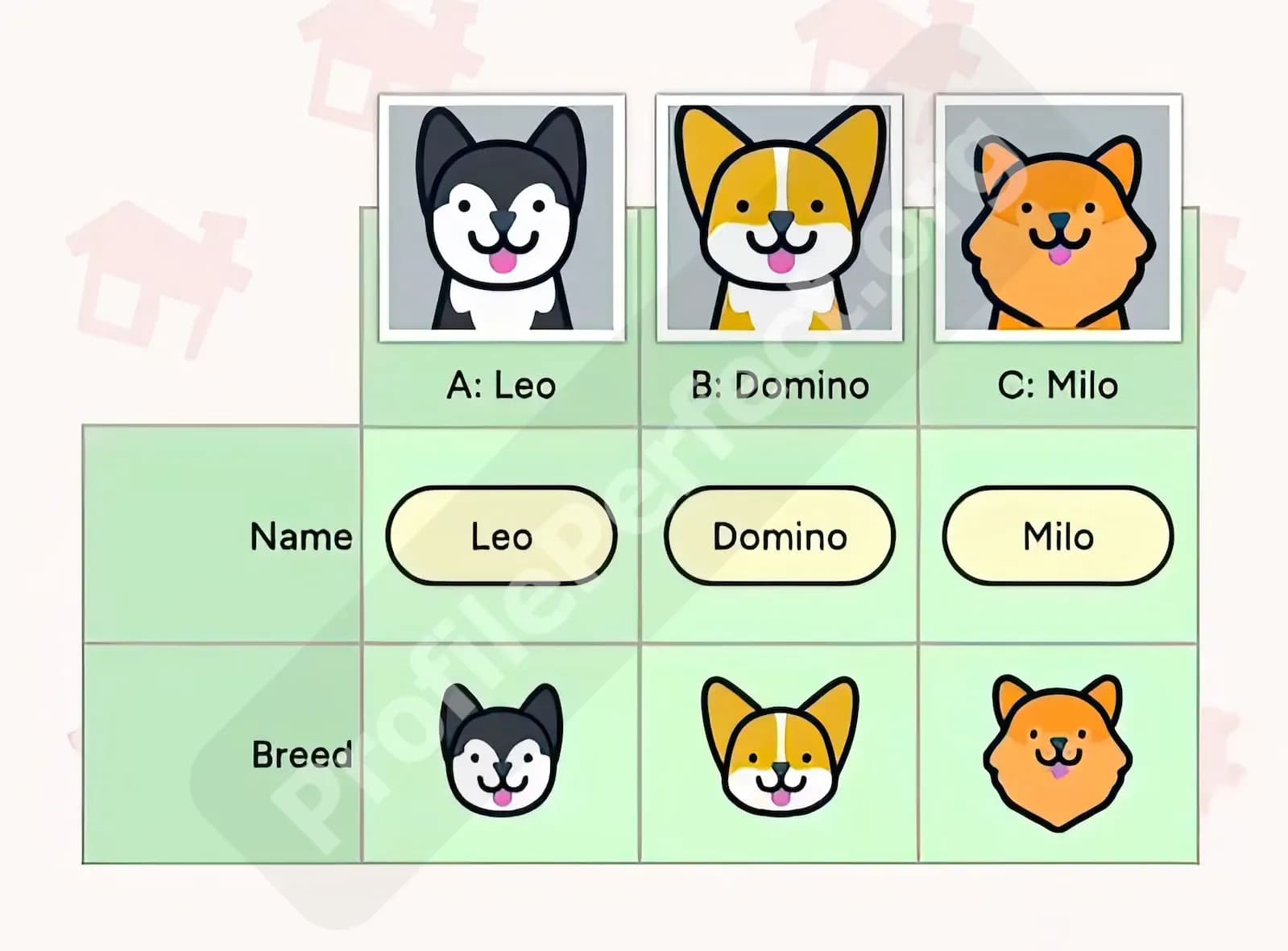
Level 2 is the clean beginner version of animal deduction. You have three dogs, three names, and three breeds. Dog B is Domino. Dog C is a Pomeranian. Dog A is black and white. The Husky is called Leo. Milo is next to Domino.
The key clue is not the name. It is the appearance. A black-and-white dog strongly points to the Siberian Husky. Once Dog A becomes the Husky, the “Husky is called Leo” clue gives Dog A the name Leo. Dog B already has Domino, so Dog C gets Milo. Since Dog C is Pomeranian, Dog B takes the remaining breed, Corgi.
The technique: when a clue describes what an animal looks like, treat it as a breed clue first. Appearance often hides the real answer.
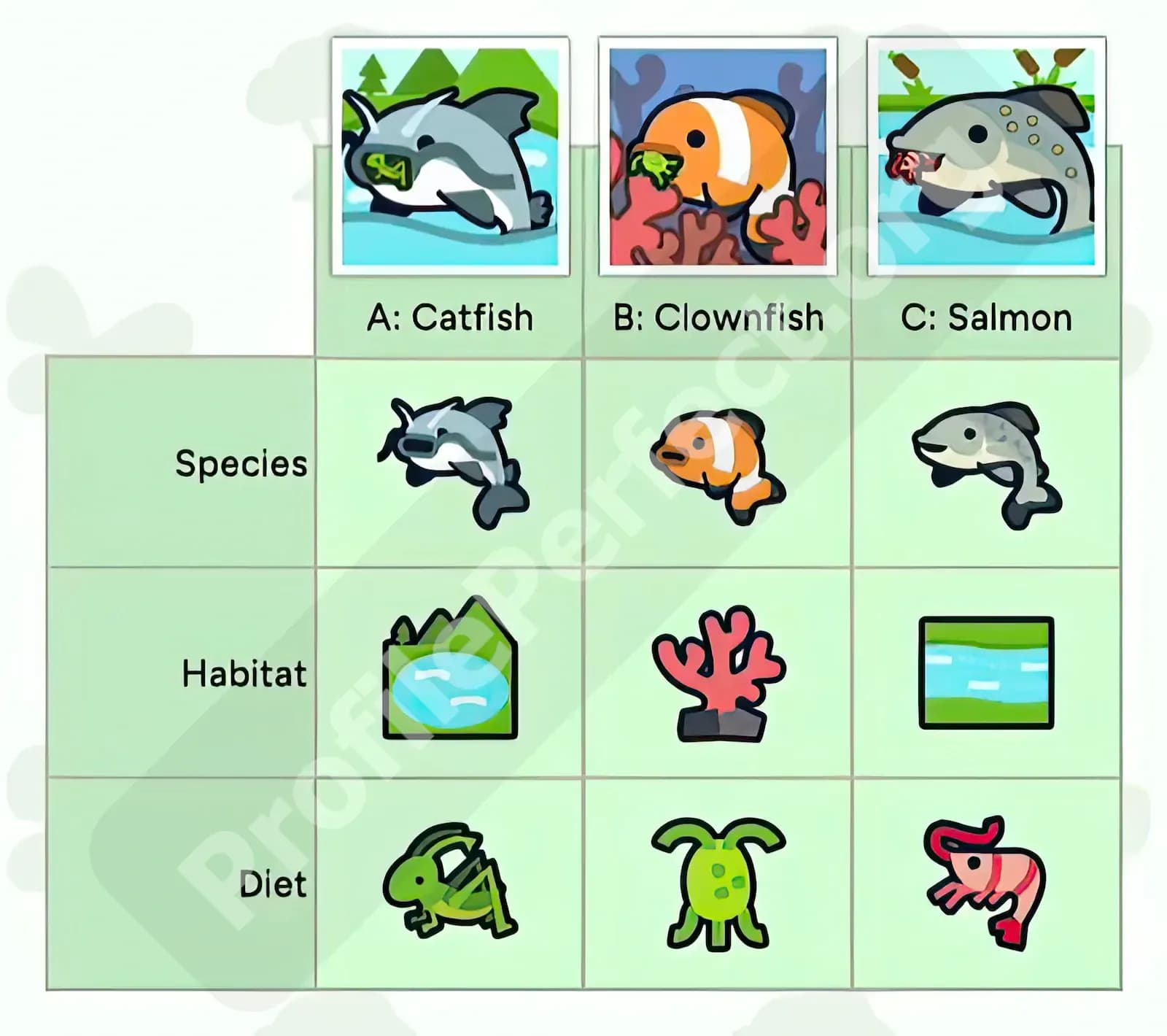
Level 9 is where the animal fact chain gets more interesting. Fish C reproduces in rivers. Fish A eats aquatic insects. The insect eater has whiskers like a cat. A fish beside the insect eater lives in coral. Salmon are not found around coral. Clownfish eat plankton.
This is a banger teaching level because almost every clue is a biology shortcut.
“Whiskers like a cat” points to catfish, so Fish A becomes Catfish. Fish A eats insects. Fish C is linked to rivers, which fits salmon. Coral reef points toward clownfish, and clownfish eating plankton confirms it. The final grid becomes much less scary once you stop reading the clues as separate facts and start chaining them together.
Species: Catfish. Trait: whiskers. Diet: insects. Neighbor habitat: coral. Species: Clownfish. Diet: plankton. River: Salmon.
That is the loop.
Bird puzzles in Profile Perfect often rely on two things: food and visual traits.
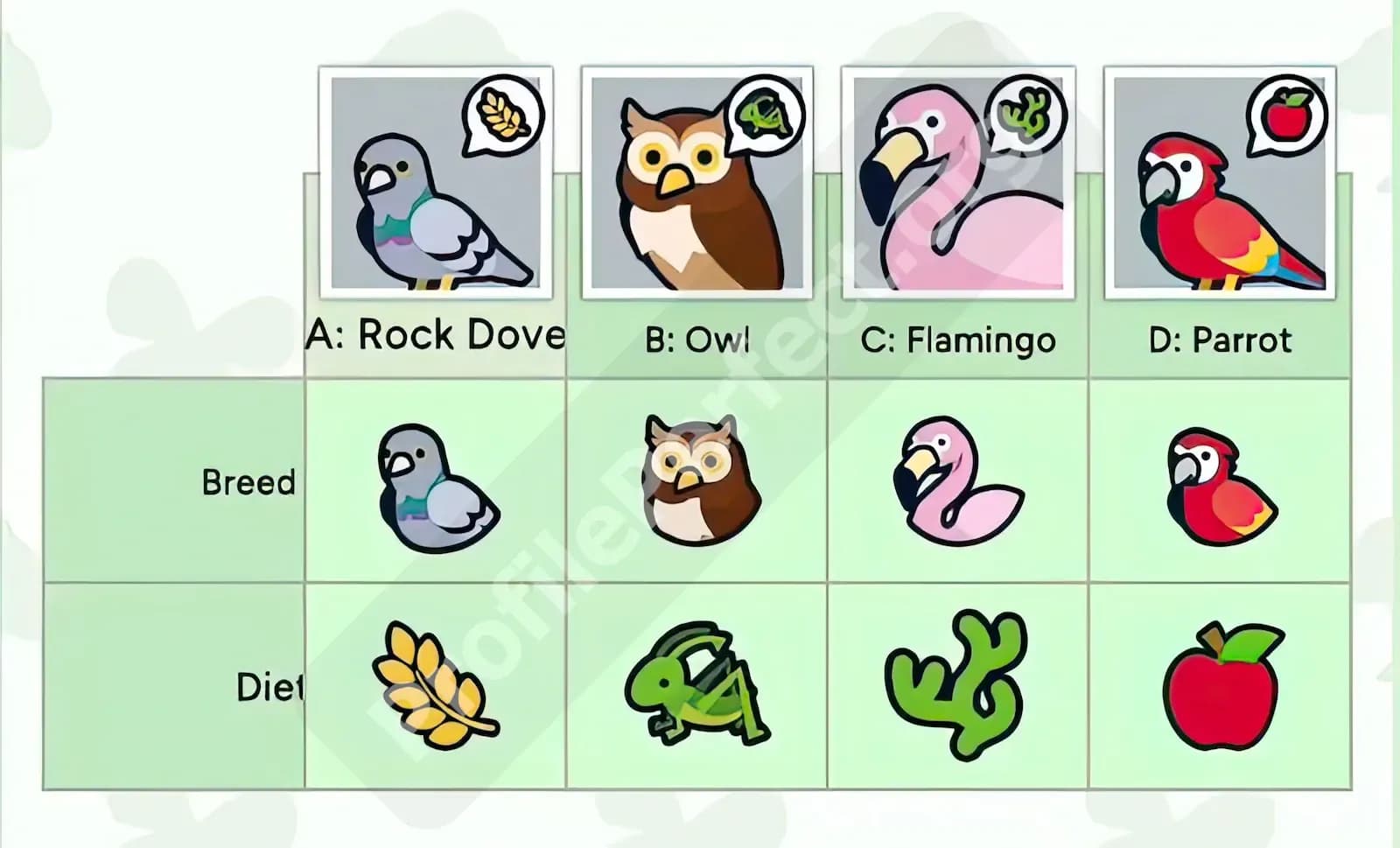
In Level 11, Parrot loves fruit. The bird next to the parrot has pink feathers, which points to Flamingo. Flamingo eats algae. The insect-eating bird is nocturnal, which points to Owl. The grey grain eaters in the park point to Rock Dove.
This level teaches a simple rule: bird diet plus behavior is usually enough to identify the bird. “Nocturnal” is not just flavor text. It is an owl clue.
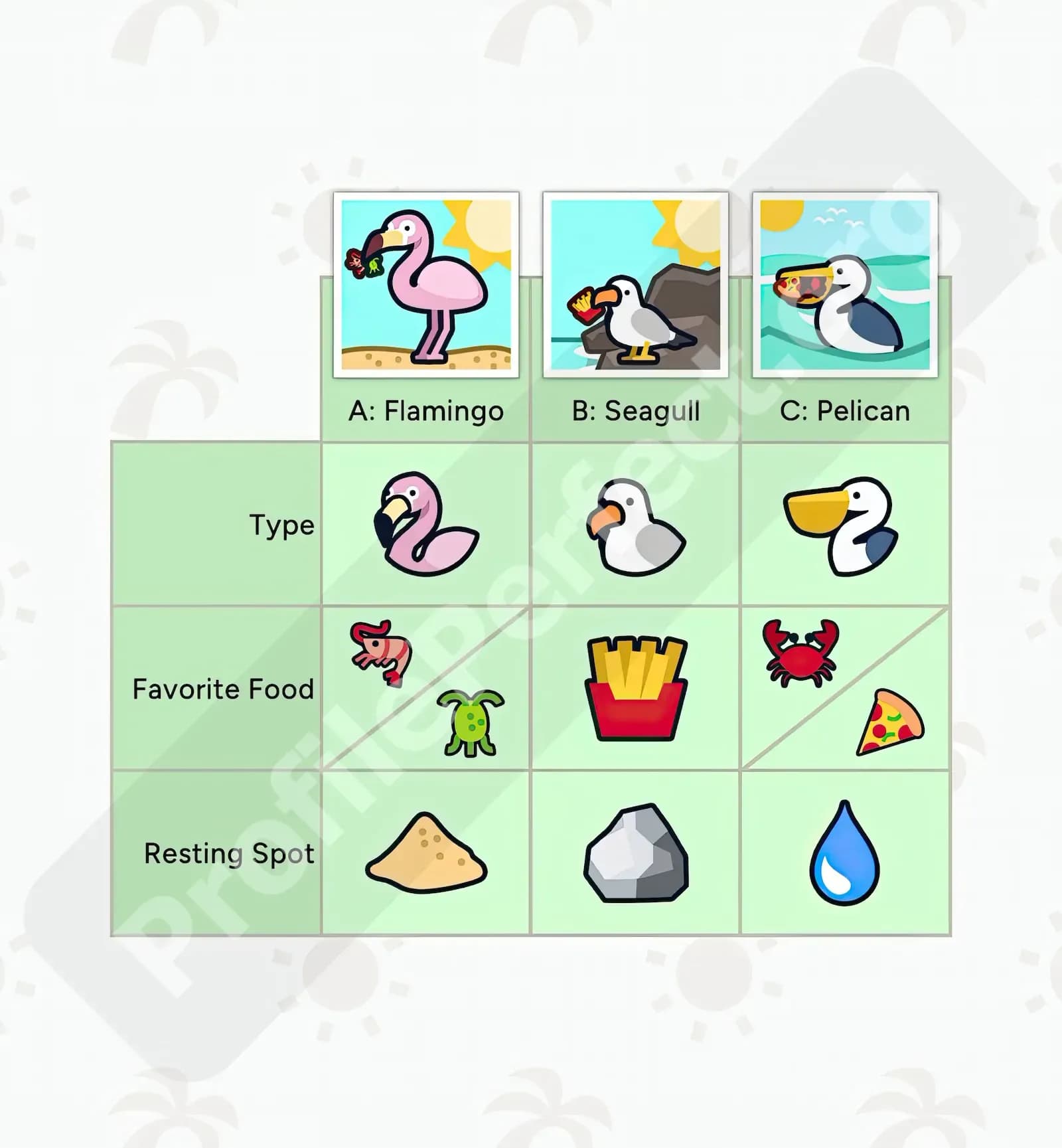
Level 173 uses the same idea with a beach-food twist. Bird C rests on water. Bird B is a seagull. Junk-food eaters are neighbors. The bird on water loves pizza. The bird resting on sand consumes plankton. Pelican rests closer to rock than sand. Flamingo turns pink because of its shrimp diet.
The shrimp clue is the big one. If the game mentions pink feathers or shrimp, start thinking Flamingo immediately. If it mentions junk food near the beach, Seagull is probably nearby. If it mentions water and a large coastal bird, Pelican becomes a strong candidate.
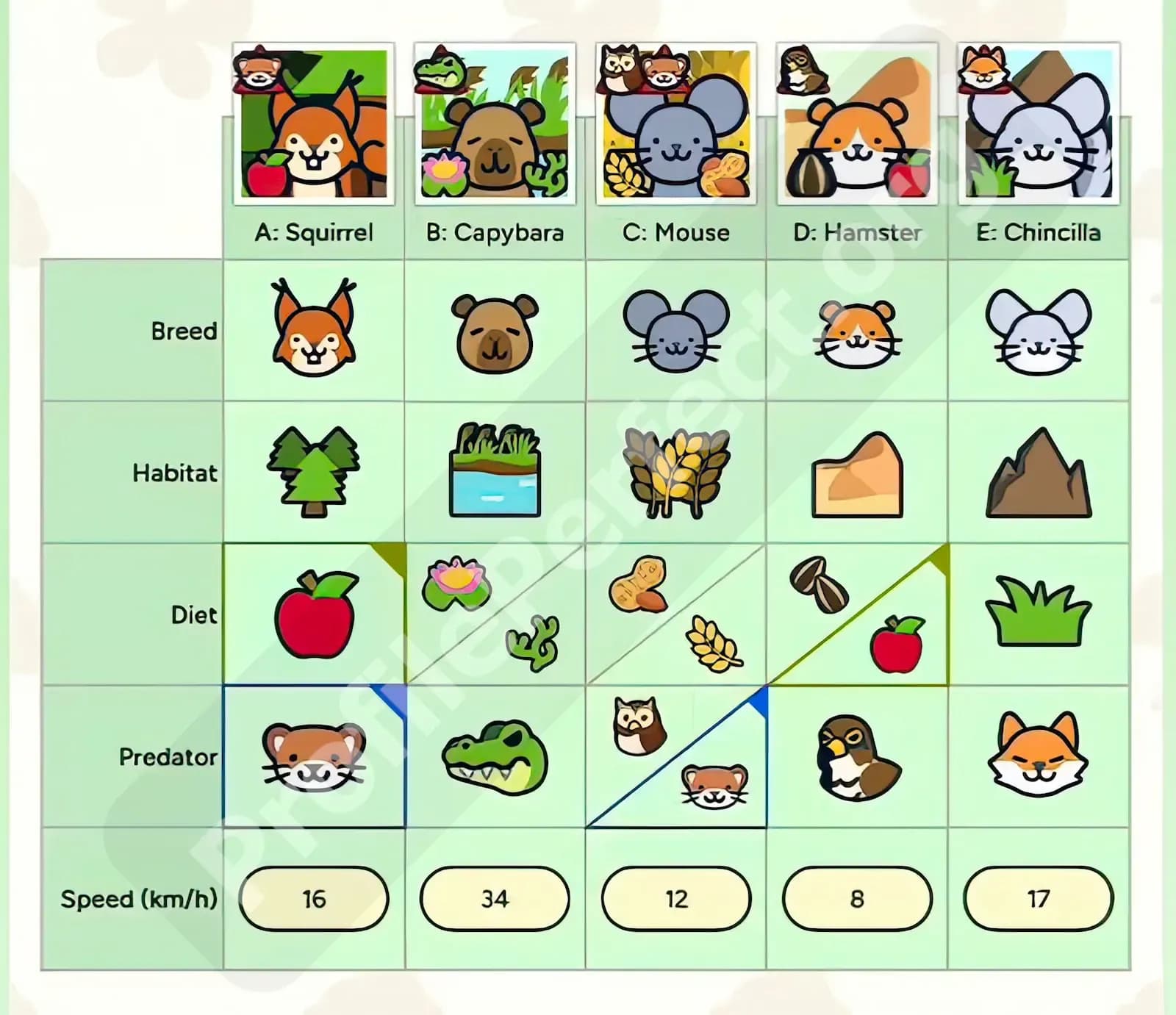
Level 120 is one of the best examples because it uses breed, habitat, diet, predator, and speed. This is the full loop, no training wheels.
You get rodents like Squirrel, Capybara, Mouse, Hamster, and Chinchilla. You also get habitats like forest, marsh, field, sand dune, and mountain. Diets include fruit, water plants, algae, nuts, grains, seeds, and grass. Predators include weasel, crocodile, owl, falcon, and fox.
This level can feel like a lot, but the chain keeps it manageable.
Capybara connects to marsh. A semi-aquatic reptile preys on Capybara, which means Crocodile. Mouse looks for nuts and is afraid of Owl. Hamster is near the middle and slower than its neighbors. Chinchilla connects to mountain. Squirrel connects to forest and fruit, then the fruit eater is hunted by Weasel.
The trick is to create mini-chains instead of trying to solve the entire grid at once:
Capybara → marsh → crocodile. Mouse → nuts/grains → owl → field. Hamster → seeds/fruit → falcon → sand dune. Squirrel → forest → fruit → weasel. Chinchilla → mountain → grass → fox.
Once you have those chains, speed clues become cleanup. They are not the main path. They are the final lock.
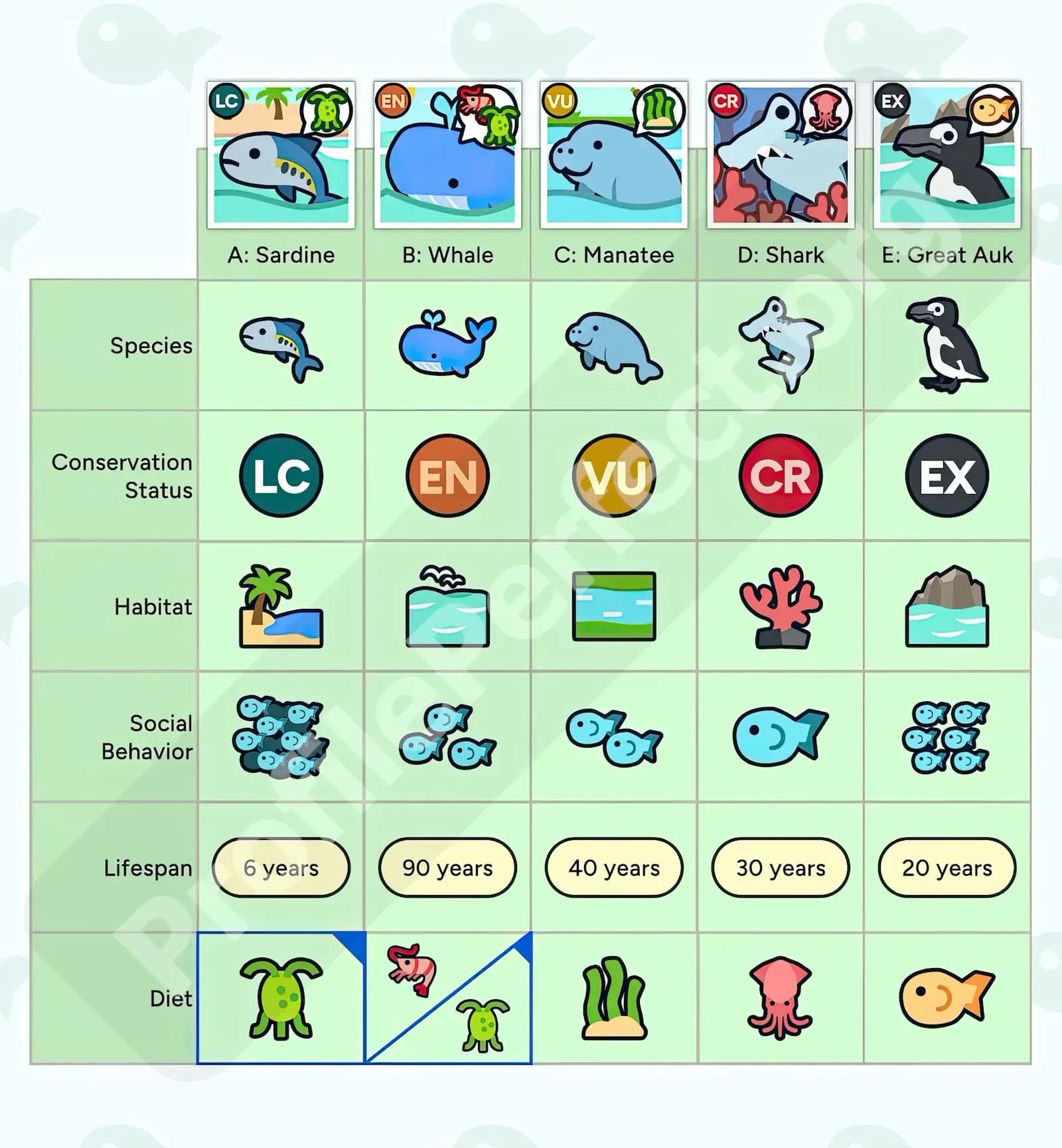
Level 132 raises the difficulty by adding conservation status and lifespan. That sounds intimidating, but the same method still works.
Sardine is Least Concern and lives on the coast. Whale is linked to the open ocean, long lifespan, and krill or plankton. Manatee lives in rivers, moves in pairs, and eats seagrass. Shark is tied to coral, solitary behavior, squid, and a critically endangered status. Great Auk is extinct and linked to rocky islands.
The important lesson here is that conservation status behaves like another trait, not a separate mystery. “Extinct” points to Great Auk. “Critically Endangered” points to Great Hammerhead/Shark. “Vulnerable” can support Manatee. Once you treat status like diet or habitat, the level becomes much more readable.
Arctic and deep-sea levels are all about environment.
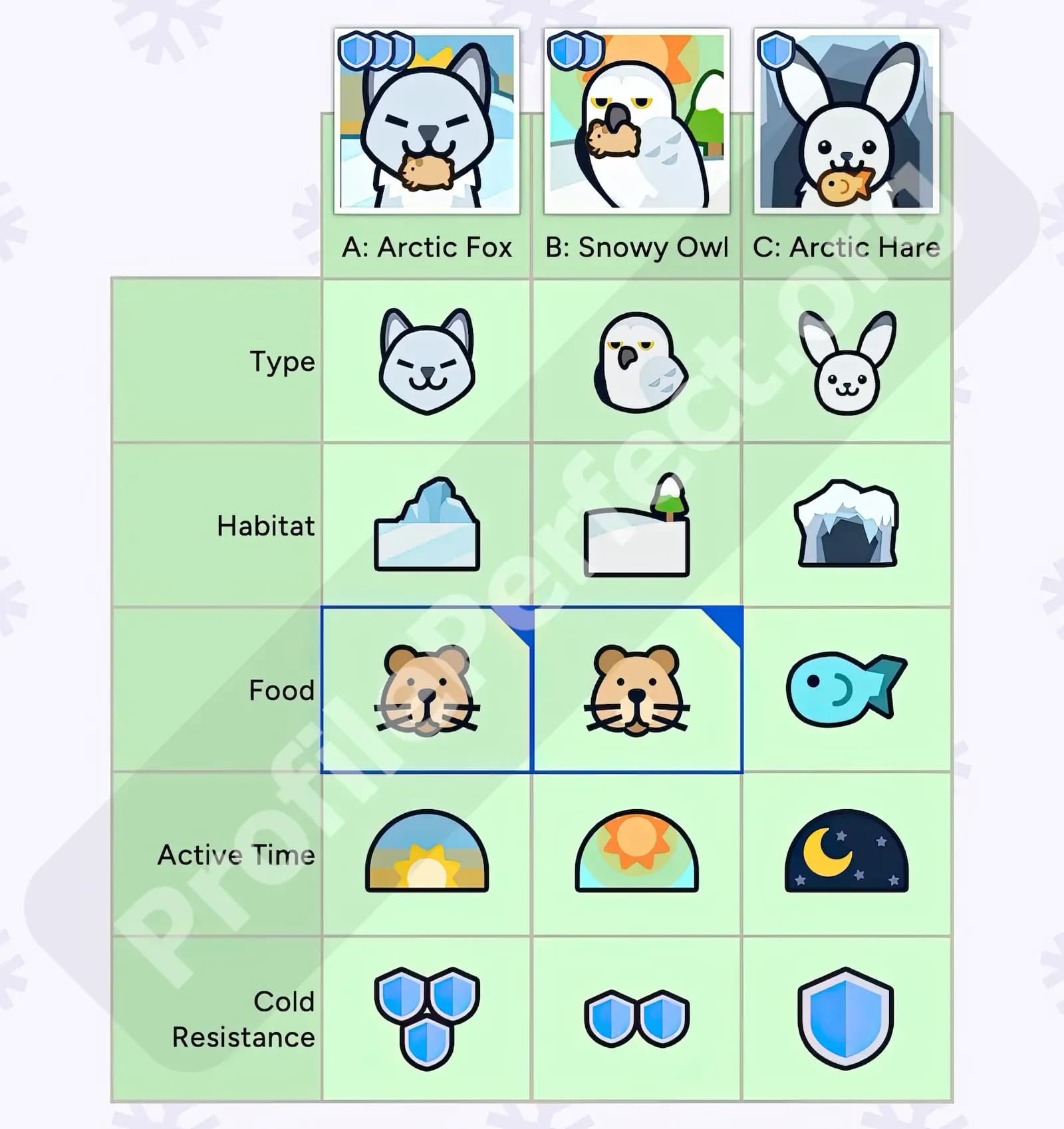
In Level 218, Arctic Fox, Snowy Owl, and Arctic Hare are matched with frozen shore, snow field, and ice cave. The food clues use lemming and fish, while cold resistance adds ranking pressure. The most cold-resistant animal lives at the frozen shore, which helps pin Arctic Fox. Snowy Owl sits near the night hunter, and Arctic Hare links to the ice cave.
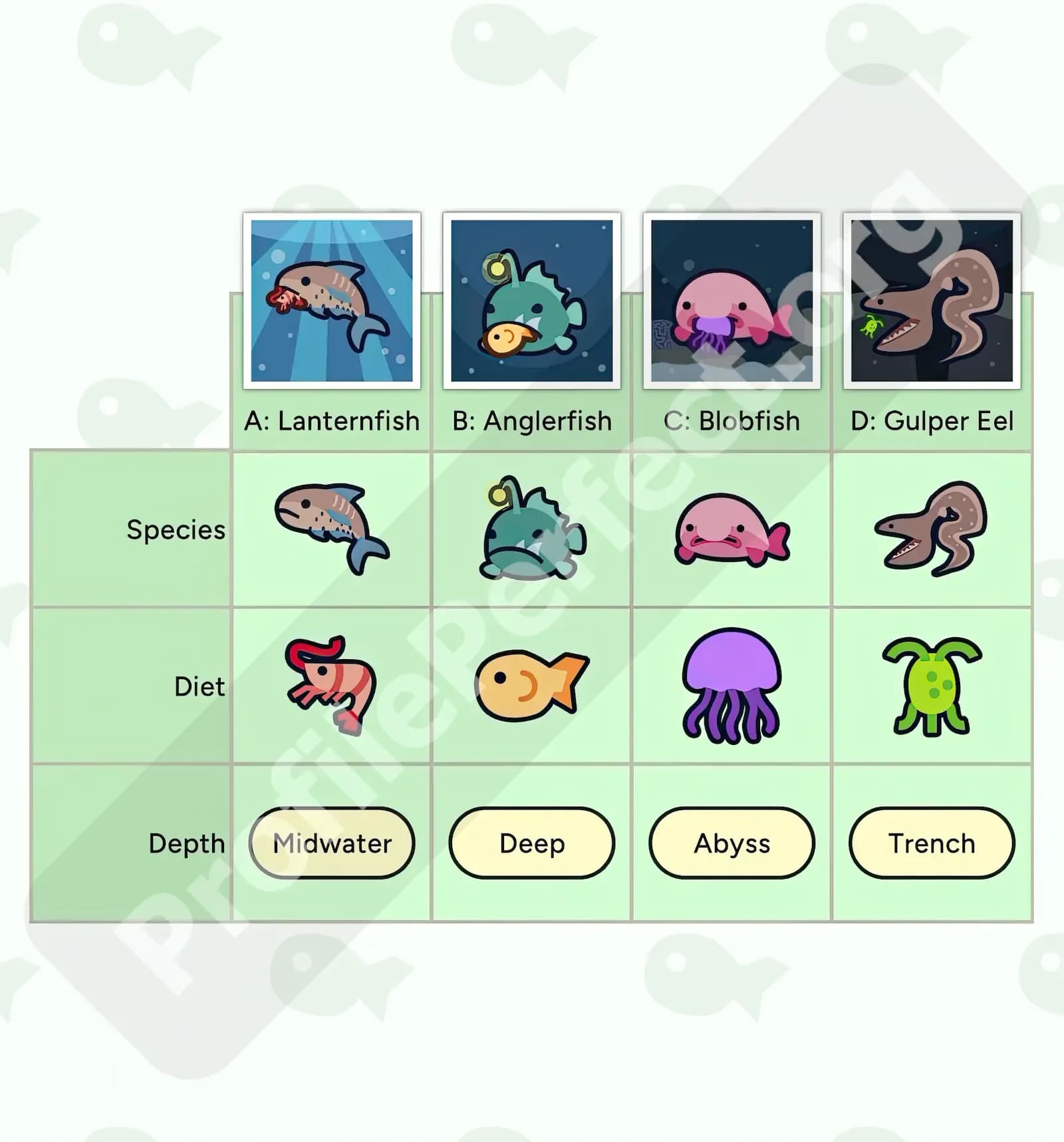
In Level 344, deep-sea fish are sorted by species, diet, and depth. Gulper Eel is rightmost and tied to trench depth with plankton. Blobfish links to the abyss because the clue mentions high pressure and a saggy appearance. Lanternfish eats shrimp in midwater. Anglerfish lands in the deep zone.
When a level uses extreme locations, do not ignore them. “Abyss,” “trench,” “frozen shore,” and “ice cave” are not background vibe. They are the spine of the puzzle.
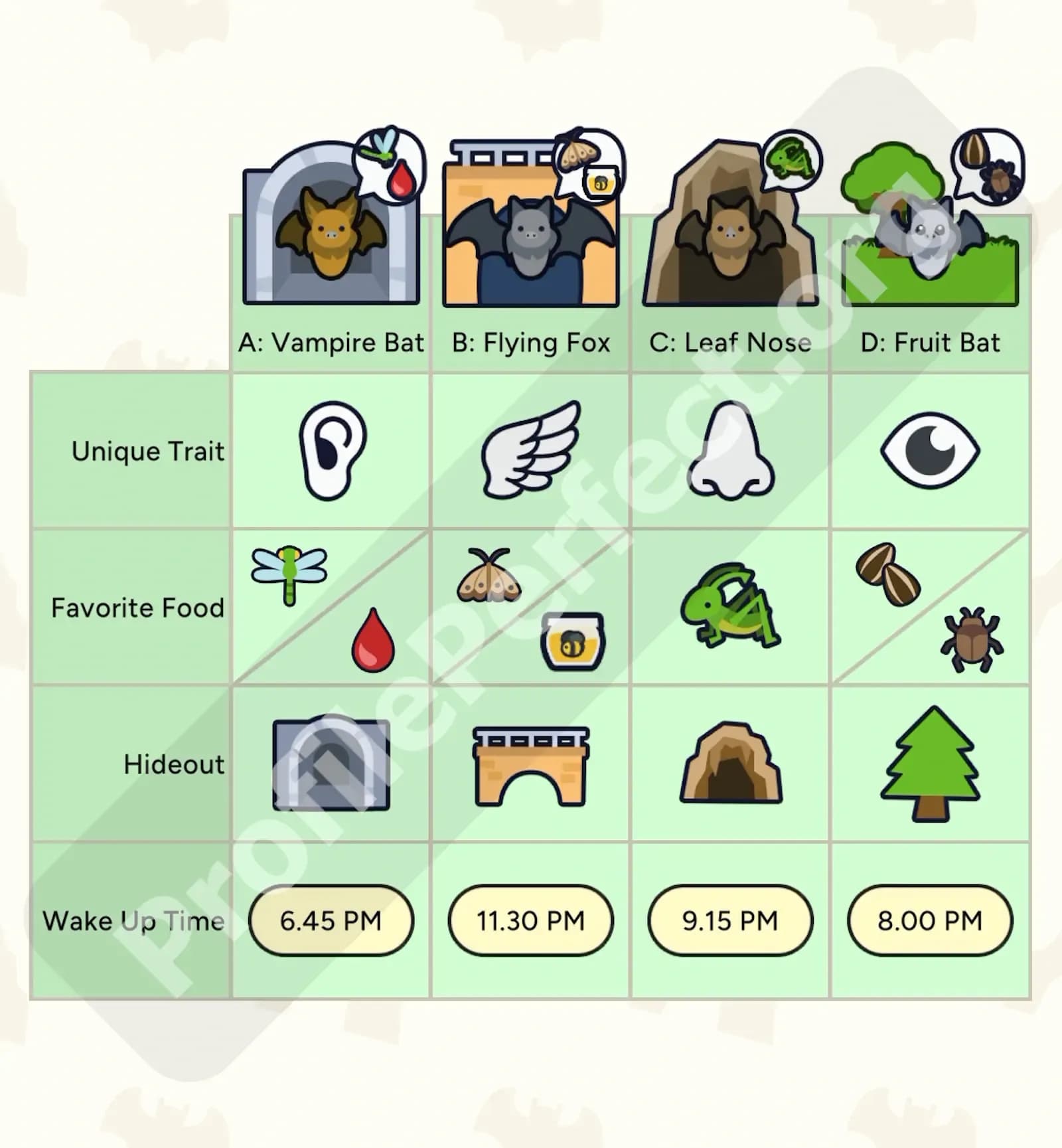
Bat levels are sneakier because the animals are similar, so the game leans on unique traits. In Level 388, Leaf Nose, Long Ears, Big Wings, and Big Eyes all matter. So do foods like dragonfly, blood, moth, nectar, cricket, seed, and beetle.
The fastest way through is to mark unique traits first. Bat C has a leaf nose. Bat A is a vampire bat, so blood becomes part of its food chain. Long-eared bat goes at an end of the grid. Big Wings competes with bees for nectar. Big Eyes connects to beetle.
Then use hideouts and wake-up times as position locks. Bridge, cave, tunnel, and tree are not just scenery. They help order the bats.
Animal clues in Profile Perfect are fairer when you treat them like translation puzzles. “Pink feathers” translates to Flamingo. “Nocturnal insect eater” translates to Owl. “Whiskers like a cat” translates to Catfish. “Marsh rodent” translates to Capybara. “Abyss pressure” translates to Blobfish.
My favorite habit is to write a quick chain beside the level before tapping anything. Species first. Habitat second. Diet third. Predator, behavior, or trait last. Then I place only the facts that are fully confirmed.
That one habit saves lives, especially in later levels where one bad guess can tank the run.
Animal levels are some of the most satisfying puzzles in Profile Perfect because they reward both logic and common knowledge. Once the fact chain clicks, the clues stop feeling random. You begin to see the hidden structure underneath the cute animal theme, and that is where the game’s detective loop really shines.